30,000 New F&B Outlets, Yet Storefronts Sit Empty: What’s Happening To Vietnam’s Retail Scene?
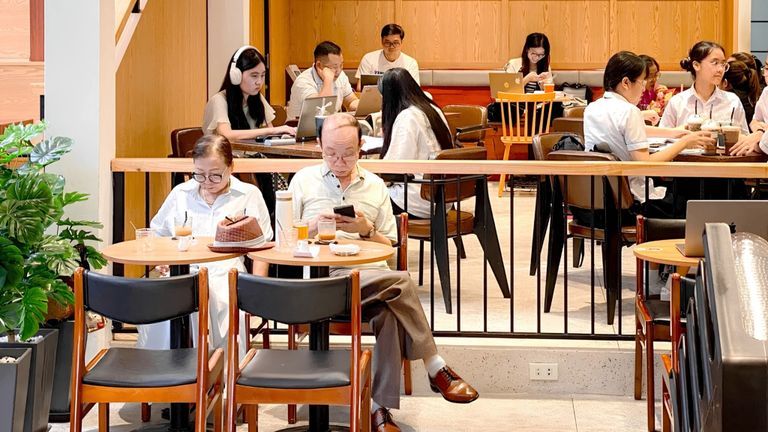
A cafe shop in Hue, Vietnam. | Source: Dan Tri News
Along Ho Chi Minh City’s busiest streets, including Dong Khoi, Nguyen Trai and 3/2, vacant storefronts have become a familiar sight. Some have recently been vacated, while others have stood empty for years, gradually falling into disrepair.
At first glance, these empty premises might suggest a struggling retail sector. Yet the figures tell a different story. In the first nine months of 2026, Vietnam’s total retail sales of goods and consumer services revenue reached VND 5.93 quadrillion, up 13.4% year-on-year.
The food and beverage (F&B) sector paints a similar picture. According to a report by iPOS.vn and Nestlé Professional, Vietnam had approximately 329,200 F&B outlets by the end of June 2026, down just 0.1% from the end of 2025 but up by nearly 30,000 outlets year-on-year.
The figures suggest that new openings have largely offset closures, keeping the overall number of outlets relatively stable. Yet they also raise a question: If Vietnam’s F&B market continues to expand, where are businesses setting up shop when retail spaces remain vacant?
Prime Locations Remain Attractive
As of October 2026, Ho Chi Minh City’s retail property market shows a clear divide: shopping malls and prime retail spaces have maintained or slightly increased their rents amid limited supply, while asking rents for street-front properties and shophouses have fallen significantly in several areas.
According to Savills Vietnam’s Q2 2026 report, Ho Chi Minh City’s total retail stock remained stable at 1.6 million sq m, with limited new supply since Q3 2025. Average ground-floor rents rose to approximately US$61.5 per sq m per month, supported by high-quality developments such as Union Square and Saigon Marina IFC.
Meanwhile, prime ground-floor rents in central areas reached USD 249 per sq m per month, up 1.2% year-on-year, compared to USD 55.2 in non-central areas. Vacancy rates in prime retail locations stood at just 3.4%, according to Knight Frank’s Q3 2026 market report.
These findings suggest that prime retail spaces continue to attract strong demand despite limited availability and rising rents. However, securing a desirable location comes at a considerable cost. For retailers and F&B operators, revenue growth does not necessarily translate into higher profits, particularly as businesses also grapple with ingredient costs, labour expenses and other operational overheads.
At the other end of the market, smaller commercial spaces, older street-front properties and locations less suited to F&B operations face greater pressure. These properties are more susceptible to prolonged vacancies, with landlords often forced to lower asking rents to attract tenants.
Rethinking The Value Of Location
On September 8, Starbucks opened a new outlet on Cao Thang Street, Ho Chi Minh City. Unlike the prominent, high-footfall locations typically favoured by major brands, the new store is tucked away in an alley.
The difference goes beyond rental costs. While the Cao Thang outlet reportedly rents for VND 80 million (approximately US$3,100) per month, Starbucks continues to pay VND 1.6 billion (approximately US$61,500) monthly for its Reserve store at Bitexco Financial Tower.
The contrast points to a broader question of how brands assess the value of each store within their network.
According to Savills’ Inside Occupier Strategy – Retail report, brands are increasingly prioritising location quality, individual store performance and the strategic role of each outlet. In Vietnam, this raises questions: where should brands open, which business models should they adopt, and how can each location contribute to both revenue and brand value?
Consumer behaviour may also be reshaping this equation. An iPOS.vn survey found that 43.02% of F&B businesses identified dine-in customers as their strongest growth channel in the first half of 2026. When direct takeaway purchases were included, 59.26% reported their strongest growth from customers physically visiting their outlets.
These figures underline the continued importance of physical stores. However, as consumers seek out cafés and restaurants for their brands, offerings or experiences, a prominent main-road address may not be the only route to attracting customers.
The Next Challenge: Make Every Outlets Count
Vietnam’s F&B market still has room to grow. According to Savills Vietnam, average household disposable income is projected to increase by 7.4% annually between 2026 and 2036, creating further opportunities for domestic and international brands.
Yet an expanding market does not guarantee success for every new outlet. Purchasing power, foot traffic, rental costs and consumer preferences can vary significantly between locations, requiring businesses to tailor their strategies to each location rather than adopting a one-size-fits-all approach.
Highlands Coffee is a case in point. Alongside flagship stores in prime locations, where monthly rents can reach US$30,000, the brand operates a network of 1,011 standard outlets concentrated along office corridors and commuter routes. Examples include Dong Khoi, Le Thanh Ton and Ham Nghi streets in Ho Chi Minh City; Hoan Kiem and Ba Dinh districts in Hanoi; and areas along the Han River in Da Nang.
Rather than focusing solely on prominent addresses, the strategy is to position stores along customers’ daily travel routes. This is complemented by smaller kiosk formats, typically located at petrol stations and transport hubs.
William Gramond, Director of Commercial Leasing at Savills Hanoi, emphasised that store count should not be the sole objective of expansion. Brands, he said, need to assess local purchasing power, foot traffic and consumer behaviour before deciding on the size and format of a new outlet.
The shift also presents challenges for landlords. As businesses become more selective, attracting tenants may require greater flexibility in rental terms, property layouts and the types of businesses a space can accommodate.
For Vietnam’s F&B market, the vacant storefronts along major streets may therefore tell a story beyond closures and rising rents. As the industry expands, the value of a retail address is increasingly being weighed against what businesses can achieve there.