4 Ways Vietnamese People Get Rid Of Bad Luck
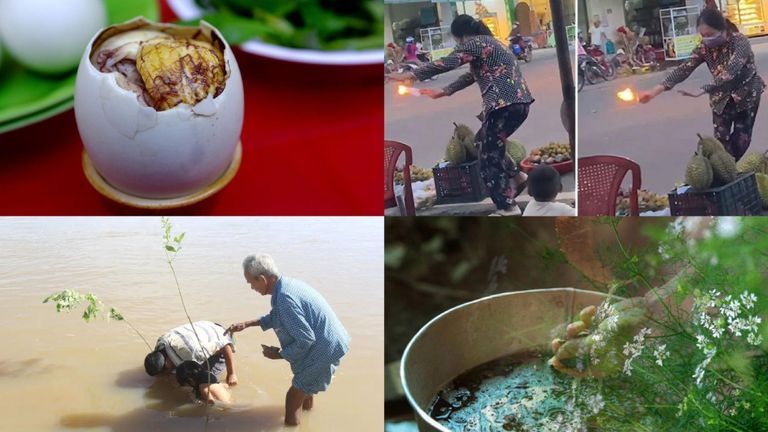
Source: Collected / Designed by Thuy Anh for Vietcetera
*The practices in this article reflect cultural beliefs and traditions rather than scientifically proven ways to change one’s luck.
During a group hangout, one of my friends told us about how she accidentally lost her recently paid salary in an envelope despite countless efforts to recall its whereabouts. We couldn’t help but exclaim “xui dữ vậy” (how unlucky you are) before offering her our deepest sympathy.
You see, some incidents can be deemed accidental or unwanted, but if they happen to occur frequently or are unlucky enough, it can be a sign that you’re experiencing what the Vietnamese call “xui” (bad luck). As bad luck is universal, people across the globe often seek ways to counter it. In Vietnam, there are many ways to “xả xui” (get rid of bad luck), and they vary widely from place to place, which sheds light on the country’s rich spiritual life and the people’s attitudes toward hardships.
“XUI” And When You Know You’ve Caught It
“Xui” means bad luck, and “xui xẻo” describes the state of being unlucky. Therefore, Vietnamese people often say “gặp xui” (get bad luck), while some adverbs can be added to “xui xẻo” to emphasize the degree of bad luck, as in “quá xui xẻo” (awfully unlucky). However, over time, “xui” is mostly used instead of “xui xẻo” for convenience, resulting in the phrase “xui dữ vậy” as mentioned above.
Although it’s hard to capture all the “symptoms” of “xui”, here are some signs that you might have caught it:
- Breaking the rules: If you break some unwritten rules in Vietnamese culture, you are bound to pay the price, and sometimes, it is bad luck.
- Your feelings know best: If you see that negative feelings linger a bit too long, or that your head is somehow clouded, then it’s time to check your fortune.
- Reality counts: If your work, studying, health, or relationships don’t go well for a while, it can also mean “xui” has come for you.
“Xui” is known and called by different names, such as “đen” in Northern regions, or “xu cà na” (tough luck) - a popular and modern expression among the young.
“Xả Xui”: A Combination Of Faith, Custom And Traditions
1. Eating Balut
Many Southern Vietnamese eat balut (boiled fertilised duck eggs) or “trứng vịt lộn” with the hope of getting their bad fortune “reversed”. This is because the word “lộn” in the dish means to turn something upside down or inside out. So, as you eat a balut, your fortune gets to be “flipped” or “turned around”.
But this wouldn’t work without a condition. Believers of this practice also avoid eating balut in even numbers, such as two or four, for one reason: if you flip something twice (a coin, for example), you’ll get back to the first side. As a result, odd numbers of balut are the way to go when people want a change in their luck.
2. “Đốt Phong Long” Or “Đốt Vía”
Another popular practice across Vietnam is “đốt phong long” or “đốt vía”: to burn something, usually a piece of paper, and wave it gently in the air or room corners while chanting an incantation. This is often done to banish the evil “vía” or malevolent forces (“phong long”) believed to come from places or people. In business, shop owners often “đốt phong long” when they encounter rude buyers, especially the tirekickers who happen to be the first customers of the day. Traditionally, some caretakers even use “đốt vía” to keep the newborn and vulnerable babies safe from the influence of negative energy from visitors.
3. Washing Your Misfortune Away
Beyond simple practices, “xả xui” can also be elevated into spiritual ceremonies. One of them is the ceremony adopted by the Jrai ethnic minority group in Gia Lai province, a Central region of Vietnam. When Jrai villagers frequently encounter unlucky incidents in life, they often come to the nearby sacred river (Ba River) on the year-end days, participating in a ceremony to “wash” their bad luck away.
For the ceremony to work, it needs to be performed by an experienced and trusted village chief, and those who join ought to bring offerings such as cattle and wine. During one part of the ceremony, the misfortune villagers will submerge themselves under the Ba River and take out their outer shirt, letting it flow with the river stream, with a belief that all the “xui” will be “washed” away.
4. Cleansing Inside Out With Herbal Remedies
Bathing with cilantro water is an annual practice and custom of many Northern Vietnamese to get rid of the accumulated “xui” before a new year starts. On the last day of the lunar year, cilantro is bought and washed thoroughly before being boiled. After this, many would bathe or wash their faces with diluted cilantro water as a way to “purify” themselves of misfortunes and worries from the old year.
This custom not only brings about many physical health benefits such as boosting blood circulation or stress relief but also boasts spiritual values. According to Associate Professor and Doctor Lê Quý Đức, a prominent Vietnamese cultural researcher, by cleansing themselves with cilandro water, the Vietnamese are respecting both the divine and their own well-being.
“Xui” May Not Be That Bad
Besides getting rid of bad luck, Vietnamese people often say “của đi thay người” (better lose the saddle than the horse) as a way to offer comfort for property loss or damage that cannot be undone. This is to help those affected move on from loss and bad luck more easily, and to remind them that their safety is much more important than their loss.
What “Xả Xui” Says About The Vietnamese?
With a tendency to associate losses and hardships with external forces such as luck or energy, the Vietnamese’s strong association with the spiritual realm is evident: it plays an important role in their lives and decisions.
Despite the inclination towards the external locus of control, Vietnamese people do take actions to solve their problems: they try to do what they can, practically or spiritually, they comfort themselves, and then they move on. Such “xả xui” practices are just a mental boost, a security blanket before they get themselves together and rejoin the race of life. I almost forgot: Now, what should I advise my friend to do about her bad luck? Eat a balut? Or just the same old “của đi thay người?”