Beyond The Celluloid Curtain: The Essential Guide To Vietnamese Animation
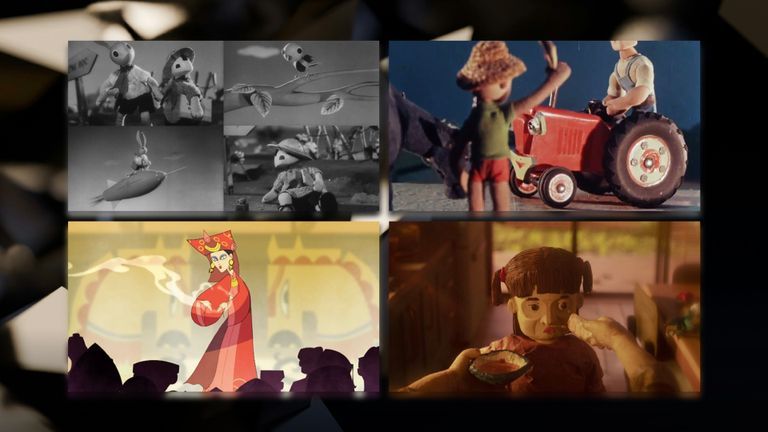
Nguồn: Tổng hợp
Every year on October 28, World Animation Day invites cinephiles to look beyond mainstream studio hubs and explore how different cultures breathe movement into art. While global conversations routinely revolve around Japan, France, or the United States, Vietnam harbors one of the most resilient and visually distinctive animation lineages in Southeast Asia.
Born under the austere conditions of wartime, nurtured through folklore, and today bursting with independent voices, Vietnamese animation offers international audiences a rich cinematic journey. Here is the essential context on how the medium began, what defines its voice, and where you can stream its most iconic historic and modern works today.
The Wartime Genesis: Cinema Born From Kerosene And Natural Light
Vietnam’s animation history is an extraordinary testament to artistic tenacity. The formal industry took root in late 1959, when Vietnam’s first animation training class assembled in Hanoi, culminating in the release of the nation’s debut short, Đáng đời thằng cáo (Serves the Fox Right), in 1960. Its founding directors—including Lê Minh Hiền, Trương Qua, and Ngô Mạnh Lân—studied at Moscow’s legendary Soyuzmultfilm studio, while directors like Nguyễn Tích trained in Czechoslovakian puppet stop-motion.
Returning to a homeland consumed by war, these animators faced severe shortages of basic artistic equipment. Lacking standard celluloid acetate sheets, they improvised by soaking thin pelure paper in kerosene to achieve transparent layering, tracing each frame against windowpanes illuminated solely by northern daylight.
In improvised jungle shelters and bomb-evacuated facilities between 1959 and 1975, the studio produced 47 completed films spanning hand-drawn, paper cut-out, and puppet animation. Rather than settling for blunt political slogans, early pioneers prioritized visual poetry and traditional folk arts, an approach that earned early international honors such as the Silver Pelican at Romania’s Mamaia Festival for Ngô Mạnh Lân’s Mèo con (The Kitten, 1965).
Unearthing The Classics: Where to Watch Vietnam’s Early Gems
For foreign viewers interested in vintage aesthetics, Vietnam’s mid-century animation offers a fascinating blend of Soviet-era character expressiveness and traditional folk art, characterized by flat paper puppets and rich mythological themes.
The country’s crowning stop-motion achievement from this era is Chuyện ông Gióng (The Legend of Saint Gióng, 1970), which recounts a legendary child hero who grows into a giant to protect his homeland. Another seminal visual achievement is Trương Qua’s Chiếc vòng bạc (The Silver Bracelet, 1962), a tender tale told through intricate paper cut-out animation.
While high-definition restorations remain scarce in international distribution, international audiences can find many of these historic black-and-white and early color films archived on YouTube. The official channel of the Vietnam Animation Studio (Hãng Phim Hoạt Hình Việt Nam / Phim Hoạt Hình Việt Nam) and dedicated preservation channels such as Vietnam Classical Cartoon host original cuts of Đáng đời thằng cáo, Mèo con, and Chuyện ông Gióng. In addition, international animation history publications like Animation Obsessive have documented these wartime productions with English-language retrospectives and visual breakdowns.
The Studio Boom: From Global Assembly Line To Cultural Sovereign
Following the economic opening of the 1990s, Vietnam leveraged its foundational technical literacy to become a dependable outsourcing destination for prominent overseas studios. Today, that technical apprenticeship has grown into an expansive, modern infrastructure. Data from the Vietnam Animation and Visual Effects Association (VAVA) records 54 active studios employing over 4,700 specialized artists nationwide, with more than 60 percent contributing directly to international co-productions and foreign pipelines.
More crucially, the past decade has marked a decisive shift from uncredited subcontracting toward original intellectual property. The commercial spectrum is wide and ambitious.
Sconnect: Building A Global Digital Presence
Sconnect represents another side of Vietnam’s animation industry: the rise of digital-first entertainment built for international audiences. Its flagship property, Wolfoo, follows a young wolf and his friends through everyday adventures designed for preschool viewers. Distributed across multilingual online channels, the series illustrates how Vietnamese studios can develop original characters for a global children’s market, where accessibility, repeat viewing, and a recognizable visual identity are central to reaching audiences.
Beyond Wolfoo, Sconnect’s portfolio includes WOA Luka, a clay-animation series focused on children’s social and life skills, as well as projects aimed at older audiences, such as Tiny Claymixer and Max’s Puppy Dog. The range points to a business model that extends beyond producing individual films: building character-led properties that can travel across languages, formats, and audience segments. While its output differs considerably from the festival-oriented work of independent auteurs, Sconnect demonstrates how Vietnam’s animation sector is developing the commercial infrastructure to sustain original content at scale.
Sun Wolf: Reimagining Vietnamese Folklore
Where Sconnect looks toward scalable digital entertainment, Sun Wolf Animation Studio builds its original projects around Vietnamese folklore and cultural memory. Its animated short U Linh Tích Ký: Bột Thần Kỳ (2021) introduces a supernatural world inspired by Vietnamese spiritual beliefs, mythology, and folk traditions. The film was selected for the international competitions at the Seattle International Film Festival and the Stuttgart International Festival of Animated Film, bringing this distinctly local imaginative universe to international festival audiences.
Sun Wolf has continued to develop that universe beyond the screen, including through the U Linh Tích Ký: Leng Keng comic series. Another ambitious project, Tản Viên Phong Châu, draws on the Sơn Tinh–Thủy Tinh legend, reworking one of Vietnam’s best-known myths for contemporary animation. The studio’s wider work also includes Con Rồng Cháu Tiên: Chuyện Chưa Kể (2017), a project inspired by the Vietnamese origin myth of the Dragon and the Fairy. Together, these projects reflect a sustained effort to turn familiar cultural references into expandable fictional worlds, rather than treating folklore solely as material for retelling old stories.
DeeDee Animation Studio: From Cyberpunk Grittiness To Silk Documentaries
Hanoi-based DeeDee Animation Studio moves fluidly between hard-hitting narrative experiments, cultural history, and razor-sharp comedic timing.Their standout sci-fi project, Tàn Thể: Tiền Truyện (Broken Being: Prequel), reveals a capacity for mature, atmospheric worldbuilding. Set in a post-apocalyptic future defined by biomechanical experimentation and psychological isolation, the short garnered widespread festival acclaim for its fluid action choreography, moody neo-noir art direction, and dark cinematic pacing.
At the opposite end of the tonal spectrum lies DeeDee’s groundbreaking venture into animated non-fiction: Hoàng Thị Thế: Fate & Destiny. Formatted as Vietnam’s first animated documentary project, the film recounts the extraordinary life of Hoàng Thị Thế, the daughter of the historic anti-colonial insurgent leader Hoàng Hoa Thám. Instead of conventional realism, the studio renders her story through an art style inspired by classical Vietnamese silk painting (tranh lụa), transforming historical record into a moving canvas of fragile, poetic brushwork.
Beyond their dramatic opuses, DeeDee is celebrated for witty, self-aware comedic shorts and commercial storytelling that showcase a distinctly modern Vietnamese sense of humor. Viewers can explore their comprehensive portfolio directly on DeeDee Animation Studio’s official YouTube and Vimeo channels, where major original releases are presented with English subtitles.
The Independent Spirit: Auteurs, Mythmakers, And Outsider Art
Alongside full-service studios runs a vibrant current of independent filmmakers whose work bypasses industrial conventions to speak directly from personal vision. In the international festival circuit, director Mai Vũ achieved global recognition when her stop-motion short Giấc mơ gỏi cuốn (Spring Roll Dream) was selected for Cannes’ La Cinef, capturing intergenerational immigrant alienation through tactile, hand-molded puppets and the quiet ritual of making traditional spring rolls.
Equally striking is the auteur voice of Hachul Lê Đỗ, whose acclaimed short Sự tích Trần Thanh Dương (The Tale of Tran Thanh Duong)—featured on the arthouse streaming platform MUBI—boldly reclaims indigenous myth to investigate contemporary gender identity and duality. Set in an allegorical world where men are fish and women are shrimp, the film pairs a hypnotic aesthetic with traditional Xẩm and Chèo theatrical singing to examine what it means to exist outside rigid societal binaries.
Yet some of the most vital creative energy in Vietnam thrives entirely outside the festival and commercial mainstream. A figure in this grassroots space is the independent creator known as KAAK TUN. Working for years with obsessive dedication, KAAK TUN is Vietnam’s natural analog to outsider internet animators like China’s Niu Lai—artists who work independently on shoestring setups, turning rough edges and offbeat aesthetics into an artistic signature.
Rejecting the hyper-polished, corporate visual formulas common to commercial children’s media, KAAK TUN crafts animated shorts that are irreverent, spontaneous, and bursting with local wit. From absurd situational parodies to poignant observations on everyday hardship and family ties, these shorts connect deeply with millions of viewers because they feel genuinely human and unvarnished. KAAK TUN’s extensive archive on YouTube serves as a compelling reminder that animation does not require multi-million-dollar budgets to possess a soul; sometimes, an unmistakable voice and an idiosyncratic pencil stroke are more than enough.
How To Explore The Scene Today?
For foreign cinephiles celebrating World Animation Day, engaging with Vietnamese animation has never been more straightforward. The transition from physical celluloid to digital platforms means that the majority of significant works live openly on YouTube, Vimeo, MUBI, and Facebook, frequently equipped with community and studio-provided English closed captions.
Approaching Vietnamese animation today means encountering a culture that has preserved its poetic roots while aggressively embracing digital reinvention. It is an industry shaped by the ingenuity of artists who once traced drawings over kerosene-stained paper by the sun, now carried forward by a fearless generation making their mark on global screens