How R&B Found Its Voice In Vietnam: From Mỹ Linh’s Tóc Ngắn To The Global Rise Of Vietnamese R&B
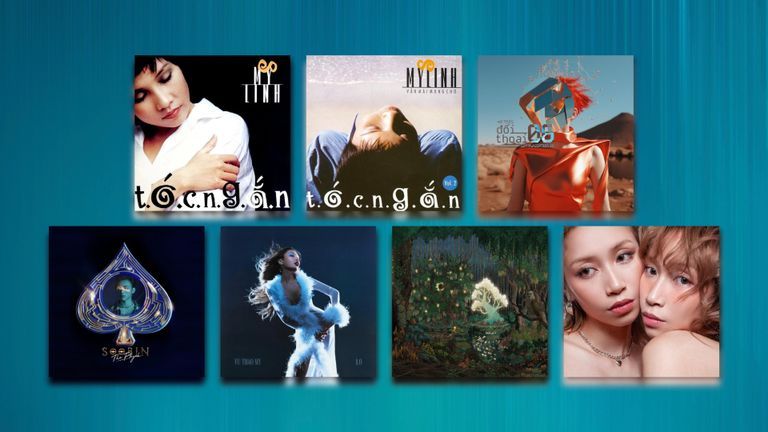
Source: Collected / Designed by Thúy Anh for Vietcetera
R&B has travelled across generations and music markets, continually evolving as artists bring the genre into different cultural contexts. Originating in African American communities in the United States, it grew from blues, gospel and jazz before developing into diverse forms that intersect with Soul, Funk, hip-hop and electronic music. As it travelled beyond its place of origin, R&B was not simply reproduced in the same form. Musicians adapted its rhythms, vocal styles and production to their own languages, audiences and musical traditions.
Vietnam has its own story of this musical exchange. In the late 1990s, Vietnamese artists and producers began experimenting with R&B, Soul and Funk influences, bringing new sounds into mainstream pop. Among the projects that helped introduce these influences to a wider audience was Mỹ Linh’s 1998 album Tóc Ngắn. Nearly three decades later, the album has found renewed attention among younger listeners, following a performance of its title track on the television music show Anh Trai Vượt Ngàn Chông Gai 2026. The response raises a broader question: how has R&B developed in Vietnam, and how are younger artists making the genre their own?
A Generation Of Musical Experimentation
The late 1990s and early 2000s were a period of change for Vietnamese pop. As the domestic music industry developed, a generation of singers, songwriters and producers began looking beyond familiar pop arrangements, drawing on international influences to explore new sounds. R&B, Soul and Funk were part of this shift, but they existed alongside other forms of musical experimentation.
Mỹ Linh and Hà Trần were two prominent voices in this broader movement, each taking a different creative direction. Mỹ Linh’s collaboration with producer Anh Quân and the Anh Em band brought R&B, Soul and Funk influences into a more accessible pop format. Before this transition, she was already known for songs such as “Trên Đỉnh Phù Vân” and “Chị Tôi”. Her 1998 album marked a significant shift in her musical identity, with rhythmic arrangements, expressive vocals and a band-driven sound that stood apart from much of the mainstream pop of the time.
The album was not simply an attempt to reproduce an international style. Its arrangements combined R&B, Soul and Funk influences with Vietnamese lyrics and melodic sensibilities. The result made these sounds more familiar to mainstream listeners, even as the project initially faced resistance from parts of the music industry.
Hà Trần, meanwhile, explored a more electronic and atmospheric direction with . Moving between trip-hop, ambient and chillout, the album incorporated elements of Soul and Jazz into electronic arrangements. It brought together five songs by veteran songwriter Trần Tiến and two by younger composer Nguyễn Xinh Xô, creating a musical conversation between generations. Arranged by Thanh Phương, with contributions from American sound engineers and producers, the album also combined Vietnamese musical influences with Western electronic production. Rather than following the conventions of mainstream pop, Hà Trần used these sounds to create a more atmospheric and experimental listening experience.
Their approaches were distinct, but both artists demonstrated that Vietnamese pop could accommodate a wider range of musical influences and creative ambitions. Alongside them, producers such as Huy Tuấn, Đức Trí and Võ Thiện Thanh helped bring contemporary arrangements and international sounds into the work of other singers, including Thu Minh and Hồ Ngọc Hà.
Within this wider period of experimentation, Tóc Ngắn became a particularly visible milestone for R&B. The project continued with in 2000, further developing the musical direction established by the first album. Its renewed attention today suggests that the album’s appeal extends beyond nostalgia. It still offers younger listeners a point of discovery, while reminding them that Vietnamese pop has long had its own history of musical experimentation.
From The Mainstream To A More Diverse R&B Landscape
By the 2000s and 2010s, R&B influences had become more visible across Vietnamese pop. JustaTee helped connect the genre with the emerging underground hip-hop scene, while Hoàng Tôn, Đinh Mạnh Ninh and MIN brought elements of R&B into more accessible pop songwriting. SOOBIN Hoàng Sơn later explored the space between R&B and pop through polished production and performance, as heard in his . Rather than belonging to a single scene, R&B had become a musical influence that artists could incorporate into different styles and identities.
R&B Today: One Genre, Different Artistic Identities
For contemporary Vietnamese artists, R&B is rarely a fixed formula. It can provide a foundation for expressive vocals, a framework for personal songwriting or one element within a broader mix of genres.
Mỹ Anh approaches R&B and Soul through her own musical interests, combining expressive vocals, songwriting and contemporary production. Her debut album, , explores personal experiences and emotions through a modern R&B/Soul sound. Her work shows how the genre’s musical language can become a vehicle for individual expression.
Vũ Thảo My also explores the intersection of R&B and pop through her album , which features Vietnamese and English-language songs. Produced in collaboration with musician Anh Quân, the project creates an interesting link between an established producer associated with earlier R&B experiments and a younger artist developing her own musical identity.
GREY D offers a different interpretation, incorporating R&B-inflected vocals and atmospheric production into contemporary pop. His illustrates how R&B can contribute to a broader artistic project without defining its entire sound.
These musicians do not represent a single Gen Z sound. Their approaches differ in songwriting, production and performance, but they share the freedom to draw from R&B while combining it with other influences. Independent artists and smaller music communities also contribute to this diversity, even when their work receives less mainstream attention.
What Does It Mean To Make R&B Vietnamese?
From Mỹ Linh’s Tóc Ngắn to contemporary artists, Vietnamese R&B has never been a single, fixed sound. Each generation has adapted international influences to its own creative environment, whether through band arrangements, studio production or genre-blending songwriting.
The renewed interest in Tóc Ngắn offers a reminder that musical experimentation can outlast its original moment. Nearly three decades later, younger listeners are discovering a piece of Vietnamese music history while contemporary artists continue to reinterpret R&B in their own ways. The result is not one definitive Vietnamese R&B sound, but an evolving conversation between global influences and local sensibilities.