Is Vietnam Still an Affordable Place to Live? What the 2026 Expat Index Tells Us
Source: Báo Lao Động
For five consecutive years, Vietnam held the top position in InterNations’ Personal Finance Index, retaining the title in 2025. The results reflected a familiar advantage: many expatriates found that their income went further in Vietnam than it would in their home countries. In the 2025 survey, 89% of respondents were satisfied with the cost of living, while 87% said their disposable household income was enough, or more than enough, to live comfortably.
Vietnam was absent from the 2026 ranking, which placed Panama first, followed by Thailand and Mexico, with Malaysia in fifth place. That absence should be read carefully. InterNations included 31 destinations in its 2026 report, each requiring at least 50 survey respondents. Vietnam did not meet that threshold. Its omission is not evidence that affordability has deteriorated, nor does it establish that expatriates are leaving the country.
Still, the change offers an opportunity to look beyond the rankings. Vietnam’s reputation as a budget-friendly destination is well established, but the experience of living here has become more complicated than a simple calculation of rent, groceries and disposable income. Housing in sought-after districts, imported products, international education and private healthcare can be expensive. Meanwhile, the country continues to offer a kind of everyday convenience and variety that is harder to capture in a cost-of-living table.
For expatriates considering a move, or those already settled here, the more useful question is not whether Vietnam is still cheap. It is what kind of life the country makes possible.
Earning in One Currency, Spending in Another
Vietnam’s affordability has always depended partly on the relationship between income and expenditure. For expatriates earning in stronger foreign currencies, the difference can be substantial. Housing, meals, domestic services and everyday transport may cost considerably less than comparable services in many Western cities. A comfortable lifestyle can therefore be accessible without requiring the level of income needed elsewhere.
But this picture changes when the lifestyle itself becomes more international. A modern apartment in Thao Dien, District 7 or Tay Ho may come with rents that compare less favourably with local housing. Imported groceries, international school fees, private medical consultations and specialist treatment can also take a significant share of a household budget. Families with children, people managing complex healthcare needs, and those who prefer familiar imported products may find that Vietnam is not the inexpensive destination they initially imagined.
The distinction is not simply between local and foreign consumption. It is also about location, expectations and personal circumstances. Someone who shops at neighbourhood markets, eats regularly at local restaurants and uses locally available services will encounter a different cost structure from someone who recreates a largely imported lifestyle. Neither approach is inherently better, but they produce very different calculations of affordability.
That is why national cost rankings can be useful without being definitive. They offer a broad indication of how expatriates experience their finances, but they cannot tell every household what its own life will cost. Vietnam remains relatively accessible in many everyday categories. It is less consistently affordable when the requirements become specialised, premium or dependent on international standards.
The Everyday Part
The strongest case for living in Vietnam may lie in the ordinary routines that rarely appear in an index. In many urban neighbourhoods, food stalls, small restaurants, coffee shops, pharmacies, groceries, repair services and other daily necessities sit within a short distance of home. Delivery services and ride-hailing have made that network even easier to use. A meal can be bought without planning ahead; a minor household problem can often be dealt with through a nearby service provider; and daily errands do not always require a car or a carefully organised trip.
The advantage is not merely that these things cost less. It is the combination of proximity, flexibility and choice. In a city such as Ho Chi Minh City, a resident may move between a traditional market, a family-run eatery, a modern shopping centre and a specialist coffee shop in the course of a single day. Hanoi offers a different rhythm, with its established neighbourhoods, street-level commerce and distinct food traditions. The experience is not uniformly convenient: traffic, heat, rain and uneven infrastructure can make short journeys frustrating. But the density of everyday services gives many residents options that would be less readily available in more spread-out cities.
Food is an especially important part of this experience. Vietnam’s culinary culture extends well beyond the familiar dishes that appear on tourist menus. Regional specialties, seasonal ingredients, neighbourhood eateries and contemporary restaurants offer a wide range of ways to eat. For residents willing to explore, variety does not necessarily require a large budget. A good meal can be part of an ordinary weekday rather than an occasion reserved for the weekend.
The social character of street-level life also shapes the experience. Cafés, markets, small businesses and neighbourhood restaurants create frequent opportunities for informal contact. InterNations’ 2024 findings reflected some of this appeal: around 85% of surveyed expatriates said they felt welcome, while 88% appreciated the friendliness of local people. Vietnam ranked fifth globally in the Local Friendliness category.
Those figures are encouraging, although friendliness should not be confused with effortless integration. Being welcomed into a neighbourhood is not the same as building close relationships, understanding local social expectations or becoming fluent in the language. Expatriates may find daily interactions warm while still encountering cultural and linguistic barriers. The figures describe an important part of the experience, not the whole of it.
A City Mid-Transformation
Vietnam’s appeal is also connected to the fact that its major cities are still changing. Ho Chi Minh City and Hanoi are expanding commercial districts, attracting investment and developing services for a growing domestic consumer market. New cafés, restaurants, retail spaces, offices and residential areas are appearing alongside older neighbourhoods and long-established businesses. The result can be uneven and sometimes chaotic, but it gives urban life a sense of movement.
For expatriates, this creates opportunities as well as inconveniences. A growing economy can offer openings in business, education, technology, professional services and entrepreneurship. The expanding local market also means that many new services are designed for Vietnamese consumers rather than exclusively for foreign residents. This matters: a city becomes easier to live in when its infrastructure and commercial life serve the people who actually live there, not just a temporary international population.
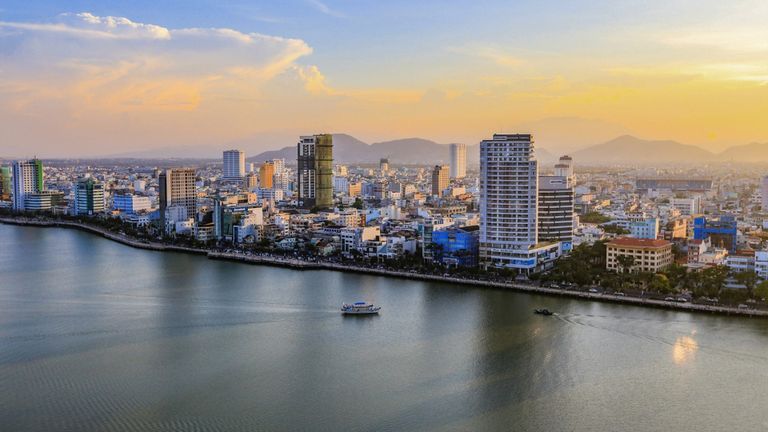
The transformation is not confined to the largest cities. Da Nang offers a different balance of urban services, coastal access and a more manageable scale. Smaller cities and provincial areas can provide a slower pace, although they may offer fewer specialised services and less choice in international education or healthcare. Vietnam is not one uniform expat destination. The practical experience of living in Hanoi, Ho Chi Minh City, Da Nang or a smaller town can be markedly different.
That diversity gives people room to choose a setting that suits their priorities. Some may prefer the professional networks and commercial scale of Ho Chi Minh City; others may value Hanoi’s cultural life or Da Nang’s proximity to the coast. The trade-offs are real, but the range of possible lifestyles is part of the country’s appeal.
Healthcare, Air and Paperwork
The limitations become clearer when daily life depends on systems that require consistency and long-term reliability. Healthcare is one of the most important examples. Vietnam has a substantial public healthcare system and a growing private sector, with private hospitals and clinics offering services that are more accessible to English-speaking expatriates in major cities. Yet quality, specialist capacity and continuity of care can vary. Public hospitals may be crowded, while private treatment, particularly for complex conditions, can become expensive.
InterNations’ 2024 survey reflected this more mixed experience: 54% of respondents rated the quality of medical care positively, compared with 66% globally. The difference suggests that healthcare remains an area where Vietnam has work to do, especially for residents who need specialist treatment or dependable long-term care. Anyone relocating with significant medical needs should assess available facilities and insurance coverage before making the move, rather than assuming that low everyday costs will extend to healthcare.
Air quality is another concern that can shape ordinary routines. Hanoi and Ho Chi Minh City experience periods of poor air quality, with fine particulate pollution linked to traffic, construction, industrial activity and regional sources. In InterNations’ 2024 Environment & Climate subcategory, Vietnam ranked 51st out of 53 destinations for air quality. For residents, this can affect outdoor exercise, commuting, children's activities and decisions about where to live.
Administrative processes can also require patience. Digitisation has improved access to some public services, but immigration, employment, banking and housing procedures may still involve documentation, coordination and uncertainty. The experience differs depending on the city, employer and individual circumstances. For expatriates accustomed to predictable, streamlined systems, these tasks can become a recurring source of friction.
These are not minor inconveniences that can be dismissed because other aspects of life are affordable. Healthcare, clean air and reliable public services affect residents regardless of nationality or income. Improvements in these areas would strengthen Vietnam’s appeal not only to expatriates but also to the people who live and work here permanently.
The Neighbours Aren’t Standing Still
Vietnam is part of a region where several destinations offer distinct advantages. Singapore provides highly developed public transport, institutional predictability and a strong international business environment, but at a substantially higher cost. Bangkok combines a large urban economy, established expatriate networks and a well-developed private healthcare sector. Kuala Lumpur offers an English-language environment, international schools and private medical services at costs that can remain competitive.
These are not interchangeable destinations, and the choice depends on what a household values most. Someone prioritising public infrastructure and administrative consistency may prefer Singapore. Another person may find Bangkok’s established international community and healthcare options more suitable. Kuala Lumpur may appeal to families seeking English-language education and a relatively accessible cost structure.
Vietnam offers a different proposition. It can be particularly attractive to people who value neighbourhood-level convenience, food culture, an evolving urban economy and the opportunity to participate in a society undergoing rapid change. Those advantages do not erase the challenges, just as the strengths of neighbouring countries do not make their own trade-offs disappear. Southeast Asia is better understood as a range of different ways to live than as a competition with a single winner.
From Cheap to Liveable
Vietnam’s position in the 2026 Expat Index should not be treated as a verdict on its future. The country’s absence from the Personal Finance ranking reflects a survey sample requirement, not a demonstrated reversal of its affordability advantage. Its previous five-year record remains significant, but it does not guarantee that every expatriate will find life here inexpensive or straightforward.
For those deciding whether to move, the more useful exercise is to calculate costs against actual needs: housing in the intended neighbourhood, school fees, healthcare, transport and the lifestyle a household expects to maintain. For those already living in Vietnam, the question may be less about whether the country is still a bargain and more about whether its advantages continue to outweigh the compromises.
A place can be affordable without being easy to live in. It can also be worth living in without being cheap in every category. Vietnam’s appeal often emerges from the relationship between its costs and the texture of everyday life: the convenience of a neighbourhood, the range of food available, the accessibility of local services, the social life of its streets and the possibilities created by a changing economy.
Affordability may have put Vietnam on the map. But for those who choose to stay, the more compelling question is not how little life here costs, but how much life there is to experience.