Nguyen Phuoc Khanh: The Man Who Doesn’t Direct Shows, But Designs What Remains
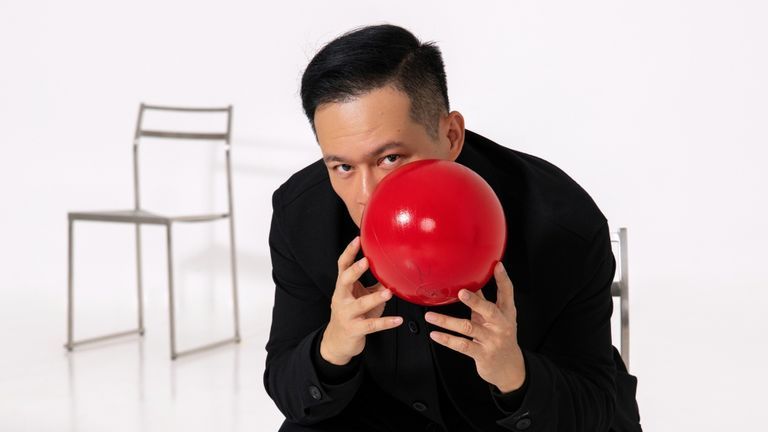
Source: Photographer Tran Thanh Thao and the No2 Studio team
Nearly two decades ago, when the events industry was largely measured by the scale and spectacle of a single night, Nguyen Phuoc Khanh chose a different path — one that began with a question few others were asking: Is an event that runs smoothly the same as one that truly leaves something behind?
It would take far more space than this article allows to list all the projects Khanh has worked on. From corporate events and artistic productions to MICE experiences, Nguyen Phuoc Khanh has consistently pursued one belief: "We don’t create events. We create experiences."
That perspective has guided Khanh and 2RES Event Agency through nearly 20 years of disciplined craft, resilience, and a belief in sustainable creative value. For every project, he follows one standard: every touchpoint must be clear, consistent, and refined enough to withstand scrutiny down to the smallest detail, what he calls “high resolution.”
As the Founder & CEO of 2RES Event Agency, Khanh also takes on the role of Live Experience Director, an approach that places the audience’s entire journey and emotional experience at the heart of every event.
In 2026, he and the 2RES team were recognized at The Marketing Events Awards in Singapore, marking a significant milestone for a Vietnamese event agency on the Asia-Pacific stage.
Audiences rarely see the experience blueprint, the countless rehearsals, or the hundreds of decisions made behind the scenes. But for Nguyen Phuoc Khanh, it is precisely these unseen details that shape what audiences ultimately feel. And after 20 years in the industry, this remains the question he continues to pursue: What should an event do for a brand beyond simply running successfully?
To understand that answer, perhaps we should begin with a moment that remains deeply personal, a moment Khanh still remembers vividly after nearly two decades.
There is one question Nguyen Phuoc Khanh has never been asked throughout his nearly 20 years in the industry: Which moment still gives you goosebumps whenever you think back on it?
He paused for a long time before answering.
“It was one evening when the stage lights had just gone out. It wasn’t a technical issue. It was a deliberate decision written into the script, three seconds of complete silence among hundreds of people. No music. No host. No visual effects. Just darkness, and a face slowly appearing on the giant screen.
At that moment, my intention was simple: I wanted to capture the audience’s emotions and curiosity. Those three seconds of silence were a test, silence in a crowd always creates a certain tension. And that empty space forces people to pay attention, to wonder what is about to happen next.
I stood in the technical control area, watching the countdown clock and holding my breath as if it were my first day in the industry. For those three seconds, the entire room fell silent in the same rhythm.
It was only later, looking back, that I realized what I had created. Those three seconds were not merely a staging technique. They were the first time I truly created a live experience for an audience, a moment when they were not just watching, but genuinely experiencing it with us.”
That realization, born from a small stage experiment, gradually became the guiding principle of his career: an event has never been the destination. An event can end on time, follow the script, and stay within budget, but what a brand truly needs is not simply a successful evening. It is for attendees to carry with them emotions, images, and messages that linger long after the lights have gone out.
Before Becoming A CEO
Before becoming the CEO behind nearly two decades of 2RES, Khanh was once a young person standing backstage at a major production, not because he dreamed of working in events, but simply because he needed a job.
His biggest fear at the time was simple: that he was just an unnecessary piece in the machine - someone replaceable.
The events industry had no clear educational path. There was no degree that could prove someone’s ability. The only way to learn was by being in the right place, at the right moment, and making sure nothing went wrong.
Then one evening, just before a show began, a piece of equipment malfunctioned. Khanh watched the entire team handle the crisis within minutes. The audience below never knew anything had happened. That moment changed something in him.
He realized this was not just behind-the-scenes logistics. It was a profession that required judgment, composure, and responsibility. Years later, another question began following him. He had worked on events that were executed perfectly - the schedule was right, the process was right, everything went according to plan. Yet one week later, nobody remembered anything.
That question became the beginning of a belief: An event could be more than what the market expected it to be. And that belief eventually became the foundation of 2RES.
I didn’t establish 2RES because I believed we could do things better than everyone else. I built it because I believed an event could leave something behind in people, instead of simply passing by in one evening.
The Cost Of Saying No
The journey of 2RES has been shaped not only by what Khanh chose to pursue, but also by what he chose to reject. One of the company’s earliest turning points came when Khanh and his team decided to stop accepting every project simply because “there was a brief.”
They began becoming more selective. Instead of starting with:
“What do you want us to produce?” They started with: “What problem does your brand need to solve?”
That decision led Khanh to a belief that, by his own admission, cost 2RES many potential contracts: A bigger budget does not automatically create a better experience.
“Many clients come to us believing that if they invest more money, the experience will automatically become better. But I have seen too many large-scale events with enormous budgets where nobody remembers a single detail after a week. At the same time, I’ve seen smaller productions create genuine emotional connections that stay with people for years.”
“The difference is not the number on the budget. It is whether every touchpoint has been intentionally designed.”
That belief came with a price.
“There was a period when I turned down a very large project because the client only wanted a spectacular evening. They were not interested in discussing what that experience would leave behind for their brand.”
“In the short term, we walked away from significant revenue. But I believed that if we accepted it, we would only be selling time and manpower, not practicing the craft we truly believed in.”
For Khanh, this is what “high resolution” means: caring about every small detail.
From the way a guest is welcomed at the entrance, to the atmosphere they feel when they step into the space. Because in his view, an experience is not created by one grand moment. It is built through hundreds of small decisions that people may never consciously notice, but will remember emotionally.
A Philosophy That Became A Profession
In the events industry, the person responsible for leading creative direction, technical execution, and overall production is often referred to as an Event Director or Show Director - titles borrowed from theater and television.
But at some point, Nguyen Phuoc Khanh realized those titles no longer fully described the work he was actually doing.
“An Event Director answers one question: Does the show run according to the script? Does it start on time? Does it follow the process?”
“Those are operational questions. They focus on what happens on stage.”
“But the real work my team and I do goes beyond that. It is about designing the entire experience journey from the moment someone enters a space, interacts with the content, feels the atmosphere, and eventually leaves the event. Every moement throughout that journey needs to be intentionally designed.”
In the events industry, the role overseeing the entire creative, technical, and operational team is often referred to as an Event Director or Show Director, titles borrowed from the worlds of stage and television. But at a certain point, Khanh realized that these titles no longer fully described the work he was actually doing.
“An Event Director answers a set of questions: Is the show running according to script? Is it on time? Is everything following the right process? These are operational questions, and they tend to focus on what happens on stage. But the work my team and I actually do goes beyond that. It is about designing the entire experience journey - from the moment a guest enters the space, interacts with the content, and experiences the atmosphere, to the moment they leave. Every moments along that journey needs to be designed with intention.”
That realization led Khanh to define his role at 2RES as Live Experience Director. He explains this perspective through an analogy with the resolution of a photograph: a low-resolution image may look beautiful from a distance, but once enlarged, the details begin to break apart. Many events work the same way. From afar, they may appear impressive, but when examined closely, the smaller touchpoints can lack consistency.
For Khanh, “high resolution” means paying attention to even the smallest details - from the way a staff member greets a guest to the atmosphere they feel when they first walk through the door.
This way of thinking eventually led a 2RES project to win at The Marketing Events Awards 2026 in Singapore - an international recognition of a philosophy that is inherently difficult to quantify.
The Legacy Lives In The First Question
If he were to start over today, Khanh says there are many things he would do differently - operations, technology integration, even his approach to people management in the early years. But one thing he would never alter: the unwavering conviction that an event is never the end goal, but a medium to build something that lasts.
“The tools of the trade will continue to evolve. But the question I ask after the lights go out - ‘What will people carry away with them?’ - is one I know I would ask in exactly the same way, no matter when I started.”
And if there is one message he wants to leave for the next generation of Live Experience Directors at 2RES, the ones who will write the chapters ahead, he points back to that three-second silence in the dark from the beginning of the story.
"In some professions, success is measured by revenue. In ours, I believe it should be measured by the number of times a stranger in the crowd sheds a tear over something genuine, rather than a stage gimmick...
My only wish for the next generation is to hold onto one fundamental rule: Never ask 'how do we make this grander?' before asking 'what will this leave behind?' If you keep those questions in the right order, everything else technology, budgets, scale will serve as tools to support the purpose, and never be mistaken for the purpose itself.
About 2RES
2RES is an event and brand experience agency with nearly 20 years of experience in corporate events, entertainment, arts, and MICE experiences in Vietnam.