Property Prices Decline In Q2 2026
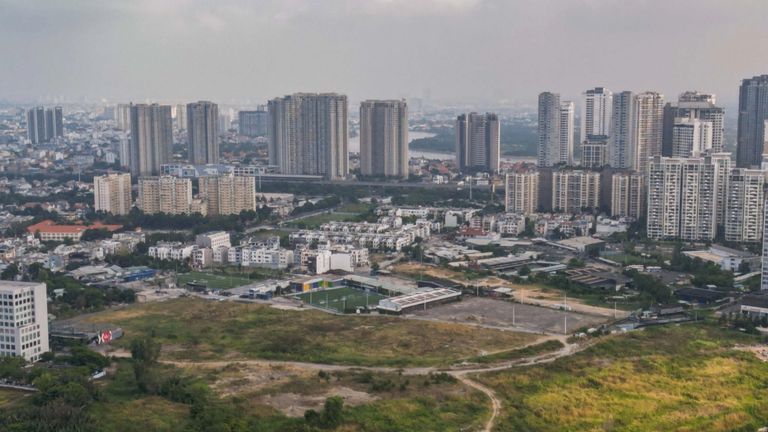
Property asking prices declined in the first half of 2026. | Source: VnExpress
According to PropertyGuru Vietnam's real estate market report, asking prices for several residential property segments declined in the second quarter of 2026. Detached houses and shophouses recorded the sharpest declines, while apartment prices remained largely unchanged.
Market experts said the adjustment has not significantly affected overall price levels. Instead, the modest correction reflects greater buyer caution as borrowing costs remain high and affordable housing remains in short supply.
Asking Price Declined By 6.5%
According to PropertyGuru, asking prices for detached houses fell 6.5% to VND130 million (US$ 4,942) per square meter in the first quarter. Shophouse asking prices dropped 5.6% to VND202 million (US$ 7,680) per square meter. Villa prices declined 3.3% to around VND148 million(US$5,627) per square meter, while land plots lost nearly 2.5% to about VND40 million (US $1520) per square meter. Apartment prices were unchanged at around VND70 million (US $2,661) per square meter.
The trend was also reflected in other market reports. CBRE said apartment price growth in Ho Chi Minh City continued to slow in the second quarter. At the same time, DKRA Consulting reported that resale prices across multiple property segments fell by 3% to 6% from the previous quarter.
The adjustment was concentrated in high-value properties and homes owned by investors under financial pressure, who lowered asking prices to recover capital and reduce borrowing costs.
Cao Thi Thanh Huong, Deputy Director of Research and Consultancy at Savills Ho Chi Minh City, said the adjustment reflected mounting macroeconomic pressures, particularly persistently high mortgage rates. Deposit rates exceeding 9% have pushed mortgage rates to around 15–16%, putting significant pressure on borrowers.
Higher borrowing costs have made home loans less affordable, weighed on buyer sentiment and slowed investment decisions, resulting in more cautious market activity.
Limited new supply has added to the pressure. Affordable housing remains scarce, leaving a persistent mismatch between supply and demand.
A Market Adjustment, Not A Downturn
According to market experts, the correction has had little impact on Vietnam's property market.
Do Thi Thu Hang, Senior Director of Research and Consultancy at Savills Hanoi, said overall price levels remain high, suggesting the market has yet to undergo any meaningful price correction.
The decline has been largely confined to the secondary market, where properties are resold between buyers rather than purchased directly from developers.
Primary-market prices remain elevated, supported by high development costs and a supply pipeline dominated by Grade A (high-end) and Grade B (mid-to-high-end) projects. While new supply continues to expand, affordable housing remains in short supply.
According to Dinh Minh Tuan, Southern Regional Director at PropertyGuru Vietnam, this is the first time most property segments have recorded price declines simultaneously after a prolonged period of rapid growth.
However, he also said the adjustment reflects a market rebalancing rather than the start of a broad-based downturn. Capital is no longer chasing the rapid price gains seen in 2021-2022. Instead, it is flowing into properties backed by end-user demand, clear legal status and infrastructure-driven growth.
Outlook For The Second Half Of 2026
Looking ahead to the second half of the year, market observers expect the recovery to become more selective. The outlook will depend largely on interest rates and access to credit for both developers and homebuyers.
In Ho Chi Minh City, Cao Thi Thanh Huong, Deputy Director of Research and Consultancy at Savills Ho Chi Minh City, said demand remains resilient. Capital continues to flow into projects with strategic locations, clear legal status and strong infrastructure prospects. New project launches are expected to pick up in the coming months. Developers are also more likely to introduce more flexible sales incentives to support buyers.
In Hanoi, demand is gradually shifting away from the city centre toward suburban areas, where homes are more affordable. The trend has been reinforced by infrastructure expansion and the city's ongoing urban development.
Do Thi Thu Hang, Senior Director of Research and Consultancy at Savills Hanoi, said that from 2027, Hanoi is expected to see a significant increase in new supply, with a broader range of housing projects concentrated along key transport corridors. The affordable housing segment is also expected to expand, helping meet strong end-user demand and improve the market's supply-demand balance.
While prices have begun to moderate, analysts expect the market to remain driven by real demand and long-term fundamentals rather than short-term speculation.