The Land Law Is About To Change: What Should Real Estate Investors Prepare For?
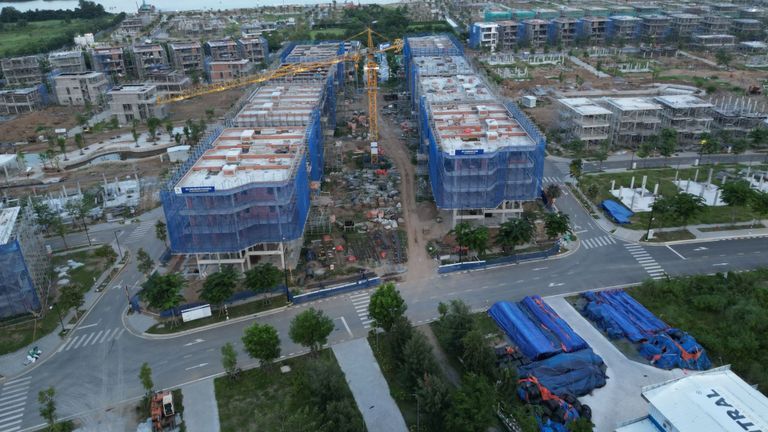
Source: Kushie In Vietnam/Pexels
On 28 July 2026, the Party Central Committee issued Resolution 21-NQ/TW on the views and directions for amending the Land Law and related laws (“Resolution 21”). The resolution replaces Resolution 18-NQ/TW of 2022 (“Resolution 18”) and calls for a coordinated review and amendment of the laws on investment, bidding, planning, construction, housing, real estate business, public assets and tax. On 13 August 2026, the Government issued Resolution 229/NQ-CP on the plan to implement Resolution 21, placing the amended Land Law, Real Estate Business Law and Housing Law on the 2026 legislative programme, with implementing guidance expected in February 2027.
Resolution 21 is only the Party’s policy direction, Resolution 229/NQ-CP is the Government’s implementation plan, and the draft amended Land Law is still being discussed and revised. Even so, investors should not ignore these new directions when planning long-term projects.
A real estate project or transaction typically runs for many years, and legal changes during that time can affect financial obligations, procedures and the assumptions underlying the deal. Transactions must still be structured on current law, but due diligence, valuation and contract drafting should all factor in the scenarios these changes could bring.
1. Land Prices Become A Clearer Tool Of State Control
Resolution 21 reaffirms the State’s role in regulating, controlling and setting land prices, and removes Resolution 18’s policy of determining prices on market principles.
Land price policy is now to be set according to the development objectives of each period, keeping input costs at a reasonable level and balancing the interests of the State, land users and investors. The central government will set the criteria, principles, methods and inspection and oversight mechanisms, while provincial authorities will decide land price tables and price adjustment coefficients within their authority.
Draft Land Law (amended) No. 03 (enclosed with Official Letter No. 9957/BNNMT-QLDD of the Ministry of Agriculture and Environment dated 28 August 2026) (the “Draft Land Law”) already reflects this direction: it removes the “market principles” standard for land pricing, adds a requirement that land prices “be consistent with the development objectives of each period”, and builds the pricing mechanism mainly around land price tables and adjustment coefficients.
The new policy may not, in itself, reduce land costs, since that still depends on how the price tables, adjustment coefficients and implementing regulations are built after the law is passed. But it is expected to cut significantly the time needed to determine land prices, which should help reduce project costs and create room to control housing prices.
For real estate deals currently under negotiation, land financial-related obligations may change significantly over the life of the project. Contracts should therefore build in a price adjustment mechanism and allocate cost and risk for the case where the actual financial obligation differs from what was assumed at signing, particularly for projects that still require a change of land-use purpose or a planning adjustment.
2. Land Users Get To Choose How They Pay Land Rent
Resolution 18 directed that annual land rent should be the basic form of payment, with one-off payment allowed only in specific cases set out by law. In addition to limit the initial choice, the 2024 Land Law also restricts conversion from annual to one-off payment.
Resolution 21 changes the approach entirely, directing that land users be allowed to choose between annual and one-off rent payment, depending on the purpose, scope and term of land use.
The Draft Land Law specifies this by allowing land users to choose their form of rent payment when applying for a State land lease, listing in Article 55 only a small number of cases that must pay one-off rent with no right to convert. In every other case, land users are free to choose their payment form, thereby widening the ability to choose and to switch between the two forms.
This choice directly affects an investor’s cash flow and scope of rights. Annual payment reduces the initial capital required but leaves the land user with more limited rights and exposure to future rent increases; one-off payment requires substantial capital upfront but is more favourable for later transfers, mortgages, capital raising and conducting business activities.
For deals currently being negotiated, both scenarios should be prepared for, along with a mechanism to handle a change in the rent payment form, including any additional cost, funding, and adjustment to the deal price.
3. Compensation Policy Aims To Protect Both Residents And Investors
For people whose land is recovered, Resolution 21 shifts the approach from “compensating for the recovered asset” to “rebuilding lives”, requiring that affected residents end up with housing, living conditions and livelihoods equal to or better than before recovery, while balancing the interests of the State, residents and investors.
The Draft Land Law implements this with more flexibility: besides compensation in land of the same land-use purpose or in cash, affected residents may be compensated with land of a different land-use purpose or with housing, where the locality has land or housing available. On on-site resettlement specifically, the Draft Land Law widens its scope to cover not only urban area projects but also rural residential area projects.
For investors, the Draft Land Law proposes widening the mechanism for deducting compensation, support and resettlement funding they have advanced. Instead of any undeducted balance simply being booked as an investment cost, as under current rules, that balance could continue to be deducted against land use fees or land rent owed on the same investor’s other projects in the same province; only what is left after that would be booked as an investment cost or refunded if the project is terminated. This eases the financial burden and encourages investors to advance funding for site clearance.
For real estate deals, these directions may not lower site-clearance costs, but they should make the process faster and smoother. Since much of the detail will sit in implementing regulations and will depend on each locality’s land and housing fund, site-clearance cost and timing should be assessed project by project and locality by locality, rather than by reference to the Land Law’s general rules alone.
4. Codifying The Negotiated Land-Rights Mechanism And Clearing Site-Clearance Bottlenecks
Resolution 21 calls for prompt development of a mechanism and policy allowing organisations, households and individuals holding land use rights to cooperate with investors to carry out projects, together with a solution to support investors who have already reached agreement on most of the land area and with a large majority of land users, but whose project remains stalled because of the remaining land.
Where the 2024 Land Law specifically required that land contributed to a commercial housing project be residential land, the Draft Land Law removes that restriction entirely. Land users holding rights over any type of land will be able to carry out a commercial housing project themselves, or together with another investor. This change substantially widens the scope for assembling land for commercial housing projects, and folds the pilot mechanism under Resolution 171/2024/QH15 into the general legal framework.
The second direction addresses the remaining land that cannot be agreed on. Under the Draft Land Law, once the negotiation period or any extension has expired, if the investor has reached agreement covering over 75% of the land area and with over 75% of the land users, the provincial People’s Council may consider recovering the remaining area to allocate or lease to the investor.
If passed, these two changes would address both ends of the land-assembly process: investors could negotiate for more types of land, and there would be a mechanism for the case where only a small share of the area or agreement has not been reached with a small number of land users. This could substantially widen the scope for project development and reduce the risk of an entire project stalling over a few remaining plots or holdouts.
That said, since these are still provisions under development, investors can treat them as a possible future legal scenario, but should not yet build them into their timeline or purchase price. Due diligence should still establish the current land type, the prospects for changing its land-use purpose, the percentage of area and number of people already under agreement, and the legal status of the remaining land.
5. A More Flexible Mechanism For Land Left Idle
Resolution 21 calls for a policy under which the cost of holding unused land outweighs the benefit of speculation. The tools it lists include higher taxes on abandoned or unused land, capturing the differential land rent, penalising delayed use, and recovering land used for the wrong purpose.
In line with this, the Draft Land Law proposes a progressive charge that rises each year the land remains unused or delayed, with recovery only coming into play once the investor has failed to put the land to use for more than 60 months – replacing the 2024 Land Law’s 12- and 24-month milestones and their accompanying extension procedure.
This approach fits project realities better, since 12 or 24 months is short next to the full course of an investment project, which can involve numerous investment, planning, land, construction and specialist procedures before construction can start and the land is put to use. The new proposal shifts the pressure from recovery within a fairly short deadline to a financial burden that builds up over time, allowing investors a more realistic period to complete the necessary procedures and commence project implementation, while still discouraging land being held indefinitely without being used.
Resolution 21 also sets a task to build a pilot mechanism for the State to buy back commercial housing projects that the investor can no longer carry out or transfer, with Resolution 21 requiring that the purchase price reflect input costs accurately, fully and reasonably, while excluding any differential land rent. If implemented, this could become an additional route for dealing with projects that can no longer proceed or be sold, while building up a stock of State-owned housing to meet public demand.
Under the plan, the National Assembly resolution piloting this mechanism will be led by the Ministry of Construction, with completion expected in 2027.
Conclusion
The directions set out in Resolution 21 have already begun taking shape in the Draft Land Law. But these are not yet final provisions. Through appraisal, public comment, review, revision, and debate in the National Assembly, much of the content could still be amended, added to, or removed altogether.
Investors should therefore not treat current proposals as rights or obligations that are certain to become law, but they also do not need to wait for the new law to pass before preparing. Projects and transactions should be reviewed against multiple scenarios, particularly in relation to land price, financial obligations, land-use timelines and legal procedure, and contracts should stay flexible enough to allocate risk if the policy changes.
Preparing early is not about predicting exactly how the law will turn out. It is about recognising the direction of change and making sure projects and deals can adapt to whichever scenario plays out.
is a Vietnamese transactional law firm specialising in M&A, venture capital, finance and antitrust. The firm won “Best New Law Firm” at the Vietnam Law Firm Awards 2026 by Asia Business Law Journal.