The Stories Behind Vietnam’s Province Names — Part 1: The North
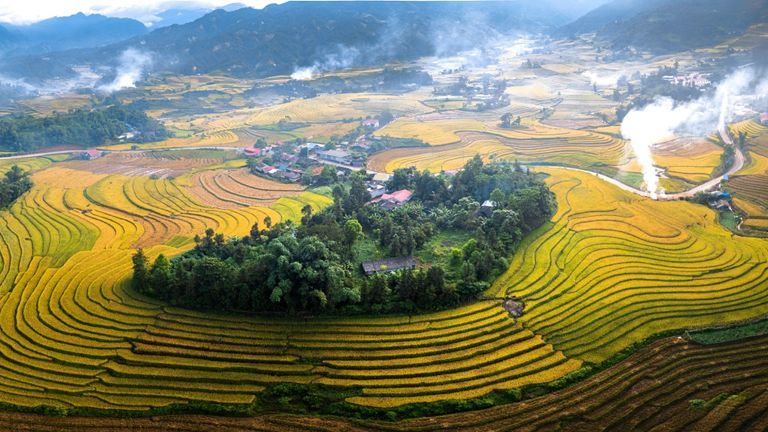
Golden rice field, a signature view of a high mountainous area in Northern Vietnam during harvest season. | Source: Huy Nguyen for Unsplash
Vietnam is no longer a country of 63 provinces and cities. Following a major administrative restructuring, the provincial systems are now officially merging and restructuring, resulting in only 34 administrative units nationwide. But what happens to their names and the stories behind them?
In Northern Vietnam, many of these newly defined provinces still carry names that date back centuries, explained in ancient languages, geography, and imperial history. Understanding them can reveal how Vietnam has imagined and reimagined its land over time.
Hanoi
The name Hà Nội (河內), established in 1831 under Emperor Minh Mạng, literally means “the land inside the rivers.” “Hà” means river, “Nội” means inside, referring to the city’s position within a network of waterways, including the Red River, Nhue River, and Day River. Long before becoming a modern capital, Hanoi was already defined by its geography: a place shaped, protected, and nourished by water.
Even after administrative restructuring, Hanoi remains unchanged both politically and symbolically as the historical and cultural anchor of the North.
Lao Cai
The name Lào Cai traces back to the H’Mông phrase “Lão Nhai” meaning “old market” or “old settlement.” Originally referring to a trading area near present-day Cốc Lếu, the name was later transliterated by the French into “Lao Cai,” eventually becoming standardized in Vietnamese administration in 1907.
After the merger with Yen Bai, the name Lào Cai now represents a much larger highland region. However, its origin still points to something intimate: from an old market to a place of exchange, where communities met long before border identities were fixed.
Thai Nguyen: The Great Plains in a Mountain Region
The name Thái Nguyên at first feels paradoxical. “Thái” means great or vast, while “Nguyên” refers to plains or open land. Established in 1831, the name reflects an imperial perspective, seeing this northern region not just as rugged terrain, but as a strategically expansive landscape.
Following its merger with Bac Kan, Thai Nguyen retains its name, but now encompasses a broader geography that blends mountainous terrain with industrial and educational hubs. The name, in this sense, is less about literal plains and more about potential and scale.
Dien Bien
Originally known as Ninh Biên (“peaceful frontier”), the name was changed in 1841. In Hanzi, “Điện” can mean to establish, to honor, or even a shallow basin, while “Biên” means border. Some interpretations describe Điện Biên as “a basin at the frontier,” referencing its famous valley. Others read it as “a sacred land at the border,” tied to older spiritual beliefs about the region which witnessed much historical evidence throughout the Vietnam War.
Before modern naming, the area was known as Mường Thanh - from the Thai phrase Mường Then, meaning “land of the heavens.” This reinforces the idea that Dien Bien was never just a remote border, it was culturally and spiritually significant.
Son La
The name Sơn La is a combination between indigenous geography and modern language. “Sơn” (mountain) is Sino-Vietnamese, while “La” originates from local Thai language - possibly linked to the Nậm La river or to early settlement patterns (Mường La).
Originally called Vạn Bú, the province was renamed Son La in 1904 under French administration, combining imperial naming systems with indigenous geography. After restructuring, Son La remains unchanged, and its name continues to reflect a layered identity: one shaped by both local ethnic groups and external governance systems.
Phu Tho
Phú Thọ is often referred to as “đất Tổ” - the ancestral land of Vietnam and the origin of Vietnamese identity. “Phú” suggests prosperity, while “Thọ” implies longevity. The name, officially adopted in 1903, carries a sense of continuity and endurance.
More than just semantics, the land is closely tied to the Hung Kings and the early formation of Vietnamese identity. Even after merging with Vinh Phuc and Hoa Binh, the name remains, anchoring the new administrative unit in a much older narrative: the origin story of the nation itself.
Bac Ninh
The name Bắc Ninh dates back to 1822, replacing the old regional identity of Kinh Bắc. “Bắc” means north, while “Ninh” suggests peace or stability.
Kinh Bac represented a historical heartland shaped by ancient citadels, sacred temple networks, and strategic defenses like the Cau River, where the Lý dynasty once held the northern frontier against foreign invasions. During the French colonial period, Bac Ninh town was organized as a key military stronghold of Northern Vietnam and a regional political and economic center.
Today, after merging with Bac Giang and expand its territory, the name continues to carry the weight of a place where culture nucleus at the core of North Vietnam.
Hung Yen
Established in 1831, the name Hưng Yên combines two aspirations: “Hưng” means to flourish and “Yên” means to be peaceful.
Originally carved out of Son Nam territory, the name Hung Yen officially appeared in 1831 (the 12th year of Minh Mang's reign) during the Nguyen Dynasty when Emperor Minh Mang implemented administrative reforms, dividing Son Nam province into smaller provinces.
Hung Yen has gone through multiple mergers, yet the name remains consistent in its intention: a land that signifies a wish for this land to always be prosperous and peaceful.
Ninh Binh
Ninh Bình, named in 1822, carries a straightforward yet powerful meaning with “Ninh” meaning secure, stable and “Bình” meaning peaceful. It was home to Hoa Lu Ancient Capital, the first imperial capital of a unified Vietnamese state in the 10th century under the Dinh and Early Le dynasties. Nestled among limestone karsts, Hoa Lư was both a political center and a natural fortress where peace is something that was fought for, consolidated, and eventually institutionalized.
Today after merging with Ha Nam and Nam Dinh, Ninh Binh now represents a broader area, but its name still echoes the Nguyen dynasty’s ambition: a stable foundation for governance and development.
Tuyen Quang
The name Tuyên Quang dates back to the Tran dynasty and is believed to originate from a river flowing through the region. Historical texts like An Nam chí lược (Abbreviated Records of An Nam) and Dư địa chí (The Treatise on the Territory) reference waterways associated with the name, suggesting that the province was identified through its river system long before modern borders.
After merging with Ha Giang, Tuyen Quang now spans a larger northern territory but its name still reflects an older way of mapping the world through rivers.