The Story Of Vietnam’s First Wave Of Feminism
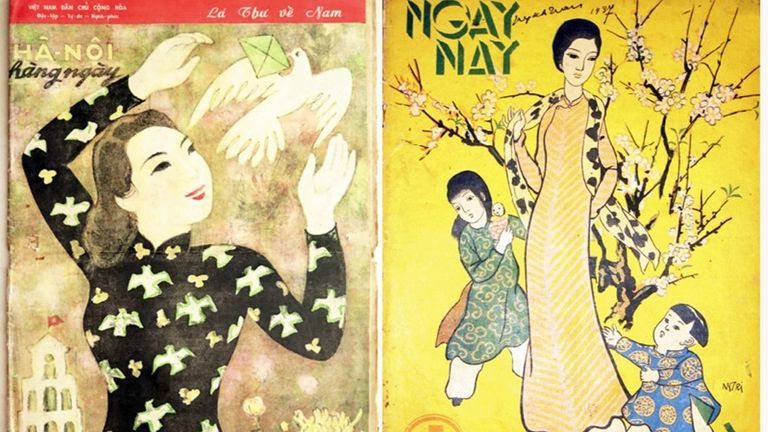
Women features on Hà Nội Hằng Ngày (Hanoi Daily Life) newspaper cover, Spring 1957 issue. | Source: Hà Nội Mới
According to UN Women, feminism is “the belief that everyone, regardless of gender, should have equal rights and opportunities.” Although the concept is often associated with Western political movements, early discussions about gender equality in Vietnam emerged within debates about modernization, education, and national survival during the colonial era.
Feminist voice first started in colonial Vietnam
In traditional Vietnamese society, women’s roles were largely shaped by Confucian norms that emphasized obedience to father, husband, and son. Sayings like “Công, dung, ngôn, hạnh” (household skills, graceful appearance, modest speech, and virtue) reinforce the notion that a woman’s worth is tied to domestic virtue, obedience, and moral preservation.
The early 20th century marked an important turning point. When colonial authorities introduced educational reforms and the spread of chữ quốc ngữ (Romanized Vietnamese script), the earliest discussions about women’s rights began to take shape. One of the most influential platforms for these debates was the women’s press.
In 1918, Nữ Giới Chung (Women's Bell) newspaper was founded - the first Vietnamese newspaper dedicated to women. Led by poet Suong Nguyet Anh, the publication addressed topics such as women’s education, moral reform, and family life. Although the newspaper lasted only a few months, it opened one of the earliest public forums where women's issues could be discussed.
Intellectuals and reformers advocating women’s rights
The conversation continued in the following decade.
By the late 1920s, more prominent female intellectuals began to emerge. Writers such as Huynh Thi Bao Hoa and Phan Thi Bach Van contributed essays and literary works that reflect on women’s status in society. Followed by the success of Phu Nu Tan Van (1929–1935), the second women's newspaper published in Southern Vietnam, further expanded these conversations with many newspapers established by women in the following years.
The feminist discussions of this period were not limited to women alone. One notable example was educator Dang Van Bay, whose book Nam Nữ Bình Quyền (Gender Equality), written between 1925 and 1927, argued that women deserved equal rights and social recognition.
Circulating widely across the three regions of Vietnam, newspapers and books act as a media platform creating a vibrant space for discussions about education, marriage reform, literature, and social change. They posed questions such as: Should women get access to education? Should they participate in public life? What role should they play in a modern nation?
Women rights became part of nationalism in 1940-1970s
Vietnam’s women’s movement unfolded in the context of colonial domination and national resistance. Historian Bui Tran Phuong notes that early feminist debates operated under two powerful constraints: centuries of Confucian patriarchal norms and the political repression of French colonial rule.
During wartime periods, women were celebrated as symbols of courage and sacrifice. Cultural expressions such as the saying “Giặc đến nhà đàn bà cũng đánh” (When the invaders come the women fight too) illustrate how women were portrayed as capable defenders of the nation.
After the war, women’s rights were often intertwined with nationalist aspirations: nation building. Education for women, for example, was frequently justified not only as a matter of equality but also as a way to cultivate modern citizens who could contribute to national progress.
More than a hundred years later, the early debates about women’s rights and equality still resonate in contemporary discussions about gender in Vietnam. Looking back at these early newspapers and intellectual movements reveals that feminism in Vietnam has been part of the country’s intellectual life for more than a century.