UN Võ: Study Abroad Doesn’t Have to Be a Straight Line
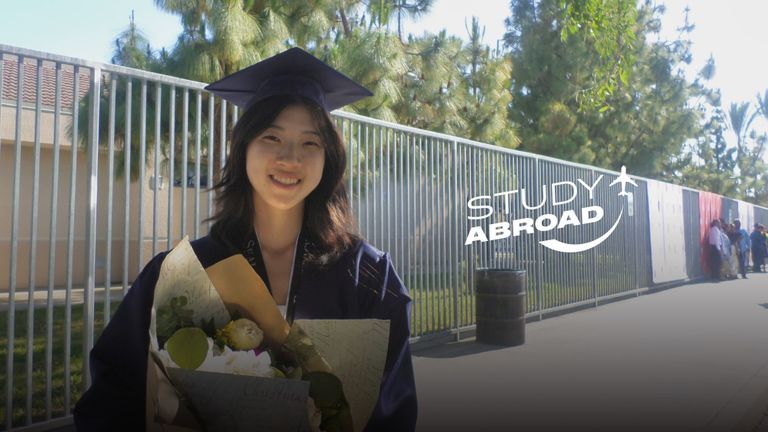
Source: Provided
When we picture studying abroad, we often imagine a clean, straight line: packing four years into a neat blueprint, moving seamlessly from lectures to internships, and crossing the graduation stage right on schedule. But real life rarely follows a linear trajectory.
For UN Võ, a student at UC Irvine, the most meaningful chapter of her university experience didn’t happen inside a lecture hall in California. It began when she chose to pause her degree, pack her bags, and take a year-long leave of absence back home in Vietnam.
In a culture that often views pausing as "falling behind," UN’s decision to take a mid-degree gap year was both terrifying and transformative. We sat down with UN to talk about unlearning academic perfectionism, finding belonging on a local volleyball court, and returning to college on her own terms.
How was your life in America when you first moved there for school?
I was actually no stranger to America, as I had moved back and forth between Vietnam and the US throughout my childhood. In 10th grade, I was originally supposed to attend SSIS in Vietnam, but when COVID hit, my plans shifted and I ended up attending a public high school in California instead.
When it came time for university, I stayed in the same city and enrolled at UC Irvine. Because I already knew the area, I assumed the transition into college would be seamless.
But right off the bat, I felt completely confused as a freshman. Being the youngest of four siblings, I found myself comparing my progress with theirs. I carried an internal pressure to measure up to my older brothers and sisters, who had attended schools like Harvard, Stanford, and NYU, or played professional sports. I felt guilty if I didn’t figure things out quickly, and put pressure on myself to show that I was capable of succeeding on my own. Making the most out of my study abroad opportunities felt like something I had to prove right away.
What was it like starting college at UC Irvine?
I initially declared a Chemistry major, but upperclassmen kept giving me advice like, "You should switch to engineering," or "You need to secure a research lab position immediately." You're constantly fed the next step, and because I was terrified of wasting my family's investment, I kept pushing myself down that fast track.
I ended up ramping my schedule from a standard 12 units to 25 units in a single quarter. At my university, taking over 18 units requires signing an official petition acknowledging the mental health risks, but I signed it anyway. I convinced myself that I had to be in research labs, hold board positions in student clubs, and take on every possible responsibility just to earn my place there.
What did your typical schedule look like during that first year?
My life became a constant rush. I would wake up at 8:00 AM and run 20 minutes across campus to back-to-back STEM lectures, spend two hours leading a student project team building a chemically powered car, conduct protein-folding research, play piano for the campus orchestra, and attend club board meetings—all while commuting 30 minutes each way every day.
I went from enjoying time with my roommates to completely isolating myself. Eventually, the burnout caught up with me and I failed a physics class. Instead of coming home to Vietnam to rest over the summer, I stayed alone in California retaking courses because I felt I had to constantly fix my mistakes. Scrolling through social media made it worse, I felt like everyone else could handle 20 units effortlessly while landing internships, and I kept telling myself I was falling behind. I didn't know how to just be a beginner.
As that schedule piled up, how did it start to affect your life?
It affected everything, especially my living situation. I was living alone in the house I spent years with my family in,the lights only on in my little room. Coming home every single day after a long commute to six completely silent rooms made the loneliness feel so heavy.
I had pushed my friends away and isolated myself. Yet, even while feeling completely lost inside, I still felt forced to show up for club meetings, answer research emails from professors, and keep up appearances. I never told my family how badly I was struggling mentally because I thought I had to handle it all independently.
Was there a moment when you decided something needed to change?
It happened about two months into what was supposed to be my second year. I was driving home from campus on my usual 30-minute commute, just a straight line back to my house, and I completely broke down in my car. I sat there realizing how isolated I had become and how lost I felt under the weight of everything on my plate.
When I walked into that empty house with six empty rooms, I called my mom. I rarely called her to express emotional distress, but that day I just asked her for help because I didn't know what else to do.
What happened after you called your mom?
My mom listened to me cry and then said something that completely shifted my mindset. She told me: "Learning is a lifelong journey, it never stops."
She shared that she herself had taken four years off before going to college, and reminded me that people in their 40s go back to school all the time. She said: "It doesn't matter when you go back. If you need to take a break, just take a break. Come home to Vietnam, be with family, and change your environment." Hearing that from her gave me the permission I couldn't give myself to step back and withdraw for a year.
With a different mindset, what was it like for you to come back home to Vietnam?
People often assume going abroad is what opens your mind, but for me, coming back to Vietnam was what actually made my perspective flexible. In the US, I felt trapped in a fast-paced "rat race" where I was constantly monitoring myself.
When I first returned, I still carried a lot of guilt, feeling like taking a gap year meant I had failed. I took a research and development (R&D) internship in Saigon, but because I had moved around during my childhood, I was insecure about my Vietnamese fluency. I panicked about how I would sound at work, so every night I sat alone in my room, pausing YouTube videos on how to speak formally, recording myself on my laptop, and trying out different phrasing, even attempting a Northern accent because I thought it sounded more professional. I was trying to eliminate every mistake before anyone could hear me.
Was there anything in particular that helped you see things differently?
I joined an open volleyball play in Thảo Điền, where university students, corporate workers, and local residents gathered after work.
At first, I brought the same anxiety onto the court, apologizing excessively whenever I thought I said something wrong in Vietnamese. One day, after I apologized again, a friend on the VSSC court smiled at me and said: “It’s nothing, UN! You speak well. Everyone understands everything, they’re only smiling because they find it cute.”
That simple moment felt like a massive weight lifted off my chest. They kept inviting me back to play, going for late-night cơm tấm together, and spraying Salonpas on each other's bruises after matches. Another friend there told me: "No one was meant to walk on the same path as you." In that community, people like each other for who they uniquely are, without needing to see a resume or credentials. It taught me that taking a gap year is trading academic opportunities for time to explore who you actually want to become. .
And how did you spend the gap year with your family?
Christmas during my gap year became a huge bonding moment for my siblings and me. My second-oldest sister, who had studied at NYU, opened up about her own struggles in college and how she too switched majors many times before deciding on law school. She told me to focus on what I genuinely enjoy, rather than choosing a career just because it sounded stable or impressive.
My brother served as a grounded, reassuring voice, reminding me that I have all the time in the world and that it’s okay to just live. Having my own family, who had walked similar paths, validate my experience made me feel seen and no longer alone.
As you head back to California now, how has your relationship with studying abroad transformed?
I’m going back to UC Irvine for my second year with a different mindset. Before, I followed the people around me so anxiously that I missed out on what it means to explore your unique strengths…
This time, I’m approaching college out of genuine desire to learn. For now, I want to explore my interests majoring in B.S. Business Information Management to better work with people and directly make an impact while still keeping my passion for the sciences close to heart. My gap year wasn't a pause from studying abroad—it was where I learned how I wanted to return to it. I realized I don't have to earn the right to enjoy my life. I'm going back not to race or prove my worth, but to truly live the experience.