Vietnam’s International Financial Centre: A Regulatory Laboratory and a “Mini-Singapore”
Source: Government News
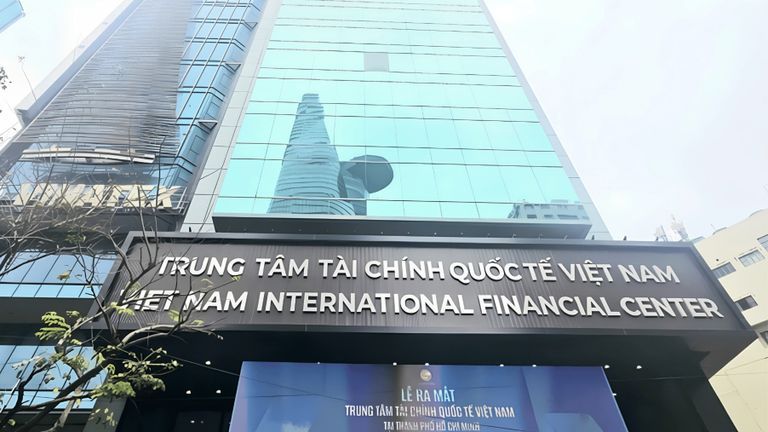
In 2025, Vietnam established the Viet Nam International Financial Centre (VIFC), with hubs in Ho Chi Minh City and Da Nang, as part of its ambition to deepen the country’s role in global finance. Yet, an international financial centre, or IFC, is more than a place where financial institutions set up offices. At its best, it is a controlled regulatory laboratory: new products, business models and legal mechanisms can be tested within clear limits; those that prove both useful and safe can then be refined, standardised and applied more widely.
The VIFC Should Be a Controlled Regulatory Laboratory
A modern financial centre cannot be built on infrastructure, tax incentives or talent alone. Its real foundation is a legal environment that is transparent, stable and flexible enough for capital to enter, operate, remain protected and exit on predictable terms.
An IFC gives Vietnam room to test new approaches without applying them immediately across the whole economy. A new financial product, fintech model, foreign-exchange mechanism or dispute-resolution process can operate within a defined scope, for a limited period and under specific safeguards. Evidence from the trial can then help regulators decide whether to stop it, adjust it, grant a full licence or scale it up.
The value of an IFC therefore goes beyond attracting a group of financial institutions. More importantly, it gives Vietnam a place to learn how to make better law from real transaction data.
A “Mini-Singapore” for Investment Transactions
The VIFC can be described as a “mini-Singapore” in terms of the investment experience it offers. It is not a separate sovereign territory, nor does it sit outside Vietnam’s legal system.
Many Vietnamese startups establish a holding company in Singapore because investors want a jurisdiction where they can invest efficiently, enforce shareholder rights, use foreign currency, apply international accounting standards, resolve disputes and exit their investment. That structure can make a deal easier, but it may also move the holding company, part of the fundraising activity and the surrounding professional-services ecosystem outside Vietnam.
The VIFC is intended to bring many of those functions back to Vietnam. Within the limits set by law, a foreign investor may invest directly in a VIFC member through a lighter process. Members may use dedicated accounts and foreign-currency flows, apply IFRS or other recognised international accounting standards, and, for eligible transactions, choose foreign law. Disputes may be heard by specialist courts or arbitration bodies, proceedings may be conducted in English, and new business models may be tested in a sandbox. Tax and talent policies form part of the same framework.
The strategic aim is to keep the legal entity, operations, talent, tax base and business ecosystem in Vietnam. Investors do not buy tax incentives alone. They buy speed, predictability and rights that can be enforced.
Competitiveness Comes from Reducing the Cost of Uncertainty
The strongest attraction of a financial centre is not its skyline or a low tax rate. It is a legal operating system for the full life cycle of capital: capital should be able to enter quickly, operate smoothly, remain protected and exit transparently.
In Vietnam today, a foreign investor may spend several months completing the procedures required to buy even a single share, including investment, business-line, banking and foreign-exchange formalities. When shareholder rights and enforcement outcomes are hard to predict, startups and investors often place the holding company in Singapore instead.
The VIFC matters because it tackles several of these bottlenecks together. Lighter procedures, however, create a lasting advantage only when they are supported by clear rights, credible dispute resolution and consistent application of the law. Put simply, the VIFC will compete by reducing the cost of uncertainty.
Fast entry. Smooth operations. Secure rights. Easy exit.
Streamline Procedures, Not Safety Standards
The lesson from other financial centres is not to copy another country’s rulebook. It is to apply different levels of oversight to different levels of risk.
Singapore allows firms to test products within a defined scope and period, subject to specific relief, customer disclosures, reporting duties and a clear plan either to leave the sandbox or move to a full licence. The Monetary Authority of Singapore accepts that an experiment may fail. The purpose is to contain the consequences of failure, not to assume that every experiment will succeed.
In the Dubai International Financial Centre, the Dubai Financial Services Authority sets the intensity of supervision by looking at both the impact and likelihood of risk. A low-risk business should not face the same level of scrutiny as an institution that holds client money, uses substantial leverage or could affect the wider financial system. The DIFC also has an independent civil and commercial court system that operates in English and applies common law.
Vietnam could use three tracks: a fast track for familiar, low-risk products; a sandbox for new models whose risks can be contained; and full licensing, capital and governance requirements for activities that hold client assets, use leverage, serve the general public or pose systemic risk. The principle should be simple: streamline procedures, not safety standards.
Streamline procedures, but do not lower safety standards.
Technology-Neutral, Risk-Aware Regulation
The law will rarely move faster than technology. Regulators should therefore avoid writing a separate set of rules for every application, token or new business model. They need durable principles that can also apply to technologies that do not yet exist.
The central rule is: the same function and the same risk should be subject to the same regulatory standard. Regulators should ask what a product actually does and who will bear the loss if it fails, rather than relying on the name attached to it.
- If a token raises money from the public, the relevant issues include disclosure and investor protection.
- If a platform holds a customer’s money, assets or access keys, the rules should address custody, segregation of assets and insolvency.
- If a product processes payments or matches orders, it should be regulated for payment, manipulation and operational risks.
A workable framework must answer five questions: how is the product classified by function; who may provide it; how are client assets protected; what rules apply to disclosure, anti-money laundering, conflicts, manipulation, data and cybersecurity; and what happens after a cyberattack, operational failure or insolvency?
A sandbox is a bridge from testing to licensing, not a legal vacuum. Each trial should set limits on customers, scale and duration, together with reporting duties, stopping criteria and a route to wider deployment. Regulation should be neutral about technology, but never neutral about risk.
Regulate the function and the risk, not the label.
Rights Matter Only If They Can Be Enforced
Investors do not ask only what rights appear in the contract. They also ask whether those rights can be enforced quickly and effectively when something goes wrong. This is another important reason why many Vietnamese startups have used Singapore holding structures for fundraising.
The VIFC framework addresses this concern. Within the scope allowed by law, parties may choose foreign law, use a specialist court or an international arbitration centre, and conduct proceedings in English. In an IFC arbitration, the parties may also agree to waive the right to ask a court to set aside the award, provided the waiver is valid.
Passing the law is only the first step. The VIFC’s credibility will depend on the quality of its judges and arbitrators, the availability of urgent measures to preserve assets and evidence, confidentiality, consistency and the speed of enforcement. Twenty early cases that are resolved quickly, consistently and effectively will inspire more confidence than twenty new regulations.
Winning on paper is not the same as winning in practice.
Make the New Framework Work in Real Transactions
The next priority is not to keep adding rules. It is to make the mechanisms already created work in real transactions.
First, the VIFC needs one point of contact, one accountable authority, one digital system and clear processing times. A business should not have to move between several agencies to ask the same question.
Second, it needs a cycle of testing, measurement, standardisation and wider adoption. Every sandbox should have clear objectives, data, success criteria and a process for publishing results. Mechanisms that work well in the VIFC can then provide evidence for reform across the country.
Third, the VIFC must build credibility from the outset through high standards on beneficial ownership, anti-money laundering, protection of client assets, cybersecurity and the orderly failure of financial institutions. It will remain attractive only if it is flexible, well governed and safe.
Finally, Vietnam should concentrate on markets where it can build a real advantage. Ho Chi Minh City could focus on capital markets, asset management, funds, green finance and commodity derivatives. Da Nang could focus on digital assets, payments, tokenisation, supply-chain finance and innovation.
Success should be measured by the time required to complete a transaction, the capital raised, the number of products that graduate from the sandbox, the speed of dispute resolution and the number of effective policies adopted more widely, not simply by the number of licences issued or the amount of office space built.
One point of contact. Test small. Measure real outcomes. Scale what works. The VIFC should be where Vietnam learns to make law from real-world data.
Understand the Limits
- The VIFC is not a territory outside Vietnamese law.
- A new product does not automatically qualify for the sandbox or an exemption from the usual licensing and operating requirements.
- The special framework applies only where the entity, transaction and activity fall within the relevant membership, licence or sandbox. Matters outside that scope remain subject to Vietnam’s ordinary laws.
- Transactions with a Vietnamese counterparty that is not a VIFC member remain subject to the relevant restrictions, including foreign-exchange rules.
- Real estate and security over real estate remain governed by the law of the place where the property is located.
- The legal framework for the specialist court has been in force since 1 January 2026, but its practical quality will still need to be demonstrated through its people, procedures and first cases.
is a Vietnamese transactional law firm specialising in M&A, venture capital, finance and antitrust. The firm won “Best New Law Firm” at the Vietnam Law Firm Awards 2026 by Asia Business Law Journal.