What Does Trung Thu Look Like When You Celebrate It Far Away From Vietnam?
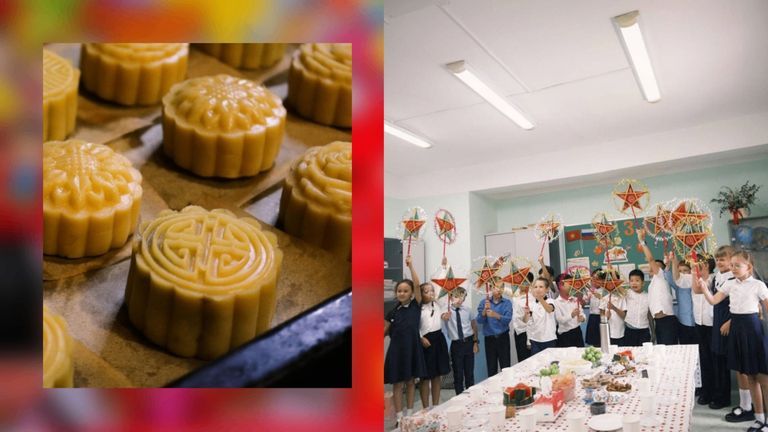
Source: Vòng Tay Việt Nga & Embassy of Vietnam, Moscow
September brings the colours of Trung Thu to streets across Vietnam: toys in all shapes and forms — dragons, cats, fish, masks of Chú Cuội, crimson fans. Lion dancers welcome citizens and visitors, while children hold their đèn ông sao (traditional Vietnamese star-shaped lanterns) and walk alongside their parents. At school, the atmosphere of celebration can be felt too, as children and teachers draw, decorate their classrooms, and share sweets.
The mood is a blend of red and yellow.
For Russian children, September means little more than the start of a new school year: new subjects, a busier routine, and less time to play with friends. No autumn festival greets them. There are no decorations, no toys, no sense of gathering in the air. Though autumn's golden leaves seem to match the golden Moon perfectly.
But if you are a Vietnamese child in a Russian town, there is an unspoken ticket to a different world: bánh Trung Thu, handmade lanterns, and the familiar “tùng rinh rinh tùng tùng tùng rinh rinh” song playing on the television at home. It is a little light in the middle of those tough school days.
That is Trung Thu.
Around 13 years ago, Nhàn, 42, who had already lived in Russia with her family for many years, would take a train to another city, get some work done, and buy mooncakes for her daughters. There was no easy shipping or delivery system at the time, so families had to prepare at least a month in advance to make sure the Trung Thu sweets arrived in time.
Nhàn and other parents would gather together, buy watermelon, grapes, and other fruits at the end of summer, and bring the children to someone's home. The children would run around, enjoy a meal together, and receive toys and star-shaped lanterns as presents.
Nhàn recalled: “We created a Trung Thu for our kids. We wanted to bring them lots of joy and a splendid atmosphere. It was so endearing to let them experience a little of what we had felt growing up in Vietnam. And of course, it was fun for the adults, too. We had another reason to get together. Now, even though my children are already grown up, they still buy themselves mooncakes every year to celebrate Trung Thu, even after an exhausting day of work or study, when it is otherwise just an ordinary day in Russia.”
Some parents might not have a clear answer as to why they put so much effort into preparing for a festival that their surroundings do little to acknowledge. They simply do it, without thinking too much about why.
Perhaps there is an instinctive feeling that if they do not, their children might lose not only the tradition, but also a small, unique part of their childhood.
Sơn, 29, and Hải Minh, 22, were among those children.
For Sơn, the most vivid memory of Trung Thu was the sense of celebration. He remembers it as a day for children, warm enough to bring families together, “like June 1st, International Children's Day, but kind of a Vietnamese version.” There were colourful decorations, star-shaped lanterns, and, of course, mooncakes. His mother would buy the cakes from Moscow and decorate the house, while everyone gathered at home and simply spent time together.
Hải Minh remembers something slightly different: dancing. He can still picture himself and the other children running around the house with their lanterns, making up silly dances. “Those lanterns were the coolest, really,” he recalled. “Who even thought of the idea of putting a star onto a stick anyway?”
The mooncakes remain part of the memory, too. The white one was his favourite. But when asked whether he knew anything about the origins of Trung Thu, Hải Minh had a simple answer: “No.”
Some Vietnamese teenagers growing up in Russia might know the origins of Trung Thu and have heard the stories of Chị Hằng and Chú Cuội, the figures associated with the Moon in Vietnamese folklore. Some might not.
But even without knowing the stories, they can vividly picture that time in early autumn: the texture of mooncakes, the glow of lanterns, and the excitement of being surrounded by friends who shared the same roots.
Sometimes, they might wonder what it is like to celebrate Trung Thu in Vietnam. What other toys do children buy? What shapes and colours do they come in? What food do parents prepare for their families? How are the cities decorated, and what sounds fill the streets and shops? What does it feel like to wait for the festival with classmates?
Maybe one day, when they set foot in Vietnam as Trung Thu unfolds across the country, they will find some of the answers they have been looking for.
But for some, the truest celebration will always be the one shaped by memory: the picture their parents created for them far from home.
Nowadays, everything moves quickly, and it can be difficult to pause and pay attention to small moments. Still, Vietnamese families in Russia continue to find their own ways to preserve the autumn festival.
Some organise large celebrations with several families, complete with a host, dance performances, food, and enough activities to give their children a full taste of Trung Thu. Others choose something quieter: staying home, sharing a warm dinner, and calling relatives in Vietnam.
Whatever the format, these celebrations travel. Photos are shared in family chats, stories are told to international friends, and memories find their way across borders.
Vietnamese children living abroad grow older and busier, scattering to different corners of the world. One day, they may have children of their own, or younger siblings and nieces and nephews, and perhaps wonder how to give them the same kind of childhood Trung Thu they once had.
At least, they have their parents as a model.
All that may be needed is a bite of mooncake and a look up at the Moon at the start of autumn.