What Should Young Chefs Build Before They Build A Signature?
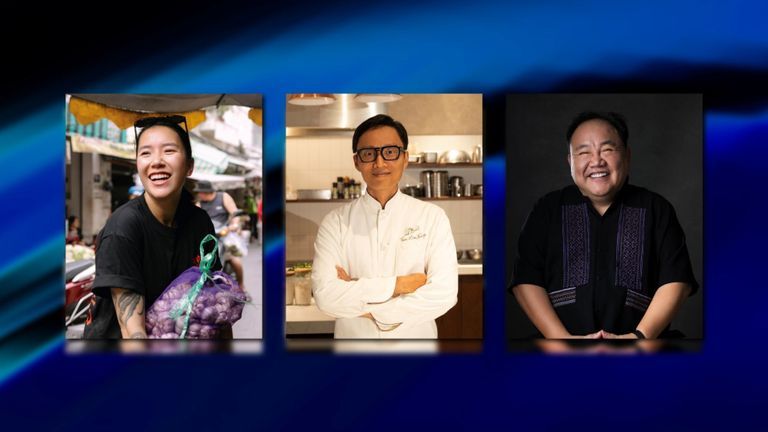
Source: Thuy Anh for Vietcetera.
If you had to choose one flavor, memory, or moment that quietly shaped the way you see food today, what would come to mind first?
Everyone enters the culinary world carrying something different. For one person, it may be the Vietnamese meals that remained on the family table despite growing up thousands of miles from home. For another, it is the desire to return to simpler flavors after years of experiencing cuisines from around the world. And sometimes, what changes a person’s understanding of hospitality has little to do with a particular dish. It can begin with watching a young person find confidence and a sense of belonging in a kitchen.
Before trying to create something entirely new, perhaps the more important starting point is understanding and valuing what has shaped us in the first place. That idea lies at the heart of “The Makers of Our Time,” the theme of Rising Chefs Challenge 2026.
Joining this year’s contestants are Chef Anaïs Ca Dao – Founder & Culinary Director of Yeshi and Bar Rơm, and Culinary Director of Esta House; Chef Trần Hiếu Trung – Founder & Head Chef of Lamai Garden; and Jimmy Pham AM – Founder & Executive Chairman of KOTO.
Through their three distinct journeys, Vietcetera explores how memories, lived experiences, and personal values can become the foundations from which people find their own direction in food and hospitality.
What Brings A Chef Back To Familiar Vietnamese Flavors?
Chef Anaïs Ca Dao: My mom used to study Vietnamese culture in France, and her professor told her something that has always stayed with me: Vietnamese children who grow up overseas and have to adapt to another culture through school or their environment will still, at the end of the day, come home and eat Vietnamese food.
That idea has always stayed with me because Vietnamese cuisine is more than food. It represents home, identity, and connection. Wherever we are overseas, its flavors always bring us back to our roots.
Chef Trần Hiếu Trung: I think my perspective on food was shaped over a long period of time. But if I had to choose one moment when I began to understand it more clearly, it would probably be when I opened my first restaurant, La Chérie.
Before that, I had opportunities to study, work, and experience different cuisines. Interestingly, the more I learned about ingredients from around the world, the more possibilities I began to see in the very familiar ingredients around me.
When I started La Chérie, I realized that this way of thinking had probably been taking shape for much longer. Perhaps it came from missing the flavors of the Saigon I grew up with, or simply from realizing that after traveling, eating in many places, and experiencing so many different dishes, what I still wanted to return to most was a simple meal at home.
What interested me was no longer necessarily going deeper into European cuisine or creating complicated fusion dishes. I wanted to spend more time understanding familiar Vietnamese ingredients and telling stories through things that already appear in our everyday meals.
Jimmy Pham: For me, the defining moment wasn’t about a remarkable meal. It was about a remarkable young person.
When I first returned to Vietnam, I met young people living on the streets who had been told, in many ways, that they didn’t matter. Through KOTO, I watched one young person discover hospitality, not simply as a career, but as a place where they belonged.
In the kitchen, they found discipline. Through serving others, they began to discover their own worth. That changed my understanding of food. When someone feels they belong, they begin to believe in themselves. That’s where opportunity begins.
When The Familiar Becomes Something Of Your Own
Chef Anaïs Ca Dao: I think my dishes always evolve and are different everywhere, depending on the concept. I’ve had a lot of different interpretations of things.
For me, that means there probably isn’t one single dish that can represent the entire journey. A dish can change with the space, the concept, and where I am in my own thinking at that moment.
Chef Trần Hiếu Trung: I would probably choose “Vườn cải Lamai”, or Lamai’s garden of greens. It has been with me since the early days of the restaurant and continues to evolve with Lamai today.
The dish uses vegetables grown in Lamai’s winter garden, including cabbage, Chinese kale, mustard greens, watercress, and chrysanthemum greens. Each brings a different character — sweetness, bitterness, or a gentle heat — and they are brought together by a climbing perch broth inspired by canh cải cá rô, a traditional Vietnamese mustard green and fish soup.
What I find interesting is that the dish is never exactly the same. The vegetables are harvested at different times each year. The weather changes. The broth changes. The way the greens interact with one another changes as well.
Through these small differences, I can feel the passage of time and the cycles of nature. That is also quite representative of the way I cook: working with what is available around me, without forcing things, and allowing nature to complete the flavor in its own way.
Jimmy Pham: If I had to choose, it wouldn’t be a single dish at all. It would be thịt kho and canh chua - the meal my family gathered around growing up. As a child, I never thought much about it. It was simply home. But over the years, I’ve come to realize those two dishes taught me something about balance.
Thịt kho is rich, comforting, and full of warmth. Canh chua brings freshness, brightness, and sourness. One without the other never quite feels complete.
Life has been much the same. There have been moments of joy and fulfillment, but also heartbreak, uncertainty, and sacrifice. Both the sweetness and the sourness shape who we become.
Does A Dish Of Its Time Have To Chase What Is New?
Chef Anaïs Ca Dao: I think every dish needs to go through a meticulous process of research so that you understand it and can interpret it without disrespecting it.
I also think we should not follow trends, because it is very easy to fall into that trap. I believe the best dishes are personal, or have real research behind them, rather than simply following a trend.
Chef Trần Hiếu Trung: I think putting a label like “the flavor of our time” on a dish can place quite a lot of pressure on it.
For me, a dish first needs to do something very simple: it has to taste good and create a connection with the person eating it. You do not have to create something completely new for it to belong to its time.
If I were to define “the flavor of our time” in my own way, I would say a dish does not necessarily have to be modern or use a new technique. What matters more is whether it offers a new perspective grounded in understanding, and whether it expresses the personality of the person cooking it.
Jimmy Pham: When I think about the flavors of our time, I don’t think the most meaningful dish will simply be the most technically perfect or the most beautiful. I think it should tell us something about who we are and who we aspire to become.
A great dish should reflect more than flavor. It should reflect purpose. It can honor the farmers who grew the ingredients, respect the environment that sustained them, celebrate the culture they came from, and recognize the people who prepare and serve them.
To me, the flavors of our time are also compassion, sustainability, inclusion, and hope. When those values are part of the way we work, a dish can create meaning far beyond the dining table.
How Do You Reinterpret Tradition Without Losing Its Spirit?
Chef Anaïs Ca Dao: I think you need to build a bridge between the customer and your dish. I usually try to find a connecting point between their comfort, their food, and Vietnamese food. That way, even though the flavors may be different, there are still elements that remind them of their own culture.
Chef Trần Hiếu Trung: For me, reinterpreting a dish is a little like composing music. It is not like solving a scientific equation. It relies heavily on emotion, so it is difficult to answer with a single formula. Of course, the more knowledge and experience a chef accumulates, the more depth their creativity can have.
I often compare it to gardening. If you spend enough time caring for the soil before planting the seeds, you are more likely to have a richer harvest. Creativity works in much the same way. It needs a strong foundation before it can grow naturally.
Jimmy Pham: Many people assume that passion comes first. My experience at KOTO has taught me the opposite. Many of our trainees do not arrive dreaming of becoming chefs. They arrive because they are looking for an opportunity.
So we don’t begin by teaching them how to cook. We begin by helping them believe in themselves. Once a young person discovers that they have value, something starts to change. They take pride in their work, their confidence grows, and passion can follow naturally.
I’ve always believed that purpose is more powerful than passion. Passion can fade on difficult days, but purpose gives you a reason to keep going.
Hospitality is demanding. The hours are long and the standards are high. But every day, you also have the opportunity to make someone’s experience a little better through a meal, a smile, a warm welcome, or a simple act of kindness.
Amid Endless Trends, What Helps A Young Chef Build A Lasting Career?
Chef Anaïs Ca Dao: Perseverance, as always.
If you choose to do this job, it can be very taxing on both the body and the mind. For me, if you persevere and take care of your health, you will be able to create a story that is true to yourself. Also, be a student of life. We never stop learning from food, but also from everything around us.
Chef Trần Hiếu Trung: I think the fact that young chefs today can access international techniques and trends so easily is a very good thing. But when new ideas are constantly appearing, it is also easy to be carried along by them. You may be interested in one trend today and want to try another tomorrow.
To build a solid career, I think the first thing is to keep working on the fundamentals. Instead of learning only how a finished dish is assembled and presented, start by understanding the ingredient itself. If you are working with fish, for example, learn where it comes from, whether it is farmed or caught, how it should be prepared, how different species differ from one another, and how different cooking methods affect it.
That knowledge becomes the foundation for everything you do later. Local culture is just as important. Without it, it becomes difficult to develop your own identity, especially today. Culture is part of the foundation from which a chef’s individual style can grow.
Jimmy Pham: People often ask me what makes a great chef. My answer is always the same. It’s not talent.
Talent might open the first door, but character is what keeps it open. Trends will change. Techniques will evolve. But the qualities that matter most remain the same: discipline, humility, a willingness to learn, teamwork, and the resilience to keep going when things become difficult. Skills build careers. Values build legacies.
What Would You Like To Say To The Contestants Of Rising Chefs Challenge 2026?
Chef Anaïs Ca Dao: Good luck! (Laughs)
Be yourself and don’t follow trends. Taste everything. It needs to taste good before it looks pretty.
Chef Trần Hiếu Trung: I think the most important thing is not to rush into trying to be different.
Many young chefs enter the profession feeling that they have to create something completely new, different, or special. There is nothing wrong with that, but sometimes searching for novelty too early can make you overlook what is already close to you.
Instead of asking how you can be different from everyone else, perhaps ask yourself what matters to you most right now, what you understand best, and what you feel most confident about. Once you find that, spend time going deeper. Do it well, understand it thoroughly, and take what you believe in as far as you can. Let something new emerge naturally from a foundation that is truly your own.
Jimmy Pham: Winning this competition may change your career, but how you choose to use your career can change someone’s life. Food has always had the ability to connect people. It can cross cultures, bring strangers together, and make someone feel welcome.
So as your skills grow, don’t let your heart grow smaller. Success is not measured only by awards, restaurants, or followers. It is also about the opportunities you create for others along the way.
At KOTO, we have a simple philosophy: Know One. Teach One. Once you’ve been given an opportunity, create one for someone else. I hope that one day, when people speak about your career, they will remember more than your signature dish. I hope they remember your generosity, your integrity, and the opportunities you created for others. Because the greatest legacy of a chef is not simply the meals they serve. It is the lives they nourish.
Rising Chefs Challenge is part of Flavors Vietnam 2026. This year's competition is co-organized by Royal Arctika, bringing new culinary experiences while continuing to celebrate Vietnam's vibrant F&B culture.
Rising Chefs Challenge 2026 officially opens for applications from July 12 to August 23, 2026. Apply HERE.
The Grand Finale will take place on:
Date: September 18, 2026
Venue: Saigontourist Hospitality College, Ho Chi Minh City
Our sincere thanks to the sponsors and partners of Flavors Rising Chefs Challenge 2026: Gold Sponsor: Royal Arctika; Bronze Sponsor: SpeedPOS; Trusted Partners: V Horeca, H Cookware, and Lý Gia Viên.