



Iced tea (trà đá) is a popular, cooling and affordable drink for every Vietnamese. It is not merely a drink meant to quench thirst but a social gesture, a shared pause, and a deeply ingrained habit that has followed Vietnamese through decades of urban change.
From tea culture to daily life
Long before trà đá became a default presence on Vietnam’s sidewalks, tea itself had already been deeply rooted in everyday life. Tea drinking in Vietnam is believed to have emerged during the Northern Chinese colonial period, when language, writing systems and certain cultural practices were gradually absorbed over nearly a thousand years. Yet, from the very beginning, Vietnamese tea culture did not simply mirror its Chinese counterpart.
While Chinese tea culture evolved toward refinement and ritual, Vietnamese tea developed in a more pragmatic direction. Tea was not confined to scholars’ rooms or aristocratic settings. It was something to be brewed easily, shared casually, and consumed as part of daily life.
In Vũ trung tuỳ bút, scholar Pham Dinh Ho observed that although elites once chased after rare tea leaves and expensive teaware, the true pleasure of tea did not lie in extravagance. His idea that tea mattered only when it allowed people to pause, converse, has later shaped how tea would later be consumed across Vietnam.
Inviting someone a cup of tea shows the Vietnamese identity of hospitality, as cultural researcher Tran Ngoc Them once described Vietnamese tea drinking not as an act of refreshment, but as an invitation to conversation, reflection, and social bonding:
“Người Việt mời nhau uống trà không phải đơn thuần để giải khát, mà là để bắt đầu một lời tâm sự, bàn chuyện gia đình, xã hội, và cảm nhận trong chén trà có cả hương vị của đất trời.”

Sidewalk iced tea stalls (trà đá vỉa hè), often nothing more than a kettle, a thermos, and a few rows of low plastic stools, act as informal meeting points. People sit close together, facing the street, watching traffic flow while time seems to slow down.
Even as Vietnamese cities grow more modern and fast-paced people continue to return to this humble ritual. Amid cafés with curated menus and imported beans, trà đá remains unchanged for its simple and affordable price of just $0.2 USD.
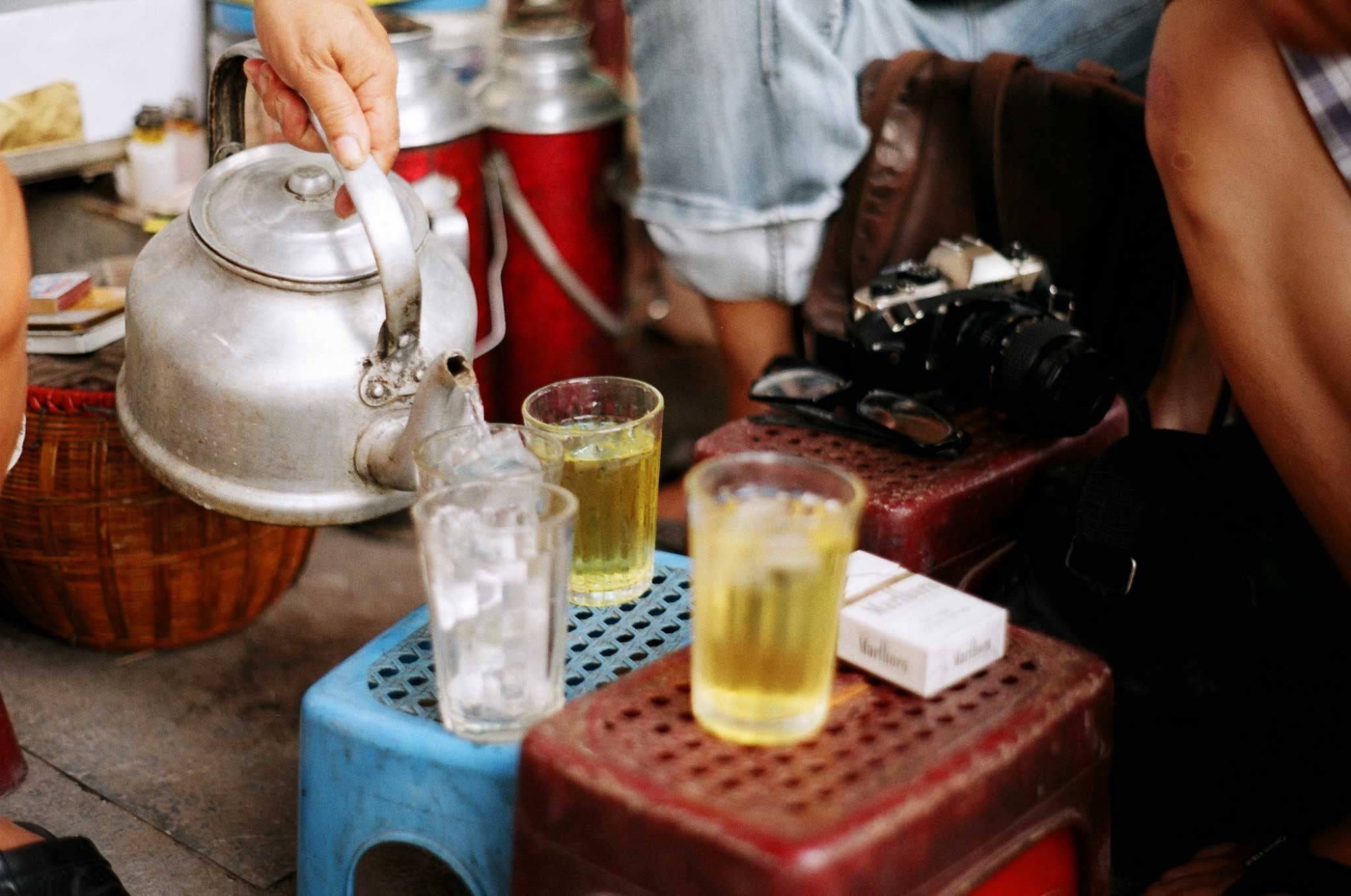
Trà đá arises in Saigon as a practical solution to heat
Before 1975, iced tea was not a habit in Northern Vietnam. Hanoi’s colder winters and seasonal rhythms favored hot tea, consumed slowly in quiet settings.
Meanwhile, with Saigon’s tropical climate, intense heat, the city demanded practicality. As ice became more accessible, tea adapted. Served cold and refillable, trà đá emerged as the favourite drink among Saigonese.
After reunification, many Northerners migrating south encountered trà đá for the first time. Poet Nguyen Quang Thieu recalled his surprise to this drink upon arriving in Saigon in “Trà đá và cuộc 'chinh phạt' đồ uống từ Sài Gòn” (Iced tea and its journey from Saigon):
“Nhưng có một thứ mà tôi thực sự ngạc nhiên và khi nếm thử bỗng nghiện ngay, nhất là khi bạn đang hành trình trên một chuyến tàu chật chội, oi bức và mệt mỏi. Đó là trà đá.”
(Upon tasting this one particular drink, especially when you’re journeying on a crammed, stuffy train cabin, all signs of fatigue seemed to disappear. The drink is trà đá.)
Stepping in any random local food vendor in Saigon, you will easily notice trà đá not listed on menus, yet present everywhere. It appeared automatically at street food stalls, often free of charge, placed next to bowls of noodles or plates of rice. Saigon’s version was often lighter, less bitter, sometimes criticized as “nhạt,” (bland, tasteless) yet suited the city’s casual energy.

Trà đá in Hanoi: a meant to be connected
Following reunification in 1975, iced tea habits spread from the South to the North and entered Northern daily life. It was gradually gaining ground in the 1990s with Hanoi becoming the first Northern city to adopt trà đá at scale.
This drink is not for finishing in a mouthful, it becomes a catalyst: for catching up, for storytelling, for simply being present without rush. Tourists often wonder why Hanoians seem to have so much free time when witnessing people sipping tea, flipping through old newspapers, debating everything from daily gossip to national affairs. The act of drinking tea here is just like the popular quote “Hà Nội không vội được đâu” (In Hanoi, you cannot hurry things.)
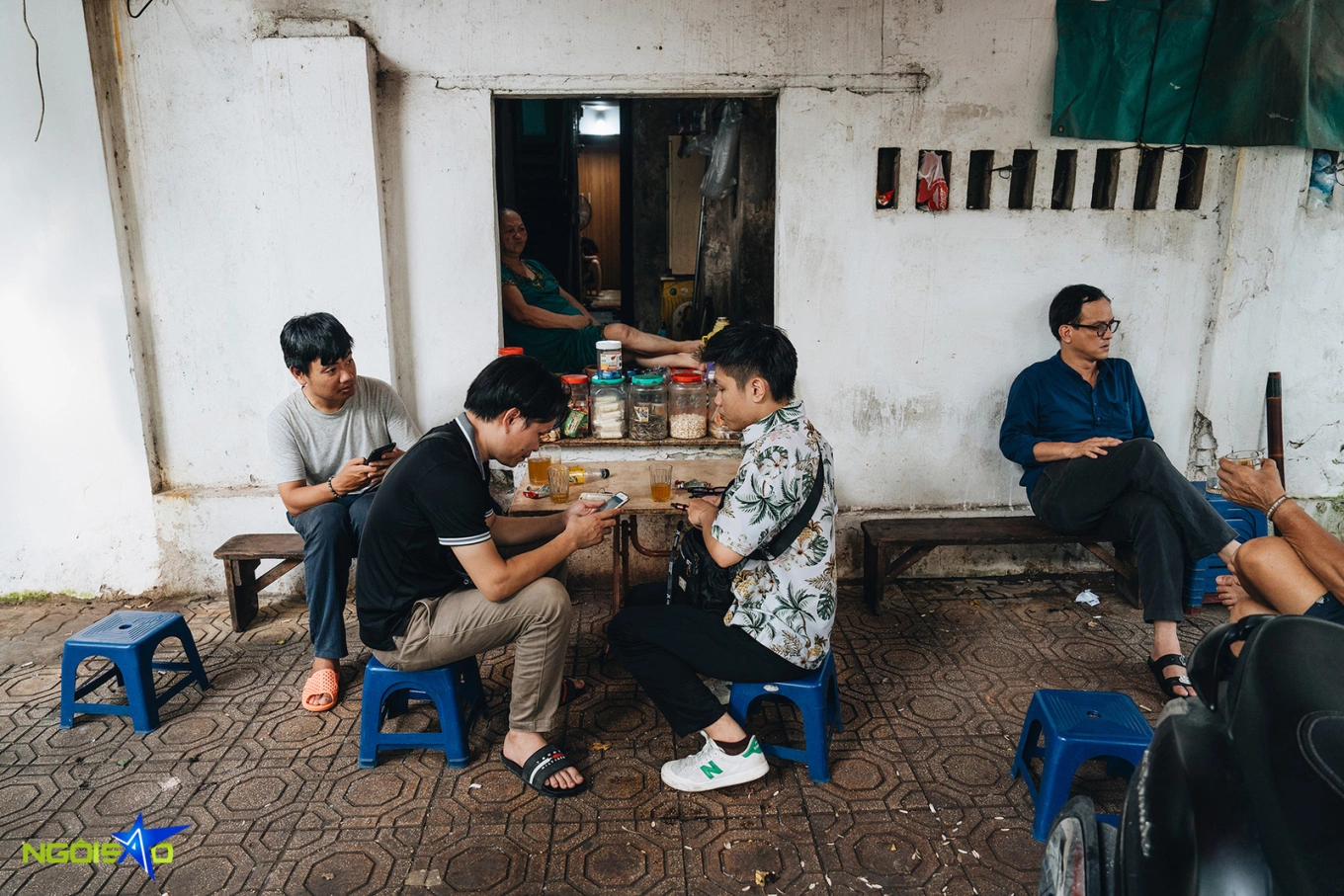
A collective memory of Vietnamese urban life
Despite the differences in drinking style across regions, trà đá with its costs little, yet holds space for countless stories.
To understand Hanoi’s essence, it is often said that one only needs to sit at any sidewalk tea stall long enough to listen to people’s conservation. In Saigon, trà đá tells a story of shared hardship between street vendors, delivery workers, and anyone moving through the city under the same heat through free iced tea placed on sidewalks.
This is where the North and the South quietly meet. Amid the city's rush toward modernity, sometimes, all it takes to bring people together is a glass of iced tea.
