Beyond “Ăn”: Mastering The Many Ways To Say “Eat” In Vietnamese
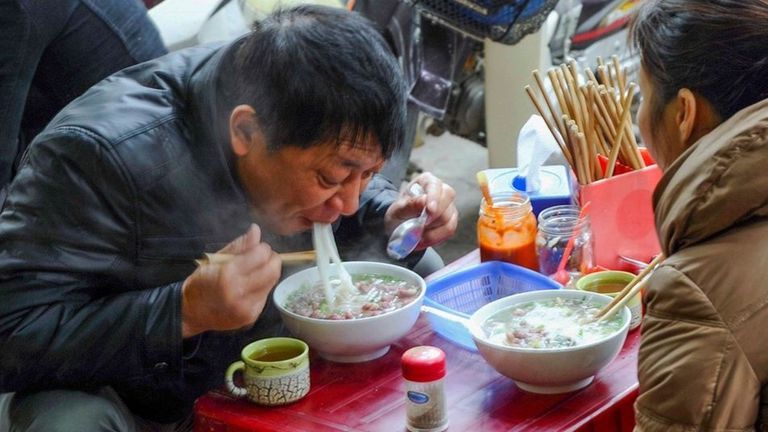
Nguồn: Getty
When someone invites you to “Đá bát phở”, “Húp miếng cháo”, “Quất tô cơm”, what would you do? If you’re about to kick or hit something, then you’re going to be hungry, as these expressions are not what they seem on the surface.
You’ll be more surprised when realising that all of those words - “đá”, “húp”, “quất”, and many more are just one way to say “eat” in Vietnamese. So, how many words do the Vietnamese use to describe such a simple action? And if you’re trying to blend into the culture and avoid becoming a textbook speaker, then this article is for you.
1. “Ăn” Modestly With The Formal And National Package
Ăn, Xơi, Dùng, Thưởng Thức
If “ăn” is the most common and neutral way to describe the action of eating, then “xơi”, “dùng”, and “thưởng thức” are often used in more formal contexts. While the first two words (“xơi” and “dùng”) are frequently used in offering manners, “thưởng thức” (enjoy/savour) has a deeper meaning where the focus is placed on the experience of the consumers and their ability to evaluate the food quality.
Let’s take a look at some examples of these words in contexts:
- “Mời cả nhà ăn cơm.” (Everyone, let’s eat / Enjoy your meal, everyone.)
- “Cả nhà xơi bữa tối đi.” (Dinner is ready, everyone.)
- “Xin mời chị dùng cơm.” (Please enjoy your meal.)
- “Hãy thưởng thức hương vị độc đáo của nhà hàng chúng tôi.” (Please savor the unique flavors of our restaurant.)
2. “Ăn” Casually With The Informal And Local Package
Đá, Quất, Xực, Chén, Hốc, and Nhấm nháp
Besides tone, words are also indicators of one’s manners when eating. The two “xực” (scraf down) and “hốc” (gobble down) are typical examples where eating is done in a hasty manner without much consideration for etiquette. The latter word can sound critical and offensive to some, as it is often associated with the image of a pig eating in Vietnam; hence, its use should be carefully considered. “Chén” (eat heartily), on the other hand, is also conversational, but it carries a more neutral and positive meaning and is used when speakers and listeners share a certain level of familiarity, such as close friends.
About “quất” & “đá”, there are no official records of the two words as verbs used to describe the eating action, except for their recognition as slang in different regions and a quick eating style of workers before getting back to their grind. Interestingly, the two words, in their original meanings, both refer to an action: “quất” - to hit something using a whip, or “đá” - to kick something. While “đá” as a verb is prevalent in the Northern parts such as Hanoi or Hai Phong, “quất” is more common in the Southern and Central parts.
Do you notice something familiar about the mentioned words? Besides their behavioural indication, all of them are one syllable, crafting a rather rushed feeling for listeners. Opposite to this, the two-syllable word “nhấm nháp” - “nibble” really slows the pace down, as its meaning is all about eating something slowly and gently without the worry of time.
Confused yet? Let these examples clear the confusion:
- “Hắn xực hết nửa cái bánh chỉ trong vài phút.” (He scarfed down half the cake in just a few minutes.)
- “Con mèo hốc hết phần cá trên bàn.” (The cat gobbled up all the fish on the table.)
- “Ba đứa bạn rủ nhau đi chén lẩu tối nay.” (Three buddies are getting together to chow down on hotpot tonight.)
- “Đá bát phở không?” (Wanna grab a bowl of pho?)
- “Sáng quất tô cơm là bao no.” (Smashing a bowl of rice in the morning and you’ll be stuffed.)
- “Ông cụ ngồi nhấm nháp miếng bánh quy bên hiên nhà.” (The old man sat nibbling on a biscuit on the porch.)
3. “Ăn” Vividly With The Highly Imaginable Package
Húp, Gặm, Táp
When someone “húp” (slurp), they put liquid food into their mouth, using their lips to slurp bit by bit. But when someone or something “gặm” (gnaw), the use of teeth is involved in the eating action in order to bite food that is hard or tough, piece by piece, before it is swallowed down. “Táp” (snap) is used when the mouth is wide open, and the food is often eaten with one fierce force. While “húp” can be used for both humans and animals, “gặm” and “táp” are seen more as animal behaviours, hence their limited presence in human descriptions.
Here are some vivid examples:
- “Sau cơn mưa, tôi húp chén súp nóng cho ấm bụng.” (After the rain, I slurped down a hot bowl of soup to warm my stomach.)
- “Con chó đang gặm chiếc xương bên sân.” (The dog is gnawing on a piece of bone in the yard.)
- “Cá táp mồi rất nhanh rồi lặn mất.” (The fish snapped at the bait quickly and then disappeared.)
Culture Notes (Based On My Own Experience)
The culture and place you use these words also matter, as different regions have their own preferences. Here are the regions and their commonly used expressions:
- In Southern areas: Quất, Xực, Táp
- In Central areas: Quất, Hốc, Táp
- In Northern areas: Đá, Xơi, Chén, Hốc
One important notion that can be drawn is that context really matters in the Vietnamese language. One wrong word choice in the wrong place and at the wrong time can make your speech become a comedy of errors. Moreover, the nuances within the words subtly remind us of the richness of the Vietnamese language, always seeking to convey meanings down to the tiniest details. Some words are so unique in their meanings that they cannot be translated into English.
From Words To Actions
What to do with all this information? One way knowing this can help you is by recognizing regional features in speech. By acknowledging this, you won’t be confused once native speakers start using these expressions. Beyond passive efforts, you can also try using them in your conversations with Vietnamese locals to convey more nuanced and subtle meanings while keeping your talk natural and appropriate.