Bridging The Gap Between Vietnamese Artisanal Craftsmanship And Contemporary Art With Devon Nguyen
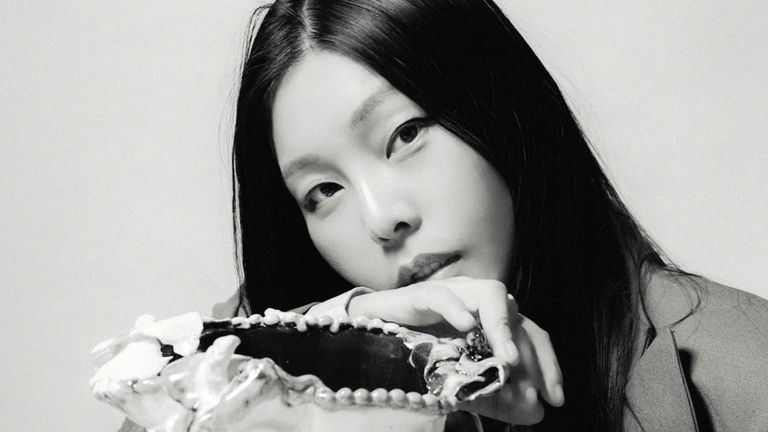
Devon Nguyen
Devon Nguyen began her creative career in fashion in 2012, established her own fashion brand before evolving into visual art through a more concept driven and emotionally layered practice. Her background in fashion continues to shape her refined visual language, craftsmanship, and sculptural approach. Through tactile and multidisciplinary works, she explores vulnerability, human connection, and contemporary culture, balancing delicacy with emotional tension.
As a Vietnamese who grew up abroad, and eventually made her way back home, Devon positions her work to speak a universal language, one rooted in Southeast Asia but built to resonate on a global scale.
In our conversation, we explore how her transnational experience has shaped her sense of identity, artistic language, and what she hopes for Vietnam’s contemporary art scene moving forward.
You were born in Vietnam, raised in Poland, educated in London, and eventually returned home. How has this transnational experience shaped your identity and artistic language?
This cross-cultural journey is the entire blueprint of my identity and artistic language. Has given me a multidimensional perspective on the world, I view each culture as a distinct layer that enriches my practice. Returning home allowed me to fuse these experiences by embracing my Vietnamese cultural roots and channeling them into a contemporary approach. By grounding my work in the tactile energy and earthy craft traditions of Vietnam, my practice naturally evolved off the canvas into three-dimensional sculpture.
Returning to Vietnam was a strategic turning point, providing the foundational base I needed to eventually scale my practice back onto the international stage. I view Vietnam not just as a geographic home, but as a dynamic incubator shaped by three core pillars: its culture, its market, and its people.
Ultimately, building my practice in Vietnam is a deliberate step toward global expansion. By capturing this region's unique, tactile energy and synthesizing it with the international design principles of my background, I am positioning my work to speak a universal language, one rooted in Southeast Asia but built to resonate on a global scale.
Looking back, do you think returning to Vietnam was ultimately an emotional decision, a creative decision, or both?
Returning to Vietnam was a strategic decision that seamlessly merged professional expansion with personal purpose.
On a professional level, it marked a major creative pivot. Returning opened my eyes to the incredible richness of the local heritage, providing the ideal infrastructure and resources to scale my practice. This environment gave me the foundation to successfully transition from fashion design to becoming a multidimensional visual artist.
On a personal level, the move was about investing in sustainable growth and regional impact. It allowed me to actively contribute to Vietnam's creative economy by merging international design standards with a wealth of local craftsmanship. Ultimately, moving back allowed me to streamline my vision, build a sustainable business model, and establish a meaningful, long-term foundation for both my brand and the growing regional art scene.
In a previous interview with Vietcetera, you mentioned the limitations of resources within the fashion industry. How do you see the landscape for contemporary art in Vietnam in comparison? What are your aspirations as an artist, both locally and internationally?
In fashion, you are always pushing against practical limits, production timelines, fabric availability, and the commercial pressure to be functional. It can feel like your creativity is fighting against a lack of structural resources.
The contemporary art landscape in Vietnam is completely different. Because it is still fresh and rapidly growing, it is far less rigid than the fashion industry or even long-established Western art hubs. It feels like an open, agile space where there are fewer rules. This freedom has allowed me to experiment without boundaries, letting me bridge my fashion background, abstract painting, and heavy materials like ceramics seamlessly.
Nature and flowers have been recurring inspirations in your work since your earliest paintings. Where does this fascination come from, and what does it reveal about your inner world?
My fascination with nature and flowers stems from a very simple truth: Mother Nature is the best teacher of all. For as long as I can remember, I have looked to the natural world to understand the cycles of life, growth, and transformation.
Flowers show us how to be both incredibly fragile and remarkably resilient. When it comes to my inner world, it is less about fighting the complex or heavy things and more about finding a sense of peace.
I don’t believe art always has to be challenging, loud, or try to save the world.
Sometimes, the most powerful thing art can do is simply ease your soul. If a piece of mine can bring someone a moment of calm, comfort, or quiet emotional release, then it has already done its job.
What does the exhibition In Her Garden represent in your journey as an artist? Was there a particular emotional or conceptual starting point behind the exhibition?
In Her Garden exhibition celebrates growth and transformation. For me, a garden isn't a static place; it is a living space that changes every day. Like a real garden, our lives continue to evolve, shaped by time, experience, and care. Through this work, I want to remind everyone that growing into yourself is a natural, ongoing journey, not a final destination.
The starting point for this exhibition was my own journey of looking inward and letting my art mature. It is the moment where all the pieces of my past finally bloomed together. By taking the deep emotion of abstract painting and shaping it into physical clay, I built a quiet, safe space. In Her Garden exhibition is an invitation to step into that sanctuary, embrace your own vulnerability, and see the beauty in your own growth.
Your website states: “My work explores the intersection of art, space, and human perception, translating emotion into form.” How does this philosophy manifest in your recent works, particularly in In Her Garden?
In In Her Garden, this philosophy comes to life by turning the exhibition space into a physical sanctuary. I wanted to bridge the gap between abstract emotion and reality, so I took the fluid feelings that used to stay flat on my canvases and gave them physical bodies through ceramic sculpture. Clay allows me to translate emotion into a tangible form that you can sense in three dimensions.
When viewers walk in, they aren’t just looking at art; they are stepping into a living extension of my inner world. Because the works celebrate growth and transformation, the shapes and textures are designed to make people slow down and connect with their own vulnerability. It creates a quiet, comforting experience where art, space, and human emotion meet to simply ease the soul.
The exhibition statement asks: “If your soul were a garden, what kind of flowers would grow there?” So, what flowers are currently blooming in Devon Nguyen’s inner garden and what do they say about you at this stage of your life?
Right now, Iris flowers are fully blooming in my inner garden.
The iris is a beautiful symbol of transformation, deep inner vision, and emotional wisdom. At this stage of my life, it represents a very intentional shift. I am moving away from the loud, fast-paced pressures of my past and stepping into a softer, more grounded, and feminine energy.
These flowers show that I am currently in a phase of maturity and gentle reflection. After years of exploring different cultures, industries, and mediums, my inner garden is no longer a wild, chaotic space. It has become a quiet sanctuary of comfort and resilience. The presence of the iris says that I am embracing my own vulnerability, trusting my intuition, and focusing on creating art that simply aims to ease the soul.
Vietnam’s contemporary art scene is changing rapidly. What conversations or shifts do you hope to contribute to as an artist working here today?
I hope to contribute to a major shift in how we look at traditional materials and the purpose of art in Vietnam today, to bridge the gap between traditional craft and fine art. Vietnam has an incredible history of craftmanship, but it is often seen purely as a utilitarian craft. By taking clay and using it to shape modern, abstract sculptures, I want to show that our traditional materials can speak a highly contemporary language.