Duyên Âm: Why Do Some Vietnamese Believe Love Can Outlive Death?
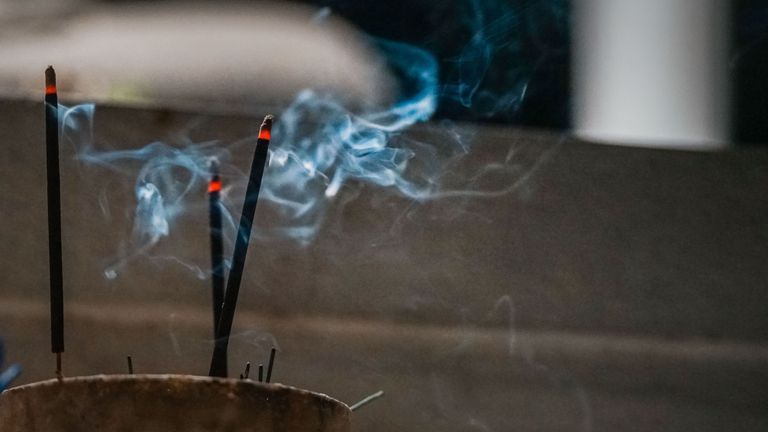
Source: Atlantic Ambience/Pexels
*This article examines duyên âm as a Vietnamese folk belief for the purpose of cultural understanding. It does not present the concept as scientifically established or endorse superstitious practices.
You meet someone. Things are going well. Then, for reasons neither of you can quite explain, the relationship falls apart. It happens again… and again.
At some point, a relative, a friend, or perhaps a fortune-teller might offer an explanation that has little to do with modern dating apps, attachment styles, or mere ill luck:
Có khi bạn có duyên âm.
Maybe you have duyên âm.
To someone unfamiliar with Vietnamese spirituality, the phrase can sound like the premise of a supernatural romance novel. Yet within Vietnamese popular belief, it belongs to a much broader way of understanding duyên, the invisible affinity or cosmic circumstance believed to bring people into one another’s lives.
If (fate and karmic debt) offers a framework for why people meet, stay, and eventually part ways in the waking world, duyên âm takes that logic somewhere far more mysterious: beyond the threshold separating the living from the dead.
What Exactly Is Duyên Âm?
The phrase is made up of two familiar Vietnamese words.
Duyên can roughly refer to fate, affinity, or the circumstances that bring two people together. Âm, meanwhile, refers to the realm associated with the dead, in contrast with dương, the world of the living. Put together, duyên âm is commonly used in contemporary Vietnamese popular belief to describe an alleged emotional or romantic attachment between a living person and a spirit of the dead.
There is no single authoritative definition of duyên âm, nor an established religious doctrine that neatly explains how it works. It is better understood as part of folk spirituality and popular storytelling than as a scientifically established phenomenon.
Still, stories about it tend to follow familiar patterns. One involves an unfinished relationship from another lifetime. Two people may have once been lovers or spouses, the story goes, but one remains emotionally attached even after death and continues to follow the other.
Another version begins in the present: a wandering spirit encounters a living person, becomes attached to them, and refuses to leave. The details vary from storyteller to storyteller, the underlying idea remains remarkably consistent: Some attachments are imagined as being so difficult to release that even death does not completely end them.
Why The Unseen World Feels Close?
To understand duyên âm, one must understand that in Vietnamese spiritual traditions, the boundary between life and death has rarely been treated as an absolute wall.
Anthropologist Heonik Kwon, in his classic study Ghosts of War in Vietnam, documented how the spirits of those who suffered untimely or displaced deaths continue to exist as active presences in the social worlds of the living. Families and neighbours offer incense, meals, and votive paper, treating these unseen entities not merely as forgotten ancestors, but as continuous social participants.
This worldview is neatly encapsulated in a well-known Vietnamese idiom frequently cited by scholars of religion:
Trần sao âm vậy.
As in the earthly world, so in the unseen realm.
As anthropologist Alisher Sharipov notes in his research on Vietnamese ghost beliefs and rituals, the unseen domain is structured like our own. It possesses social hierarchies, emotional needs, and relational desires.
If the dead can be remembered, spoken to, offered sustenance, and cared for, then the idea that romantic desire or possessiveness might survive bodily death is not an unthinkable leap. It is simply the extension of a shared human reality.
When Heartbreak Becomes Supernatural
This is where duyên âm transitions from an intriguing cultural philosophy into a source of personal anxiety.
- Someone reaches the age when society expects them to marry, yet every relationship inexplicably dissolves.
- Someone repeatedly dreams of the same unfamiliar, phantom figure.
- Someone wakes in the dark with the lingering sensation of another presence in the room.
Popular interpretations often link these experiences to a spirit's intervention. In folklore, the ghost becomes jealous of any living suitor, subtly orchestrating misunderstandings or emotional coldness to ensure their living partner remains single.
These interpretations should be read for what they are: folk frameworks rather than empirical evidence. What matters culturally, however, is how effectively this framework transforms personal grief or dating frustrations into an intelligible narrative.
As scholar Nguyễn Thị Hiền demonstrates in her research on and spirit-mediumship practices among the Việt, personal suffering and psychological distress in Vietnam are frequently contextualised through relationships with the spirit realm. A failed romance ceases to be merely a string of bad dates, it becomes part of an invisible dialogue between two worlds.
How To “Break Up” With A Ghost?
Vietnamese folk tradition even has a dedicated phrase for ending a spiritual attachment: cắt duyên âm - literally, to “cut” the unseen bond.
A wide variety of rituals are advertised or practiced under this name today, but they should not be viewed as a single, standardized Vietnamese ceremony, nor as part of established Buddhist doctrine. In popular practice, however, the intent behind them is straightforward: the living person wants to move forward.
Depending on who conducts the ritual, the methods and explanations vary considerably, often involving offerings of food, votive paper, or tailored prayers to bring closure to the perceived bond. Yet what makes this tradition intriguing is not whether an invisible lover actually departs, it is the idea that a relationship with the dead can be renegotiated in the first place.
Anthropologist Heonik Kwon’s research into Vietnamese ghost traditions shows that interactions with displaced spirits are rarely defined purely by fear. Instead, they are often mediated through care, reciprocity, and ritual transformation. The dead do not necessarily need to be defeated or aggressively expelled; within this worldview, the nature of the relationship can simply change.
Seen through that lens, the gentler interpretation of cắt duyên âm feels surprisingly less like a Hollywood exorcism and more like psychological closure:
Whatever bound us together has run its course.
You can go your way now, and I can go mine.
A Story About Release
At its core, the concept of duyên âm carries a surprisingly tender realization:
- The spirit lingers because it cannot accept the end of a bond.
- The living person suffers because they cannot clearly step into their future.
- The resolution requires neither side to destroy the other, but simply to accept release.
This aligns duyên âm closely with the fundamental philosophy of duyên–nợ. Some people enter our lives because of duyên (affinity); some remain because of nợ (debt). And when that shared karma is exhausted, the kindest act, whether between two living people or across the boundary of death, is to acknowledge that the journey together has ended.
Whether viewed as an active spiritual reality or a profound cultural allegory, duyên âm endures because it speaks to a universal human condition: we all know what it feels like to be haunted by a love that is already over.