E-Commerce Exporting: Vietnam’s New Frontier To Outgrow The "Manufacturing Hub" Label
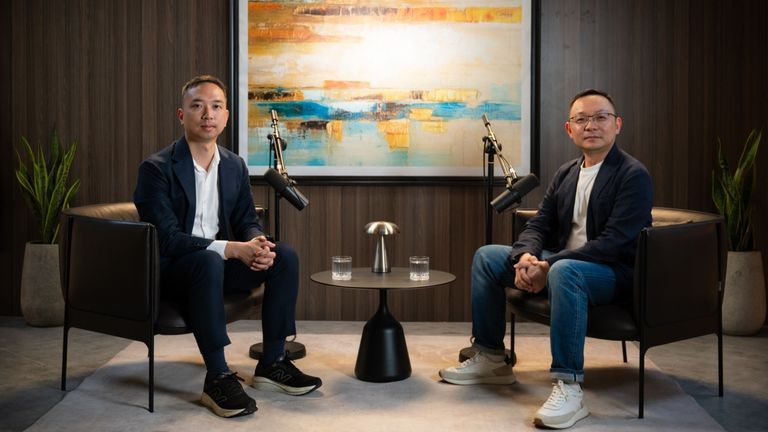
Source: Khooa Nguyen from Vietcetera
For decades, Vietnam’s role in the global economy has been well-defined, yet fundamentally constrained. Recognized predominantly as a powerhouse manufacturing hub, the nation's export growth has historically been driven by a traditional business-to-business (B2B) model.
Factories across the country have produced goods at massive scale for global brands such as Nike, Adidas, and Samsung, following the requirements and designs set by overseas buyers. It is an Original Equipment Manufacturer (OEM) model that has successfully lifted the nation’s economy, helping push total exports to US$405 billion in 2024. Yet behind these strong export figures, Vietnam’s economic story is beginning to shift from factory production to brand ownership.
In his conversation on Vietnam Innovators, Larry Hu, Head of Amazon Global Selling Southeast Asia, shared how technology and e-commerce are helping Vietnamese businesses move beyond traditional OEM manufacturing. Based in Ho Chi Minh City and armed with 11 years of experience at Amazon, Hu has worked closely with sellers to navigate the challenges of global trade.
Through efforts in infrastructure, seller support, and grassroots education, Hu and his team are supporting Vietnamese businesses in moving closer to end consumers and capturing the true value of their products.
The most compelling aspect of this narrative is not merely that it is happening, but where it is happening. The next era of Vietnam’s digital trade is not confined to the tech-savvy startup enclaves of Hanoi or Ho Chi Minh City; it is penetrating deep into the country's rural agricultural communities and traditional craft villages.
The Macro Shift: From “Made In Việt Nam” To “Vietnamese-Owned Brands”
To understand the scale of this evolution, one must look at the shifting ambitions of the Vietnamese entrepreneur.
According to the Amazon Vietnam SMEs Empowerment Report 2025, the desire for brand ownership is accelerating at a remarkable pace. Over a span of just 12 months, the number of Vietnamese sellers enrolling in Amazon's Brand Registry for protecting intellectual property surged by 30%. Consequently, sales from branded products grew by 40%, and the number of Vietnamese sellers surpassing the $1 million annual revenue milestone increased by a staggering 60%.
For Hu, this rapid growth is fueled by three converging forces: ambition, access, and capability.
First- and second-generation factory owners are no longer satisfied operating behind the scenes; they possess an intense ambition to own the customer relationship and climb higher up the global value chain. E-commerce has democratized access, allowing small businesses to reach hundreds of millions of consumers globally without the prohibitive costs of international travel or the need to rely on intermediaries.
Finally, advanced technology innovations and tools have given these businesses the capability to execute sophisticated digital marketing, manage logistics, and analyze data that were previously impossible for a small enterprise to handle alone.
While digitally native urban startups like the activewear brand Coolmate have leveraged these forces beautifully, the true democratization of this model is found far outside the metropolitan borders.
The Most Important Transformation Is Happening Outside The Big Cities
Perhaps the most compelling part of Hu’s story is where this transformation is taking place.
Vietnam’s next chapter in digital trade is not limited to urban startup ecosystems. It extends into the country’s agricultural heartlands and more than 5,000 traditional craft villages historically had limited direct access to global consumers.
For generations, many artisans and farmers could only participate in export markets indirectly. Their products moved through multiple intermediaries, leaving local producers with limited margins and little understanding of how international consumers actually perceived their goods.
Amazon is helping reduce many of these barriers. By providing direct access to global storefronts, local producers are transforming raw commodities into high-value, branded consumer goods.
A prime illustration of this is Vida Farm. Rather than the low-margin tradition of exporting raw agricultural materials, this farming business follows the strategy of creating finished wellness products. Today, they sell branded herbal teas directly to American consumers, sharing their unique local story and traditional ingredients on their Amazon storefront. This not only builds a recognizable brand but also ensures a significantly higher percentage of the revenue flows back into the local farming community.
Similarly, in the traditional manufacturing sector, Green Mekong, a company based in the Mekong Delta with two decades of experience in wooden furniture, faced the logistical challenge of exporting bulky, heavy items. Refusing to be constrained by geographical and logistical limitations, the company's leadership reinvented their product design specifically for the e-commerce era. By transitioning to flat-pack, easily shippable furniture, they successfully aligned their traditional craftsmanship with the demands of modern global logistics.
To facilitate these success stories, Hu’s strategy is decidedly boots-on-the-ground. Rather than expecting rural entrepreneurs to find their way to Amazon, Amazon goes to them.
Hu’s team consistently travels across the country to provinces like Da Nang, Dak Lak, and Hai Phong to run local initiatives. Through the "Nami" training and nurturing program and massive seller conferences which recently saw 1,500 in-person attendees and a staggering 300,000 online participants from across the nation, Amazon is proving its commitment to uplifting the broader Vietnamese community.
As Hu notes, witnessing this inclusive economic expansion is "the most rewarding part" of his team's daily mission.
Rethinking R&D Through Data and Consumer Insights
One of the most fascinating insights from Hu’s conversation was how data is transforming the way Vietnamese businesses approach product development itself.
In the legacy B2B model, research and development (R&D) was heavily restricted. Manufacturers produced goods based on the strict directives of foreign procurement officers, or relied on slow, capital-intensive guesswork.
Today, data has replaced instinct. Through tools and consumer insights provided by Amazon, Vietnamese manufacturers can identify unmet demand before a single prototype is manufactured.
Hu points to tools like the Amazon Product Opportunity Explorer. If a local furniture maker wants to produce a new coffee table, they no longer have to guess what American or Japanese consumers want. By analyzing search volumes, conversion rates, and millions of customer reviews, they can quickly identify specific market gaps like an unmet demand for a "purple coffee table", for example, and innovate their product lines accordingly.
This continuous loop of testing and learning is perfectly exemplified by NewBam, a Vietnamese cashew seller. Vietnam is a global leader in raw cashew production, but NewBam bypassed commodity exports entirely. By studying US consumer behavior data, they identified a growing demand for healthy, convenient, and varied snacks. In response, they developed small, on-the-go packaging featuring bold flavors like caramel, wasabi, and tom yum, directly aligning local agricultural strengths with specific international consumption habits.
R&D is no longer a one-time, risky bet; it is an agile, data-driven conversation with the global market.
The Future Of AI And The "Solo-Preneur"
Looking toward 2030, Hu predicts that AI will be the ultimate catalyst. "Generative AI will dismantle the final barriers of operation, language, and marketing. A one-person company can now serve millions of international customers by using AI agents to manage supply chains and provide 24/7 customer service."
This vision extends beyond big cities to rural craft villages. Success stories like Vida Farm (herbal tea) or Green Mekong (furniture from the Delta) demonstrate that when agriculture and traditional crafts meet a digital mindset, they transform from raw commodities into high-value cultural exports.
A New Economic Identity
Vietnam’s export economy is continuing to evolve. Much like the neighboring Asian economies decades prior, the nation is steadily transitioning from being the world’s factory to becoming a cradle of recognizable global brands.
For Hu, the long-term ambition is to see more Vietnamese businesses gain international recognition not only for manufacturing, but also for innovation, branding, and product quality. He envisions a future where the exceptional talent of Vietnamese entrepreneurs translates into "international shining stars" – products and brands that command global respect and capture maximum economic value for the country.
By pushing the boundaries of e-commerce beyond the major cities and deep into the agricultural and manufacturing heartlands, Hu and Amazon are helping to forge a new, resilient, and inclusive economic identity for Vietnam on the global stage.
Watch the full Vietnam Innovators episode here: