Flowers At The Gate, Stories In The Card: The Unspoken Etiquette Of Vietnamese Teachers’ Day
Source: PennSchool
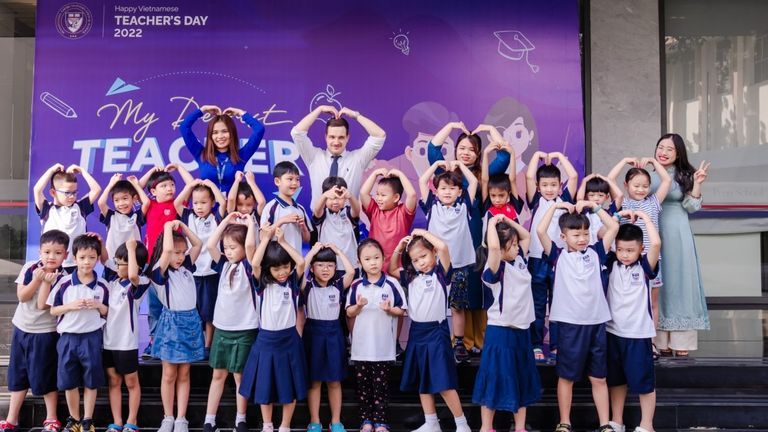
Every November, the morning commute past school gates in Ho Chi Minh City and Hanoi undergoes a visible transformation. Sidewalks normally claimed by parked motorbikes fill with cellophane-wrapped bouquets, potted orchids and neatly tied parcels. Inside international and bilingual campuses, security guards direct a steady stream of parents arriving early with gifts in hand. For anyone unfamiliar with the local calendar, it can look like an impromptu civic festival. In Vietnam, 20 November is Vietnamese Teachers’ Day—an occasion that is not a public holiday, yet carries the social weight of one.
Across generations, the tokens exchanged on this day have evolved alongside the country’s economy. In earlier decades, families expressed appreciation through modest, symbolic offerings: a few sweet oranges, a bar of scented soap or a length of fabric chosen for a teacher’s traditional áo dài. Today, those gifts more often take the form of specialty coffee, artisan tea, flowers and handwritten cards. Yet the enduring sense of gratitude toward one’s mentors has remained steady. Shaped by a deep-seated cultural ethos of respecting teachers and valuing education, acknowledging educators is a collective instinct rather than a private formality.
Friction arises only when that instinct meets the institutional norms of an international classroom. When Vietnamese parents, expatriate families and overseas teachers share one school community, a warm gesture can easily be misread. Navigating 20 November well simply asks both sides to understand how gratitude is spoken, and heard, across cultures.
For Parents: The Quiet Power Of A Thoughtful Token
For families with children studying in Vietnam, 20 November presents two distinct cultural puzzles. Vietnamese parents whose children attend international or bilingual schools often translate a familiar custom into an environment governed by Western workplace boundaries. Expatriate parents, meanwhile, experience the reverse: arriving in a country where teachers are celebrated on a scale rarely seen back home, and wondering how to participate without overstepping. In both cases, restraint paired with personal attention is the safest guide. Thoughtful gestures strengthen the partnership between home and school; extravagant or transactional ones quietly strain it.
Do: Leave Room For A Child’s Voice
The most meaningful gift rarely comes from a shop. A handwritten card, a drawing or a few lines about what a child enjoys in class can become a lasting keepsake for a teacher working far from home. Parents can help younger children find the words, but should leave the sentiment their own. “Thank you for helping me read” or “You made me feel brave on my first day” is more moving than a polished message written by an adult. A bilingual card is especially thoughtful: a short Vietnamese greeting alongside an English note gives the occasion local texture while ensuring the teacher understands it.
Do: Offer A Small Taste Of The City You Share
For families who prefer a physical gift, modest and easy-to-carry options are usually safest. Vietnamese specialty coffee, artisan tea, locally made chocolate, a small scented candle, a notebook or a book are all strong possibilities. A reasonably priced coffee-shop or restaurant voucher can also be genuinely useful to a teacher still discovering the city. Local products give an overseas educator a small encounter with the place in which they live and work. Before buying, parents need only ask whether the gift would feel comfortable in a professional relationship; if uncertain, choosing something simpler is wiser.
Do: Check The School’s Policy And Consider A Shared Class Gift
International schools often have gift policies designed to prevent conflicts of interest and perceived favouritism. These may include limits on the value of individual gifts or restrictions on cash, vouchers and presents from individual families. Since policies vary between institutions, parents should check the school's guidelines before making a purchase rather than assume that a gesture considered appropriate elsewhere will be welcomed.
Where permitted, a voluntary class gift can be a thoughtful alternative to individual presents. A card signed by students, a modest floral arrangement or a shared gift for the teaching team allows families to express their appreciation collectively, without creating unnecessary pressure to spend. Contributions should always remain optional, and every child should feel equally included regardless of whether their family participates.
Do: Remember Teaching Assistants And Support Staff
In early-years and primary classrooms, Vietnamese teaching assistants are closely involved in children’s daily routines. They help with meals, transitions, reading and the moments when a child needs reassurance. Although their work can be less visible than the lead teacher’s, it is central to a child’s experience. A direct thank-you, handwritten note or similarly modest gift recognises the whole team. Where relevant, parents can also acknowledge learning support staff or others who work closely with students. Remembering only the most senior teacher can overlook the people providing much of the day-to-day care.
Don’t: Give Cash In An Envelope
For Vietnamese parents, this may be the clearest cultural boundary to understand. In some domestic settings, an envelope of money is considered a practical expression of respect. In many international schools, however, cash puts teachers in a difficult position: they may feel it compromises professional boundaries, while school rules may require it to be declined, reported or returned. Even without an expectation attached, cash can be interpreted as payment or an attempt to secure special attention. A card, modest present or approved class collection communicates appreciation far more clearly—and without creating an obligation for either side.
Don’t: Choose Luxury Or Overly Personal Gifts
Jewellery, expensive perfume, high-end cosmetics and alcohol cross a line that a modest present respects. They may conflict with a teacher’s taste or workplace rules, while their monetary value can create an unspoken debt or raise concerns about favouritism among families. Teachers are important figures in a child’s life, yet they are professionals rather than close friends or relatives. Thoughtfulness is welcome; an expectation of personal closeness is not.
Don’t: Make The Gift Difficult To Transport Or Consume
A teacher may receive several bouquets in one day. While an oversized arrangement can look striking in a photograph, it is awkward to carry home, especially for someone travelling by motorbike or school shuttle. A compact bouquet or small desk plant is far more practical. Food also requires care. A teacher may have allergies, dietary restrictions or nowhere to store fresh food during a busy school day. Packaged products with ingredient labels and expiry dates are safer than homemade dishes of uncertain composition.
For Expatriate Teachers: Receive The Gesture With Cultural Fluency
For expatriate educators, 20 November can feel both heartwarming and disorienting. Teachers accustomed to systems where appreciation is expressed quietly—or saved for the end of the academic year—often find themselves surrounded by flowers, gift bags and earnest parents at the classroom door. Receiving these gestures gracefully means balancing cultural empathy with institutional consistency.
Do: See The Cultural Memory Behind A Simple Bouquet
A parent arriving with flowers or a small present is not necessarily trying to establish a special relationship. In Vietnam, 20 November is a widely recognised expression of respect for the teaching profession. The gesture may reflect a family’s own school memories, a child’s affection or a broader belief that educators should be acknowledged. Teachers need not adopt every local custom, but recognising that a gift carries meaning beyond its material value allows them to respond with warmth rather than hesitation.
Do: Say Thank You
A brief expression of thanks at the school gate matters, and a follow-up message through the class communication platform makes the acknowledgement more personal. Mentioning the student’s card or drawing specifically—“Thank you for the lovely note; I was touched by what your child wrote about reading time”—shows that the gesture was noticed, not merely received. A little Vietnamese makes the exchange warmer still. Saying “Cảm ơn” or “Cảm ơn anh/chị nhiều” requires no perfect pronunciation; the effort itself signals respect for the host language and culture.
Do: Know Where The Boundaries Sit Before The Morning Rush
Teachers should not have to make policy decisions at the classroom door. Before 20 November, educators should check with human resources or academic leadership about individual gifts, shared presents, vouchers and cash. Finding out whether an item must be disclosed, shared with colleagues or returned, and learning what wording the school recommends when a gift cannot be accepted ensures consistency across classrooms. If one teacher accepts a high-value present while another refuses it, parents may understandably view the policy as arbitrary.
Do: Acknowledge Vietnamese Teaching Assistants
Teachers’ Day belongs equally to the Vietnamese colleagues who share the classroom. An expatriate teacher might bring a coffee in the morning, share a small box of biscuits or write a handwritten note thanking a teaching assistant for their patience and teamwork. The value matters less than recognising a colleague’s contribution. Teaching assistants bridge languages, expectations and routines; acknowledging them reinforces that education is collaborative work.
Don’t: Open Every Gift In Front Of The Giver
In some Western contexts, opening a present immediately is a conventional way to show excitement. In a Vietnamese exchange, doing so may make the giver self-conscious, particularly when several people are present or gifts differ in size. It can also give the impression that the contents are being assessed or compared. Context matters: a child may be eager to see a teacher’s reaction to a drawing. When unsure, however, thank the parent, receive the gift with care and open it later in private.
Don’t: Reject a Gift In A Way That Causes Embarrassment
Professional boundaries matter, but so does the manner in which they are upheld. A blunt refusal can make a parent feel rebuked for following a familiar custom. If a gift exceeds the school’s limit or cash is prohibited, explain the rule gently and make clear that the intention is appreciated. Where policy allows, returning the money or expensive item discreetly while keeping the accompanying card—“Thank you for thinking of me. Our school policy means I’m unable to accept cash, but I’m very grateful for your kind message”—protects the boundary without rejecting the parent’s goodwill.
Don’t: Turn Individual Gifts Into Social-Media Content
A photograph of a classroom celebration, shared card or flowers in the staffroom can capture the warmth of the day. Close-ups of individual gifts beside students’ names are different: they invite comparisons between families, expose which children gave what and raise questions about student privacy and school policy. Obtain permission before sharing student images; a collective photograph or general thank-you message conveys the spirit without singling out families.
A Few Words That Travel Well
For parents writing a card, pairing a short Vietnamese greeting with an English note bridges two traditions gracefully:
- “Chúc mừng Ngày Nhà giáo Việt Nam 20/11.” — Happy Vietnamese Teachers’ Day.
- “Cảm ơn thầy/cô đã dạy dỗ và đồng hành cùng con.” — Thank you for teaching and supporting my child.
- “Kính chúc thầy/cô luôn mạnh khỏe và hạnh phúc.” — Wishing you good health and happiness.
For expatriate teachers responding to families, a few simple phrases carry genuine warmth:
- “Cảm ơn anh/chị nhiều.” — Thank you very much.
- “Tôi rất trân trọng món quà và lời chúc này.” — I really appreciate this gift and your kind wishes.
- “Cảm ơn gia đình đã luôn đồng hành cùng lớp.” — Thank you to your family for being part of our class community.
What Remains After The Flowers Wither
The best approach to 20 November is to resist turning an occasion of gratitude into a test of generosity. Parents need not compete; teachers need not repay; children should not carry adult social expectations into the classroom. A small card can express more than an expensive object, and a gracious refusal can preserve a relationship when school policy requires it.
For Vietnamese families, the day is a chance to show that education extends beyond classroom walls. For expatriate teachers, it is an invitation to understand local culture without feeling compelled to accept every practice. Both sides can meet on common ground: respect for teaching, appreciation for the people who do it, and care for the children at the centre of the relationship. The objects may change—from oranges and fabric to coffee, flowers and handwritten notes—yet what should remain is their meaning. A gift is at its best when neither giver nor recipient feels indebted, compared or uncomfortable. It simply says: we see what you do, and we are grateful.