International Streets, Vietnamese Names: Marks Of Trade And History
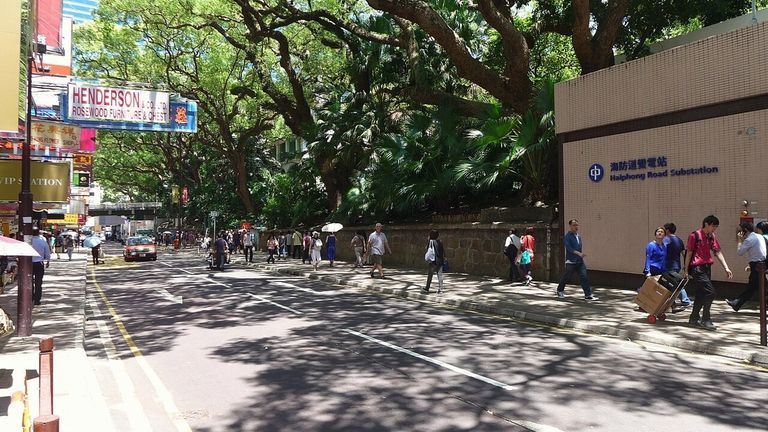
Haiphong Road in Hong Kong. | Source: Wing1990hk
It’s not a rare case for Vietnamese residents and even foreign visitors to see streets with non-native names like Alexandre de Rhodes, Pasteur, or Calmette around the city centers. But, what about international streets that have Vietnamese names on them? How many of them do you know?
This article will explore the stories behind some Vietnamese names on streets in Hong Kong, India, Italy, and many others, and see what such phenomena might give clues about Vietnam’s relationships with the outer world.
Behind The Vietnamese Streets In Hong Kong: A Mark Of Trades
Hong Kong is hundreds of kilometers away from Vietnam, yet there are around 5 streets/roads that might give you flashbacks of Vietnamese destinations. Here’s the list: “Saigon Street”, “Haiphong Road”, “Tonkin Street”, “Hanoi Road”, “Hoi An Street”, and still counting. Before any further details, yes, “Tonkin Street” is actually a Western adaptation of a Vietnamese name: “Đông Kinh” - the former name of Hanoi capital.
Historically, Hong Kong was a vibrant trading hub back in the late 19th and 20th centuries, with Vietnam being one of the country’s strategic and important trading partners. This was because during the French colonial period, in order to maintain trading relationships between Vietnam and China, goods went through 2 main routes that connected to Hong Kong: Hai Phong Port and Saigon Port.
In 1909, Hong Kong underwent an event of renaming streets in Kowloon. In this event, to pay tribute to the trading connection, it decided to give 3 of its streets the first-ever Vietnamese names: Haiphong Road, Hanoi Road, and Saigon Street, whose previous names were Elgin Road, East Road, and Third Street, respectively.
Behind The Vietnamese Streets In Italy & India: A Mark Of History
Not all streets are named after famous destinations; many of them are, in fact, named after one great Vietnamese hero and leader: President Ho Chi Minh, or Uncle Hồ, cherishedly called.
India was the first country to have one of their streets named after Ho Chi Minh: Ho Chi Minh Sarani, Kolkata (previously Harrington Street), where a historic moment was marked. In 1970, during a protest against the brutal aggression of the U.S toward Vietnam in the ongoing war, a group of young demonstrators in Kolkata decided to rename Harrington Street as Ho Chi Minh Sarani. And ironically, the street was also where the U.S. The Consulate General was located at the time, making it both a symbol of anti-colonial resistance and a subtle note of mockery. Years later, the name was officially approved by the Calcutta Municipal Corporation and lived on until today.
Italy was one of the countries that Ho Chi Minh once lived and worked in the 1930s on his quest for national liberation. His presence there left a strong impression on Italian people with his peace-loving nature, self-determination, and unwavering will to liberate his country. Later on, when the Vietnam revolutions were gaining more and more attention and progress, to send love and advocacy to its people on the land, Italy named many of its streets after Ho Chi Minh. Although exact dates for such naming were not public, 21 is now the number of streets around Italy that have Vietnam’s most revered leader as their name.
Italy and India are the primary examples, but, they are not the only ones. Worldwide, over 10 countries have Ho Chi Minh names as their street names: Russia, Cuba, Paris, Angola, Algeria, and Mozambique to name just a few. From such evidence, Ho Chi Minh and his quest were a global phenomenon and an indispensable part of Vietnam’s image to the world.
Why Choose Streets?
Street naming is a common way for commemoration but not the only form. Other forms such as dedicating public spaces or building statues are popularly seen across countries, from Ho Chi Minh Square in Moscow to his bronze statues in Cuba, Venezuela, and Madagascar. However, according to Dr. Yolandi Burger in her research on “The stories in Gauteng’s street names: Street naming as a form of urban storytelling,” street naming is still a powerful move by being both economical yet ordinarily narrative. Undoubtedly, this practice is a simple, down-to-earth, and visual way to pay tribute to historical figures and events. On the other hand, when woven into ordinary spaces, these streets are also a form of storytelling where urban areas share their history, identity, and memories.
A Quest For You
Still interested? Apart from the mentioned roads or streets, there are still many international streets with Vietnamese influence that remain unexplored or rather “lowkey”. Here are some streets that you might want to add to your research list or perhaps explore when given a chance:
- Viale Nam-Dinh in Italy
- Vietnam QuyNhon-gil (베트남퀴논길) in Korea
- Rue Bac-Ninh in France
A Bigger Picture Of Streets
Around 5 streets in Hong Kong, over 10 countries that have Ho Chi Minh as the name of a street, and many more to count. Such phenomena can signify a much bigger picture. One is that Vietnamese influence ranges from neighboring countries to global nations, from humble trading partners to a worldwide symbol of anti-colonism. The fact that these partnership ties were bonded in the past and have lasted also evidences Vietnam’s tendency to form long-term and reciprocal relationships with its partner countries. Finally, it is undeniable that Ho Chi Minh’s journey and efforts laid a profound foundation for modern ties between Vietnam and global nations.
Street names may be viewed as ordinary or even trivial, yet under a closer look, they are great storytellers. Through their presence, we know that Vietnam has already been acknowledged internationally, but mostly through its past stories of war and trade. Therefore, one question hangs: what could and will the Vietnamese do today and in the future to honour this significant part of history and also highlight the country’s new and emerging and perhaps global identity?