Phu Quoc Surpasses Bali And Phuket As A South East Asia Travel Hotspot
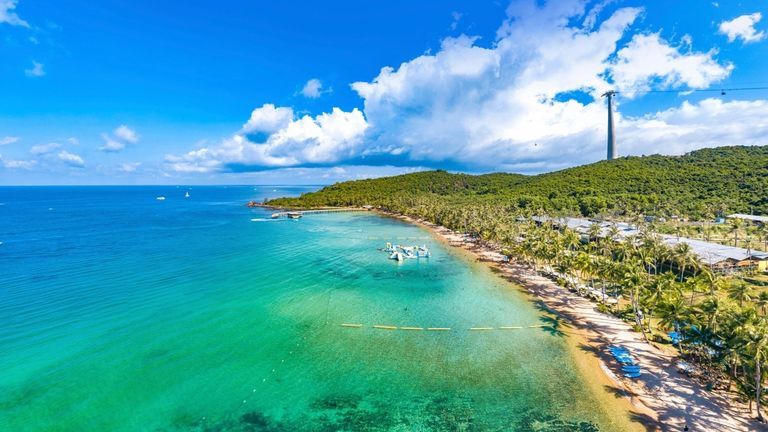
Phu Quoc has become a destination surpassing Bali and Phuket. | Source: Shutterstock
Phu Quoc is experiencing a dramatic tourism surge, welcoming nearly one million visitors in early 2026.
In January 2026, Phu Quoc received 983,387 visitors, up 60.7% year-on-year. International arrivals reached 278,347, a jump of 122.9%, generating VND 6.128 trillion in revenue, up 140.9%.
According to the latest STR report under CoStar Group, Phu Quoc’s occupancy reached 90%, surpassing Bali (60%) and Phuket (80%) in the first two months of 2026.
What makes Phu Quoc competitive?
Phu Quoc has long been one of Vietnam’s most recognisable tourist destinations. Hailed by The Independent as the “new hidden gem of Southeast Asia”, the island appears in international rankings: being the top 3 best islands in Asia (Condé Nast Traveller), the world’s second most beautiful island (Travel + Leisure), and one of Asia’s best destinations (DestinAsian).
Beyond its sun-drenched coastline and untouched mountain landscapes, Phu Quoc has become increasingly competitive thanks to its diverse tourism offerings. The island caters to luxury travellers with beachfront resorts and wellness villas, to leisure seekers with theme parks, wildlife attractions, and a casino.
For nature seekers, Phu Quoc offers UNESCO-recognised primary forests, Rach Vem fishing village (known as the “kingdom of starfish”), trekking routes, coral-reef diving, and fresh seafood culture. Phu Quoc is also rising as a MICE destination, set to host APEC 2027.
One key driver of Phu Quoc’s new momentum is the rise of iconic tourism products, particularly in the island’s south. For the first time in Vietnam, a beach destination now offers two nightly mega-shows featuring fireworks, turning the sea and sky into an immersive stage.
Meanwhile, the once-quiet nightlife scene has been transformed by Sunset Town, where travellers move seamlessly from watching the sunset on its landmark bridge to vibrant night streets and a fireworks finale. This shift has played a major role in boosting occupancy rates, especially in the southern resort belt.
The STR/CoStar report also highlights a notable trend: Vietnam’s resort destinations, including Phu Quoc, are shifting the competitive balance in the region. Unlike Bali or Phuket, Phu Quoc is not only competing on scenery but also on operational efficiency, product innovation, and smart supply management.
While Bali faces experience saturation and Phuket grapples with heavy supply pressure, Phu Quoc is hitting a “sweet spot” – where new supply remains controlled, but tourism products are continuously refreshed, creating strong appeal for both international and domestic travellers.
The boom of international travellers
Vietnam has officially granted visa-free entry to all foreign nationals travelling to Phu Quoc, allowing stays of up to 30 days in this island
This policy helped trigger a sharp rebound in international tourism to Phu Quoc, especially after the end of COVID-19. In 2024, the island welcomed 962,000 foreign visitors, a 43% increase compared to 2019, before the pandemic. Just one year later, in 2025, international arrivals nearly doubled, soaring to 1.9 million, up 93.6% from 2025.
Bui Quoc Thai, Director of the An Giang Department of Tourism, said the island now receives more than 50 flights a day, with about half of international arrivals coming from South Korea and India. China, Russia, and Eastern European countries also remain major and regular source markets for Phu Quoc.
Tran Thi Bao Thu, a representative of a travel agency specialising in the South Korean market, said many South Korean travellers choose the island for its beaches and its wide range of attractions, dining options, and entertainment complexes, all at prices lower than many other well-known Southeast Asian islands.
Phu Quoc has also become a standout destination for Indian travellers. In 2025, the island welcomed 150,000 Indian visitors out of its 1.8 million international arrivals – a surge of about 328% compared with 35,000 the previous year.
In December 2025, a high-profile Indian billionaire's wedding with more than 1,131 guests in northern Phu Quoc drove searches for the island up by 186%, according to Agoda data for the travel period of December 2025 to January 2026.
Explaining this trend, Dr. Duong Duc Minh, Deputy Director of the Institute for Economic and Tourism Development, said the wave of Indian travellers this year reflects Vietnam’s growing presence in India’s outbound tourism landscape. He noted that Indian travellers are highly sensitive to the balance between cost and experience, and their growing preference for Phu Quoc suggests the island is beginning to be perceived as a high-value destination.
Environmental challenges threaten development
Despite its tourism boom and significant growth potential, Phu Quoc still faces major challenges. Travel + Leisure – which ranked the island the second most beautiful in the world – has also been candid about its shortcomings, noting that environmental preservation remains Phu Quoc’s most urgent issue.
“In recent years, reports have surfaced of coral bleaching in the south, overfishing in key marine zones, and unchecked construction encroaching on forested land. Waste management and freshwater supply have become pressing concerns, with infrastructure racing to keep pace with demand,” the magazine observed.
Bui Quoc Thai, Director of the An Giang Department of Tourism, added that Phu Quoc continues to grapple with infrastructure and environmental pressures. The island currently meets only 13% of the global sustainable tourism standard— far below Da Nang’s 30%.
Phu Quoc has been selected to host APEC 2027, a milestone that could bring an unprecedented influx of visitors, potentially far exceeding today’s surge. This presents both an opportunity and a challenge.
If the island continues to lag in waste management and environmental protection while development accelerates, it risks losing the very natural beauty that keeps travellers coming back. It also risks losing the premium edge that APEC 2027 could bring, given the event’s concentration of high-value delegates.
In response to that, in 2024, the Kien Giang province (An Giang now), has built a proposal, which focuses on addressing infrastructure gaps, environmental pollution, and service quality. The plan proposes transitioning 100% of transportation to electric vehicles and treating 50% of waste using renewable energy.
The plan, set to be implemented from 2025 to 2045, aims to host APEC 2027, meet 30% of global sustainable tourism standards, and achieve Net Zero by 2030. It is currently being finalised before the provincial government submits it to the Prime Minister for approval.
But the window is narrow, with APEC 2027 approaching and tourist numbers climbing at a record pace. Whether Phu Quoc can balance growth with environmental protection will determine if it remains Southeast Asia’s rising star, or becomes another cautionary tale of overdevelopment in the region.