Sun, Sand, And Summits: Can Vietnam's Phú Quốc Turn A Winter Boom Into Lasting Global Appeal?
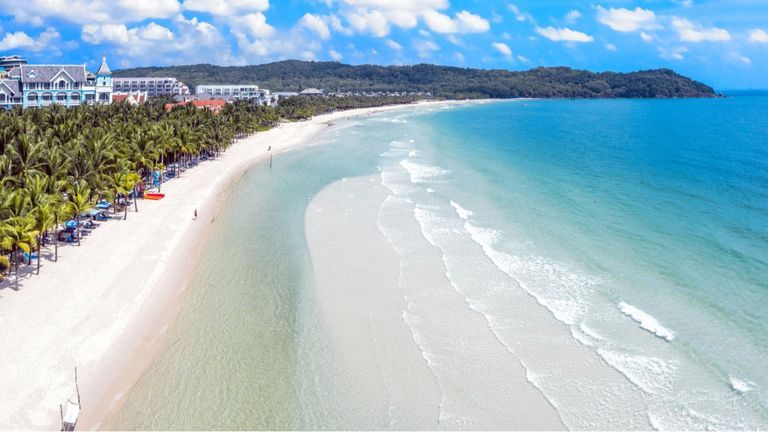
Khem Beach in Phú Quốc.| Source: VNA
Phú Quốc has officially emerged as the number one overseas destination among South Korean families with children planning their winter holidays for the November 2026 to January 2027 period, according to a comprehensive October 2026 report published by the digital travel platform Agoda. Accommodation searches for the Vietnamese island have surged by 33% year-on-year, a meteoric rise that has pushed Phú Quốc up four places in the rankings. Crucially, this surge has allowed the island to overtake traditional, highly established East Asian powerhouses, bypassing Fukuoka, Osaka, and Tokyo. The data points to a broader, undeniably profound shift towards Vietnam as a regional family holiday destination; the country proudly placed three distinct destinations within the top 10, with the coastal cities of Nha Trang and Đà Nẵng joining Phú Quốc at fourth and sixth places, respectively.
The timing of this leisure tourism boom is particularly significant, overlapping with a major geopolitical milestone for the nation. Following the conclusion of the 2026 APEC Economic Leaders’ Meeting in Shenzhen, China, on November 19, Vietnam officially took over the role of host for the 2027 summit. Placing its grandest ambitions on the world stage, the Vietnamese government has selected Phú Quốc to host the highly prestigious 2027 APEC Economic Leaders’ Week.
Recognising the immense pressure of hosting global dignitaries, Vietnam has identified 21 major infrastructure projects worth an estimated VND137 trillion (US$5.4 billion) to prepare the island for the event. These vast capital injections will cover comprehensive airport expansions, modernised transport networks, state-of-the-art conference facilities, and entirely new urban infrastructure.
Can Phú Quốc successfully turn its growing appeal as a leisure destination into a lasting, resilient position as an international tourism and business hub?
The Island That Beat Japan
To understand the scale of Phú Quốc’s ambitions, one must first look at the travel patterns it is actively disrupting. The Agoda winter travel ranking provides a striking snapshot of changing South Korean travel preferences. For decades, Japanese cities have dominated the winter outbound market for Northeast Asian travellers, offering proximity, safety, and highly developed hospitality. For a Southeast Asian island to jump four places and secure the number one spot, it signals a structural shift in regional tourism dynamics.
It is important to clarify that Agoda's metrics reflect accommodation-search intent rather than finalised bookings or official border arrivals. However, this digital enthusiasm is emphatically supported by the reality on the ground. According to recent tourism performance metrics, Phú Quốc welcomed 2.14 million international visitors in the first 10 months of 2026. This represents a staggering 59% year-on-year increase, pushing total tourist arrivals to 9.2 million for the year so far.
Rather than viewing the Agoda ranking merely as proof that Vietnam is "defeating" established Asian destinations, it should be seen as a reflection of changing consumer demands. Families are increasingly rejecting the freezing urban winter holidays of Northeast Asia in favour of affordable, high-quality tropical resorts. Phú Quốc has positioned itself perfectly at the intersection of value, novelty, and accessibility, capturing a demographic that previously would not have looked past Okinawa or Bali.
Why Winter Is Phú Quốc's Season
The foundation of Phú Quốc's competitive edge is entirely meteorological. For Northeast Asian travellers seeking to escape the bitter, sub-zero temperatures of the Korean winter, finding a reliable tropical climate is paramount. November marks the definitive beginning of Phú Quốc’s dry season. This transition brings sunnier weather, significantly calmer seas, and optimal conditions for outdoor, beach-based activities precisely when the South Korean winter holiday period commences.
This reliable sunshine offers a stark and vital contrast to Vietnam’s other booming coastal destinations. While central Vietnamese cities like Nha Trang and Đà Nẵng maintain strong positions in the Agoda top 10 rankings, they are subject to vastly different rainfall patterns. The central coast often grapples with heavy monsoons, unpredictable typhoons, and rough seas throughout November and December.
By offering a virtually guaranteed sunny holiday devoid of the climatic anxiety that plagues central Vietnam during the winter months, Phú Quốc presents a particularly strong seasonal proposition. Tour operators and independent families alike are gravitating towards the island because it removes the weather risk from their expensive, long-planned winter itineraries.
A More Connected Island
Favourable weather and beautiful beaches mean very little without the logistical infrastructure to deliver thousands of tourists daily. Phú Quốc’s ascent has been meticulously engineered through a radical expansion of direct international flights, explicitly targeting lucrative Northeast Asian markets. Across 2026, aviation networks have multiplied, spearheaded by airlines eager to capitalise on the winter rush.
A prime example is Sun PhuQuoc Airways, which has aggressively expanded its international network over the past year. The carrier strategically launched a new Taipei route in March 2026, followed closely by a Seoul route in April 2026, and most recently, a Busan route in September 2026. These direct, frequent arteries bypass the need for cumbersome layovers in Ho Chi Minh City or Hanoi, effectively transforming Phú Quốc into a highly accessible weekend or week-long getaway.
Crucially, this physical connectivity is supercharged by Vietnam’s exceptionally accommodating visa policies. In a bid to drive international arrivals, Phú Quốc operates under a special economic zone framework that grants a unique 30-day visa exemption exclusively for foreign visitors landing directly on the island. Furthermore, South Korean citizens already enjoy the privilege of a 45-day visa-free entry applied nationwide across Vietnam. By systematically erasing both the logistical hurdles of flight layovers and the bureaucratic friction of visa applications, the island has made family travel utterly frictionless.
Building a Family Holiday Ecosystem
The modern family holiday has evolved far beyond a simple stretch of sand and a hotel buffet. To compete with established mega-destinations like Phuket or Sentosa Island, Phú Quốc has actively cultivated a sprawling, highly diversified tourism ecosystem that caters to multiple generations simultaneously. The island has moved beyond traditional hotel rooms, fostering a vast inventory of large resort accommodations and multi-bedroom private family villas that suit the Korean preference for extended, multi-generational travel.
Beyond lodging, the island offers an exhausting array of experiential attractions. The traditional appeal of island-hopping and marine activities is now heavily augmented by sprawling night markets and billion-dollar entertainment complexes. Major operators have transformed the island into a playground of staggering proportions. Mega-attractions such as the sprawling VinWonders theme park, the expansive Vinpearl Safari, and the visually arresting Sun World Hon Thom provide families with highly curated, diverse activities.
This density of attractions is what truly separates Phú Quốc from its regional competitors. A family can easily spend a multi-day holiday transitioning from a morning on a pristine beach, to an afternoon observing exotic wildlife, concluding with an evening navigating a vibrant night market. By offering a broad range of safe, high-quality, and distinct experiences, the island successfully entertains toddlers, teenagers, and grandparents alike, cementing its status as an elite family hub.
From Holiday Island to APEC Destination
While leisure tourism has driven the island's economic engine thus far, the upcoming 2027 APEC summit promises to radically alter its DNA. The 2026 Leaders' Declaration explicitly underscored the region's commitment to interconnected, sustainable growth, and Vietnam intends to use Phú Quốc as a glittering showcase of these ideals. The summit is effectively acting as a massive accelerator, fast-tracking decades of planned development into a tight, two-year window.
The scale of the Vietnamese government's preparation is unprecedented for the island. The allocation of approximately VND137 trillion (US$5.4 billion) across 21 major infrastructure projects is designed to fundamentally upgrade the island’s capacity. The crown jewel of this investment is the massive expansion of Phú Quốc International Airport, which will see the construction of a much-needed T2 terminal and a second runway. This aviation upgrade is paired with sweeping improvements to transport networks, the rapid construction of high-end conference and exhibition facilities, and the development of sophisticated urban infrastructure to accommodate international press and diplomatic corps.
However, this explosive growth is not without profound risks. The primary challenge facing Phú Quốc is whether these monumental investments can be sustained and repurposed after the APEC summit concludes in late 2027. Can the island seamlessly pivot to attract high-value international business conferences and corporate travellers, or will it be left with a surplus of empty convention halls? Furthermore, the pressure of this rapid, multibillion-dollar resort development is placing immense strain on the island’s natural resources. Local authorities are already grappling with the critical challenges of environmental protection, robust waste management, and ensuring a sustainable water supply for an exploding temporary population.
The Agoda rankings prove that Phú Quốc has successfully mastered the art of the winter family holiday. But as the cranes multiply and the new airport terminal rises, the island is playing a much longer game. The true test of Phú Quốc’s multibillion-dollar gamble will not be the flawless execution of the 2027 APEC summit, but what happens the morning after. To achieve lasting relevance, the island must prove it can balance its booming leisure sector with sustainable, high-level international business, ensuring its natural beauty survives the very infrastructure built to showcase it to the world.