The Exhibition Planting Creative “Seeds” Across Asia
Source: Jia CURATED
In Indonesian culture, Gotong Royong describes the practice of working together for the common good.
It is more than helping one another. The idea reflects how a community shares labour, knowledge, and responsibility to create something that would be difficult for one person to achieve alone.
That collective spirit lies at the heart of Jia CURATED 2026.
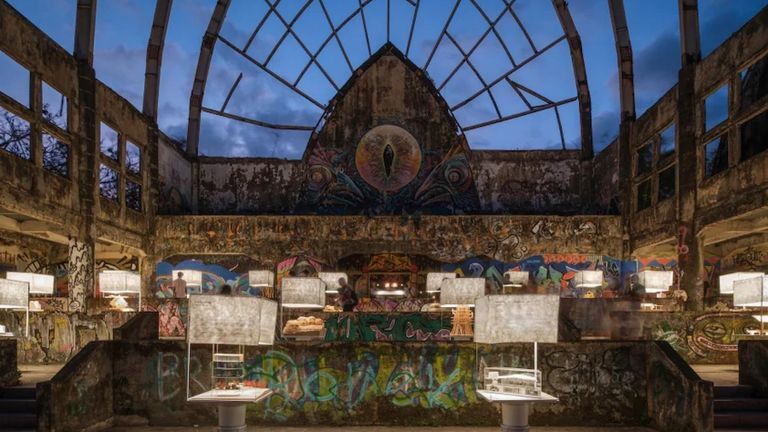
Taking place in Bali from 13 to 17 August, the annual gathering of craft, design, and culture brings together more than 250 brands and creative practitioners from Indonesia and beyond. Set at Pengembak Beach in Sanur, this year’s edition explores the relationships between people, materials, nature, and place under the theme Nature Weave.
Rather than presenting design as a collection of finished objects, Jia CURATED pays equal attention to how those objects come into being: who contributes to them, which materials shape them, and what life they may have after the exhibition ends.
Project Benih
This philosophy takes its clearest form in Project Benih.
In Indonesian, benih means “seed.”
The initiative brings together nine designers from Indonesia, Japan, and Taiwan with Indonesian artisans and manufacturers. During Jia CURATED, participants will introduce their techniques, materials, and working methods before choosing collaborators whose practices most closely connect with their own.
The resulting works will not be presented at the 2026 edition.
Instead, the meetings in Bali will mark the beginning of a year-long collaboration. The completed works are expected to debut at Jia CURATED 2027 before travelling to Japan and Taiwan as part of a touring exhibition.
In an industry often centred on finished products, Project Benih makes room for something less immediate: the time required to build trust, exchange knowledge, and learn how another person works.
The project treats collaboration not as a step behind the final object, but as part of the work itself.
In an industry often focused on finished products, Project Benih gives equal weight to the process behind them: how people meet, exchange skills, and learn from one another.
Blancostudio x Kalpa Taru Bali
That same attention to relationships appears in the pavilion by Blancostudio and Kalpa Taru Bali.
Inspired by informal gathering spaces from childhood, the structure is designed around four raw teak slabs where visitors can sit, talk, and play together. A living canopy will gradually grow into and around the pavilion, softening the divide between architecture and the surrounding landscape.
Built with timber offcuts from the production process, the pavilion is not entirely complete when construction ends. Plants, weather, and time will continue shaping it.
Nature, here, is not added as decoration; it is allowed to participate in the work’s transformation.
Living Designs Bali x Nawangseta
In the installation by Living Designs Bali and Nawangseta, nature becomes a language for reflecting on identity.
Slowly falling droplets of water represent the unseen force that sustains life. One hundred traditional Balinese Topeng Buduh masks evoke the different “faces” people carry across social situations.
Sand appears as both strong and fragile. When compressed, it can withstand pressure and time. Eventually, however, it dissolves and returns to the earth.
The installation suggests that identity is not fixed. Like the natural materials surrounding it, it changes according to pressure, context, and time.
Method Inc. x Sander Wassink
Collaboration at Jia CURATED also extends to the visitor.
Presented by Tokyo-based Method Inc., Dutch designer Sander Wassink brings a modular system that changes according to its environment and the people using it.
During a participatory workshop, visitors will assemble chairs using locally sourced Balinese materials such as bamboo and reclaimed wood. The finished objects will therefore be shaped not only by Wassink’s original system, but also by local resources and collective participation.
Rather than arriving as a final answer, the design continues to take form through the act of making together.
Materials With Another Life
Several projects at Jia CURATED reconsider materials that have already passed through another industry or purpose.
In Good Streams, Bell Living Lab examines the interconnected systems of the coffee industry. Materials commonly treated as waste are reconsidered as sources of new products, value, and opportunity. The project shifts attention away from recycling as a final solution and towards the possibility of designing more circular systems from the beginning.
The MetalLab by STVMP takes a similar approach to industrial remnants. Inside a space that functions as a laboratory, workshop, and archive, discarded metals and recycled materials are transformed into furniture and collectible objects.
The installation asks whether a material has truly lost its value, or whether it is simply waiting to be imagined differently.
Bali-based lighting atelier ONG CEN KUANG also explores how design can continue beyond its first context. Alongside Janur, its inaugural outdoor lighting collection, the studio presents A Walk in the Forest, a modular bar originally designed for a hotel in Uluwatu and repurposed for Jia CURATED.
Its return suggests that a design does not need to become obsolete when its original use ends. It may simply enter a different chapter.
Waste To Wonder
An exhibition may last only a few days, but the materials used to build it can remain for much longer.
Through Waste to Wonder, Jia CURATED considers what happens after temporary structures are dismantled.
Tyvek roofing from the previous edition will be transformed into outdoor umbrellas. Fabric offcuts will fill cushions. Cardboard tubes and reclaimed timber will become new exhibition structures, while packaging crates will be adapted into seating throughout the venue.
The initiative goes beyond recycling individual objects. It asks whether the exhibition itself can be designed as part of a longer material cycle.
In this sense, sustainability becomes less about what an object looks like and more about the decisions made before, during, and after its use.
Architecture In Scale
Curated by design writer Charmaine Chan, Architecture in Scale brings together physical models by 25 architecture practices from Indonesia and wider Asia.
At a time when architectural ideas are often encountered through digital renderings, the exhibition returns attention to the model as a physical object: one that can be approached, examined, and understood through material, proportion, and space.
The projects explore how architecture responds to light, water, air, vegetation, local knowledge, and cultural identity. Nature is not simply framed through windows or used as a distant view. It becomes one of the forces shaping how a building is experienced.
Tomorrow: Spotlight On The Philippines
The conversation extends beyond Indonesia through Tomorrow, Jia CURATED’s 2026 spotlight on the Philippines. Curated by Gabriel Lichauco of NEWFOLK, the exhibition brings Filipino designers together with craft workshops to create new works rooted in indigenous knowledge, sustainability, and contemporary design thinking.
Rather than presenting Southeast Asian design as a single visual language, Tomorrow reveals a region shaped by different materials, histories, and cultural traditions. What connects these practices is not a shared aesthetic, but a willingness to place local knowledge in conversation with contemporary questions.
Perhaps the most significant aspect of Jia CURATED is not the number of participating brands or the scale of its displays. It is the way the event understands design as an ongoing process.
A pavilion may continue changing as plants grow around it. A discarded material may begin another life. A visitor may become part of the making. A meeting in Bali may develop into a creative partnership lasting several years. Like the meaning of Benih, creation here begins with a seed: an idea exchanged, a material reconsidered, or a relationship given time to grow.
What matters is not only what can be made today, but what may continue to take shape long after the exhibition ends.
About Jia CURATED 2026
Jia CURATED is an annual immersive platform for craft, design, and culture in Bali. Founded by Budiman Ong, Rudi Winata, and Yang Yang Hartono, it brings together Indonesian and international designers, artisans, architects, and creative practitioners.
Dates: 13–17 August 2026
Venue: Pengembak Beach, Sanur, Bali
Opening hours: 12 PM-10 PM
The 2026 edition explores the relationship between people, design, and natural systems through exhibitions, installations, talks, performances, and cross-border collaborations.
Get ticket here.