The Logic Behind Central Vietnam’s Love For Spicy Food
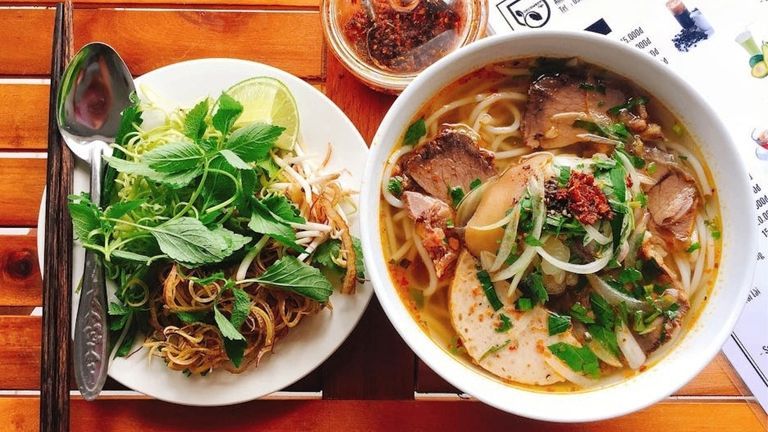
Beef noodle soup (bún bò Huế). | Source: Jang's for Pexels.
Central Vietnam, stretches from Thanh Hoa to Binh Thuan (now Lam Dong) province, is the narrow, S-shaped strip of land between the Truong Son Range Mountains bordering Laos, Cambodia and the East Sea. The area features historical Hue, Quang Tri; and beautiful beaches of Da Nang, Qui Nhon, Phu Yen.
In most Central Vietnamese households, there’s a ‘fruit’ that is indispensable: chili peppers. Fresh chilies, chili paste, or chilies pickled in salt or fish sauce often sit permanently on the dining table.
A deep anthropological layer: Cham legacy
From around the 2nd century onward, large parts of today’s Central Vietnam were inhabited by the Cham civilization. Many researchers point to historical interactions with the Cham people as a crucial factor. Later, as Vietnamese settlers moved South following Nguyen Hoang into Thuan Hoa, they lived alongside the Cham, absorbing elements of local culture.
One widely cited hypothesis proposed by researchers at the Hue Cultural Research Center suggests that the habit of eating chili was among these cultural exchanges. The Cham culinary tradition, known for its bold use of spices, likely influenced Vietnamese settlers through daily coexistence, intermarriage, and shared food practices.
Over generations, what began as imitation became tradition, transformed and localized into what is now recognized as Central Vietnamese cuisine.
An eating habit born out of adaptation
Compared to Northern and Southern Vietnam, the Central Coast is often described as the country’s most harsh-climate region. Narrow land, poor soil, frequent storms, and extreme seasonal shifts have affected people's livelihoods, and influenced their eating habits.
Central Vietnam sits at the crossroads of multiple monsoon systems. In the North Central region, winters are defined by the northeast monsoon. Cold air masses carry moisture from the sea inland, resulting in prolonged cold rain, a kind of damp chill that penetrates houses, clothes, and bodies. Summers bring a different hardship: the southwest wind, locally known as gió Lào, blows over the Truong Son Range, stripping away moisture and creating dry, scorching heat with low humidity.
Further south, in the South Central Coast, the northeast monsoon weakens after being blocked by the Bach Ma Range. Yet the region is far from mild. Strong southwest winds from the Gulf of Thailand cross the Truong Son mountains in summer, once again producing hot, dry conditions.
Rainfall is uneven, droughts are common, and fresh water has historically been scarce. In short, Central Vietnam oscillates between cold dampness and burning dryness. Eating spicy food is not a matter of preference but adaptation.
Balancing yin-and-yang
Living along an extended coastline, Central Vietnamese communities have always relied heavily on the sea. Fishing, working in wet conditions, and constant exposure to sudden weather changes shaped both diet and technique.
Seafood appears in nearly every meal. From a traditional Eastern philosophy perspective, eating spicy food helps balance yin (âm) and yang (dương). Seafood, considered yin, carries cooling and fishy qualities; chili, being hot and spicy (yang), counteracts these traits, creating harmony in flavor and digestion.
Central Vietnam boasts an exceptional diversity of chilies: chìa vôi (a slender local chili variety), chỉ thiên (bird’s eye chili), chuồn chuồn (dragonfly) chili, green and red varieties - each contributing different levels of heat, aroma, and texture to local cooking, shared by a culinary artisan Ton Nu Thi Ha.
Fermentated paste as a regional meal staple
Additionally, with abundant fresh seafood, preservation became essential here because of unstable weather and frequent floods. Fish and shrimp were dried, sun-cured, salted, or fermented into various forms of mắm - not only to extend shelf life, but also to diversify taste in an otherwise limited food system.
Over time, fish sauce (nước mắm) becomes a core cooking ingredient: meat is braised in fish sauce, vegetables are seasoned with fermented shrimp paste, and even simple soups are often finished with a spoonful of fine shrimp paste (mắm ruốc).
Naturally sweet, intensely savory, and deeply aromatic, mắm ruốc can function as a seasoning or stand alone as a meal companion. Fermented seafood carries strong aromas; chili cuts through fishiness, sharpens salinity, and brings balance. Together, mắm and chili form the backbone of Central Vietnamese taste.
More than just a sensation
Today, although refrigeration, modern supply chains, and diverse food options have transformed daily life. Yet the preference for spicy and salty flavors remains unchanged. What once emerged from necessity has turned into a way to express endurance and lived experience.
In Central Vietnam, the dialectical relationship between land, people, and food is especially visible - where every bite carries the memory of climate, history, and survival.
If you cannot eat spicy food, remember the survival phrase when ordering: “Không cay” - no spicy, please.