The Robusta Revolution: How Vietnam Is Forcing Global Coffee Culture To Grow Up
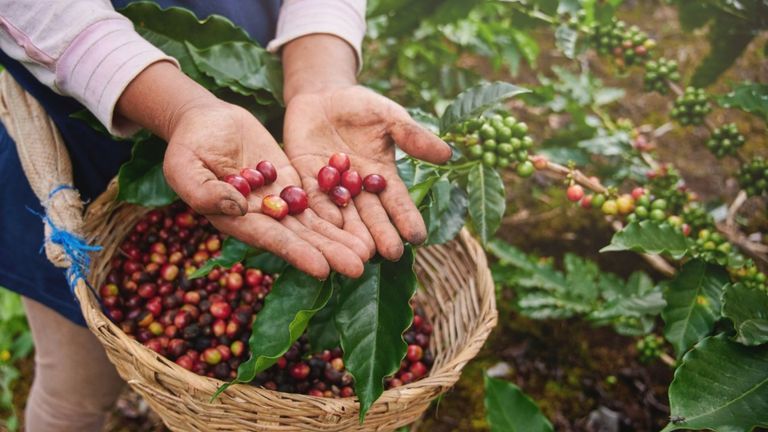
Source: Helena Coffee Vietnam
Every morning, across millions of cafes from London to Tokyo and Seattle, coffee enthusiasts sip on velvety espressos with dense, rich crema, assuming their cup is purely the product of Latin American high-altitude Arabica or Italian roasting mastery. Yet, hidden inside those commercial blends and high-yield espresso beans lies a quiet reality: the global coffee market runs on Vietnamese Robusta.
For decades, the international coffee establishment treated Vietnamese coffee as a low-grade commodity, a cheap filler suited only for instant coffee jars or a sugary street-drink novelty served over ice on plastic stools. That narrative was not just snobbish; it was historically blind. Vietnamese coffee is, in fact, a high-stakes story of geopolitical survival, Cold War diplomacy, wartime ingenuity, and an ongoing agricultural revolution that is now forcing the global specialty coffee industry to rethink what “quality” coffee actually means.
The Cold War Empire: How Geopolitics Built Tây Nguyên
To understand how Vietnam became the world’s second-largest coffee producer and the undisputed king of Robusta, supplying nearly 40% of the entire global Robusta yield, one must look back beyond modern specialty trends to the geopolitical fractures of the late 20th century.
When French colonialists introduced the coffee plant to Vietnam in 1857, they initially cultivated Arabica. However, by the late 19th and early 20th centuries, devastating coffee leaf rust (Hemileia vastatrix) decimated Arabica crops across Indochina. In response, French agronomists introduced Canephora (commonly known as Robusta), a hardier, pest-resistant variety native to the Congo basin. While the French established early plantations in the volcanic soils of the Central Highlands, the infrastructure remained modest and extracted primary wealth for the metropolis. The real industrial transformation happened under drastically different political conditions after 1975.
In the late 1970s, the Socialist Bloc faced an unprecedented economic crisis known as the Kaffeekrise (literally “coffee crisis”). East Germany (the German Democratic Republic), bound by heavy foreign debt and a lack of hard currency, found itself unable to purchase Arabica beans from Latin America on the open market. Coffee was an essential consumer good in East Germany; its scarcity threatened domestic political stability.
In a pivotal Cold War barter agreement, the East German government turned to Vietnam. East Germany poured millions of dollars into Vietnamese agricultural infrastructure, sending machinery, irrigation systems, processing equipment, and agronomists to the Central Highlands, particularly around Buôn Ma Thuột. In exchange, Vietnam pledged long-term shipments of coffee beans to the Eastern Bloc.
Although East Germany collapsed before it could fully reap the harvest of its multi-million-dollar investment, the physical and agricultural infrastructure remained intact. When Vietnam launched its Đổi Mới (official English title “Renovation”) economic reforms in 1986, opening the nation to market-oriented mechanisms and private land enterprise, the stage was set. The government encouraged domestic migration to the Central Highlands, providing land and resources to millions of farming families. Within a single decade following Đổi Mới, Vietnam surged past traditional coffee heavyweights like Colombia to secure its position as the world’s second-largest exporter.
Scarcity As The Mother Of Invention: Phin, Condensed Milk, Cà Phê Trứng, And Cà Phê Muối
While the macro-economy was scaling up bean production, a parallel domestic story of innovation was unfolding on the streets of Hà Nội, Sài Gòn, and Huế. Vietnam’s signature coffee rituals were not born out of gastronomic luxury, but out of wartime scarcity, physical constraints, and intuitive food chemistry.
Robusta beans contain nearly double the caffeine content of Arabica, along with higher chlorogenic acids and lower natural sugar levels. The result is a bold, intensely bitter profile with heavy body and earthiness. To extract this potent bean without expensive machinery, Vietnamese coffee drinkers perfected the phin filter—a lightweight, single-serve metal drip device derived from 19th-century French gravity drippers, stripped down to its bare functional essentials. The slow, drop-by-drop extraction allowed hot water to coax out the deep solubles of dark-roasted Robusta.
Fresh milk, however, was a rare luxury in post-war Vietnam due to supply chain disruptions and a lack of refrigeration. To counterbalance the astringent punch of Robusta, locals turned to canned sweetened condensed milk. High in fat, sugar, and calories, condensed milk did not require refrigeration and proved to be the ultimate companion to dark-roasted Robusta, transforming intense bitterness into a velvety, caramel-like indulgence known worldwide today as cà phê sữa đá.
An even more striking example of crisis-driven creativity occurred in 1946 during the First Indochina War. At the historic Sofitel Legend Metropole hotel in Hà Nội, a bartender named Nguyễn Văn Giảng faced a critical shortage of milk while trying to serve coffee to international guests. Looking around his kitchen, he substituted milk with whisked egg yolks, emulsified with sugar and a touch of condensed milk. The resulting airy, custard-like foam balanced the dark phin coffee beneath it. What began as a desperate wartime substitute birthed cà phê trứng (literally “egg coffee”), an iconic culinary invention that remains a staple of Vietnamese coffee culture to this day.
This tradition of resourceful adaptation did not stop in the post-war era. In the early 2010s, a new domestic phenomenon emerged from the historic imperial city of Huế: cà phê muối (literally “salted coffee”). By adding a pinch of salt to a layer of whipped cream sitting atop dark-roasted phin Robusta, local baristas unlocked a brilliant culinary principle. Sodium ions actively suppress the tongue’s bitterness receptors while highlighting the bean’s natural caramel sweetness and cocoa undertones. What began as a humble neighborhood experiment in Central Vietnam quickly evolved into a nationwide sensation and a global culinary export, proving once again that Vietnamese coffee culture excels at leveraging simple chemistry to elevate Robusta’s intense profile into a sophisticated beverage.
Breaking The Specialty Snobbery: The 80+ Fine Robusta Movement
For decades, the global specialty coffee industry, dominated by Western buyers and taste-makers, maintained a strict hierarchy. Arabica was celebrated as delicate, nuanced, and superior, while Robusta was dismissed as harsh, rubbery, and cheap.
That dogma is currently collapsing, thanks to a new generation of Vietnamese producers, roasters, and agronomists across Buôn Ma Thuột and Lâm Đồng.
Rather than treating Robusta as a mass commodity harvested by strip-picking green and ripe cherries together, forward-thinking Vietnamese farmers are applying specialty Arabica protocols to Robusta cultivation. Producers are implementing selective hand-picking to ensure 100% ripe cherry harvesting, precise micro-lot sorting, and sophisticated processing methods such as honey processing and anaerobic fermentation.
By controlling oxygen, temperature, and fermentation environments, producers are unlocking flavor notes previously thought impossible for Robusta: ripe stone fruits, dark chocolate, toasted macadamia, liquorice, and aromatic spices, all while preserving the heavy body and crema-building properties inherent to the bean.
Under the standards of the Coffee Quality Institute (CQI), Robusta that scores 80 points or higher on a 100-point scale earns the designation of "Fine Robusta." Today, Vietnamese micro-lots are consistently breaking the 80+ threshold, winning international competitions and earning spots on the menus of avant-garde roasters in Europe, Australia, and North America. Global specialty roasters are realizing that when grown and processed with precision, Robusta offers a complex sensory experience that Arabica simply cannot replicate.
The Climate Imperative: Why The Future Of Coffee Is Heat-Hardy
The rise of Fine Robusta is not merely a matter of changing culinary tastes but an urgent ecological necessity.
Coffea arabica is a fragile, temperamental species. It thrives only within narrow temperature bands at high altitudes and is highly susceptible to climate fluctuations, droughts, and leaf rust. Climate scientists project that rising global temperatures and unpredictable rainfall patterns could reduce suitable land for Arabica cultivation by up to 50% by the year 2050.
In contrast, Coffea canephora (Robusta) is naturally resilient. It thrives at lower altitudes, tolerates higher temperatures, and possesses a high natural caffeine content that acts as an organic pesticide against insects and disease.
As climate change threatens the economic viability of traditional Arabica farming in Latin America and East Africa, global coffee conglomerates and independent roasters alike are looking to Vietnam. The heat-hardy, pest-resistant Robusta crop cultivated in the Central Highlands is rapidly transitioning from a commercial backup option into the sustainable bedrock of the global coffee supply chain. Without Vietnam’s Robusta capacity, the world faces a future of severe coffee shortages and astronomical price spikes.
A Credit Long Overdue
As World Coffee Day on October 1st is celebrated across the globe, the international conversation often centers on Italian espresso heritage, Nordic minimalist cafes, or Latin American estate farms. It is time for the global narrative to give credit where it is long overdue.
Vietnam’s coffee empire was not handed down by corporate design or favorable geography alone. It was forged in the crucible of post-colonial hardship, Cold War barter diplomacy, wartime necessity, and the sheer grit of millions of farming families in Tây Nguyên who transformed bombed-out terrain into a green agricultural engine.
Vietnamese coffee is far more than a sweet street drink or a cheap commodity blend. It is a masterclass in agricultural resilience and human adaptability. As the world faces mounting climate challenges and searches for a sustainable future for its daily brew, it turns out the answer has been dripping slowly through a metal phin in Vietnam all along.