The Trends Behind Vietnam’s Next Generation Of Stays
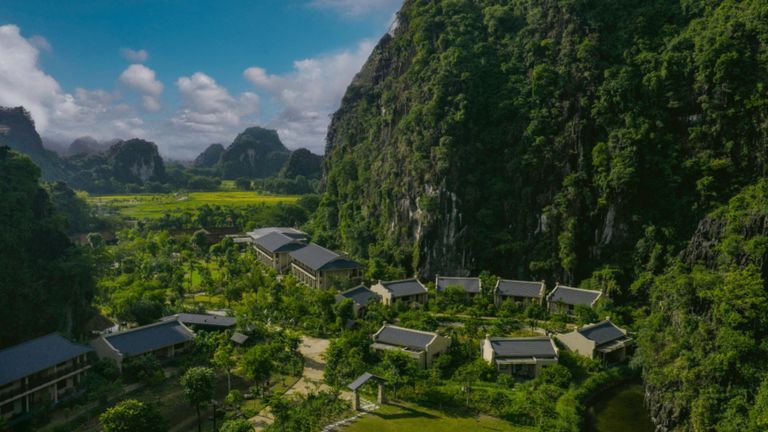
Set among Ninh Bình’s limestone karsts and rice fields, Jiva Hoa Lu Retreat reflects Vietnam’s growing shift toward inland, slow-travel stays. | Source: Jiva Hoa Lu Retreat
If one trend has defined Vietnamese hospitality in 2026, it is range. Where a previous wave of openings leaned on a single playbook — beachfront resort, city five-star — this year’s new arrivals are splintering into distinct personalities: lifestyle-led bayfronts, heritage-rooted city stays, and inland retreats designed for travellers who want to slow down. Three recent openings capture the shift clearly, and together they hint at where the country's hotel map is drifting.
1. voco Scenia Bay Nha Trang - The premium lifestyle wave lands on the bay
The most telling opening of the year so far is voco Scenia Bay Nha Trang by IHG, which soft-opened on 31 March. voco is one of IHG’s newer additions to its global stable and the group’s fastest-growing premium brand - a brand built to be, in its own words, “unstuffy”: consistent but never generic, polished but never fussy. This is the brand’s third Vietnamese property, extending IHG’s premium footprint into one of the country’s most kinetic coastal cities, and signalling how rapidly the group is scaling voco across Asia.
The product itself reads like a clean expression of the broader trend: a 31-storey tower along Nha Trang’s newly developed northern coastal precinct, ten minutes from Trần Phú Street, with all 250 guestrooms facing the ocean. Five F&B outlets carry the lifestyle framing — Infini Bleu, a pool bar with skyline views; La Bonita for Mediterranean plates; The Show, an all-day room built around live-cooking theatre; plus a lobby lounge that shifts from daytime café to evening bar. Sustainability is stitched through the fine print: recycled pillow and duvet fills, New Zealand-sourced Antipodes amenities - an expression of voco’s ‘step by step’ mantra. For travellers tired of choosing between ‘resort’ and ‘city hotel’, voco Scenia Bay is a new category altogether: urban-adjacent, lifestyle-led, bay-facing.
2. Fairmont Hanoi - The heritage city-centre debut
The second trend on display is the return of the grand, heritage-coded city hotel — and Fairmont Hanoi, which opened in February, is its clearest recent example. The storied Canadian brand’s first Vietnamese property sits in the Old Quarter, steps from Hoàn Kiếm Lake, designed by Perkins Eastman with Aston Design to weave Hanoian motifs into a contemporary silhouette. Expect 241 rooms, 38 Fairmont Gold rooms, 12 suites, and the city’s largest pillarless ballroom - a pointed nod to Hà Nội’s rising appetite for marquee events. Eight restaurants and bars lead the experience, including Bacco, a Mediterranean room helmed by Michelin-starred chef Nicolas Isnard. The spa opens in April, completing - for now — the most comprehensive stay offering in the capital.
3. Jiva Hoa Lu Retreat - The inland, slow-travel shift
The third trend is inland retreat - and Jiva Hoa Lu Retreat, an Small Luxury Hotels of the World property set inside the UNESCO-listed Tràng An landscape, makes the case better than almost anywhere else in the country. The retreat takes its name from the Sanskrit word for life or soul, and the product follows suit: rice paddies, limestone karsts and quiet rivers frame villas in a pared-back Northern Vietnamese vocabulary of timber, stone and handcraft. Ninety minutes from Hà Nội, Jiva repositions Ninh Bình from day-trip detour to destination — a reflection of how Vietnamese travellers (and increasingly international ones) are trading poolside for paddy-side.
What the three tell us
Read together, voco, Fairmont and Jiva signal a hospitality map broadening in three directions at once — lifestyle bayfront, heritage city-centre, and inland retreat. The implication for travellers is that Vietnam is no longer a single itinerary; it is several running in parallel. For the industry, the takeaway is sharper: the country has graduated from ‘new market’ to a plotted destination where global brands launch, refresh and scale their newer concepts. Our editors will be watching the next wave closely.