Urban Growth Or Ecological Balance? Ho Chi Minh City’s Vision For Can Gio
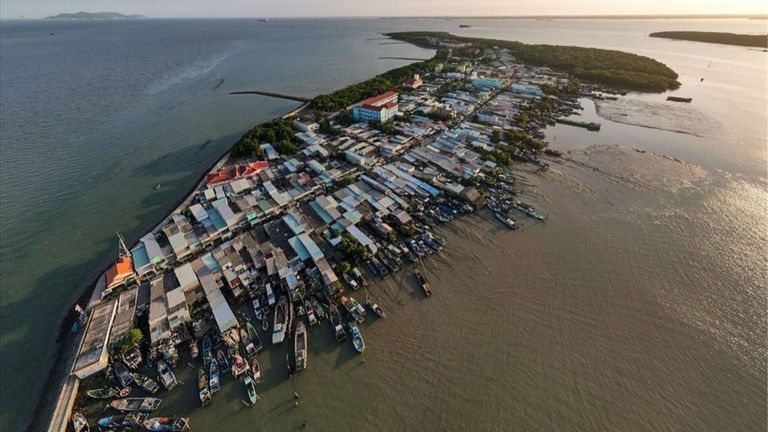
Can Gio, Ho Chi Minh City. | Source: Lao Dong
From December 19, construction of the Ben Thanh–Can Gio metro line is set to begin, and expected to complete in 2028.
The project moved from conception to groundbreaking in just over a year, with investment procedures completed within two months - an unprecedented pace in the history of Vietnam’s railway development.
If completed, the project will directly connect mainland Ho Chi Minh City with Can Gio - a coastal area in the city’s far south that is currently accessible only by ferry. The metro line is expected to unlock new development potential for Can Gio, especially when Vingroup’s large-scale sea reclamation project is underway.
Where ecological value meets economic ambition
Located about 50 kilometres southeast of downtown Ho Chi Minh City, Can Gio is the city’s coastal area. Often described as Ho Chi Minh City’s “green lung”, Can Gio plays a critical role in coastal protection, climate regulation, and biodiversity conservation.
The area is home to the Can Gio Mangrove Biosphere Reserve, a vast mangrove forest recognised by UNESCO in 2000. Spanning more than 75,000 hectares, the Can Gio Mangrove Biosphere Reserve comprises a 4,721-hectare core zone, a 41,000-hectare buffer zone, and a 29,000-hectare transition zone and hosts a rich mix of terrestrial and aquatic ecosystems.
Economically, Can Gio has long held strategic importance. Can Gio is the only area directly beside Cai Mep - Thi Vai port complex - one of the few Southeast Asia international deep-water ports, the region’s primary maritime gateway. Therefore, Can Gio is widely regarded as a potential logistics hub and a key space for marine economic development.
However, this area is still remaining sparsely populated and relatively underdeveloped compared to the city’s urban core.
A high-quality resort and eco-tourism destination to be
Decision No. 2040/QD-UBND, issued in June 2024 by the Ho Chi Minh City People’s Committee has outlined a plan for the sustainable exploitation and use of marine resources, alongside the protection of the marine environment. It stated that by 2030, the city aims to develop Can Gio into a high-quality resort and eco-tourism destination with regional competitiveness.
Under the plan, by 2030, Ho Chi Minh City aims to develop its coastal economy by prioritising tourism, marine services, coastal industries and urban development, alongside fisheries, renewable energy and other emerging marine-based sectors, while improving local livelihoods.
With a vision to 2050, Can Gio will become a leading coastal locality which focuses on green growth, marine biodiversity conservation, a clean environment, and a society living in harmony with nature.
The plan also includes a project to build the tourism and urban reclamation complex, covers a total area of 2,870 hectares with a total investment of over VND 217 trillion. The project is owned by Vingroup and is set to begin in April 2025.
Besides targeting high-end individuals, the project is promoted as an ESG-oriented development, with stated commitments to conservation and green growth.
The plan also included the The Can Gio International Transshipment Port which covers 571 hectares and a water surface area of about 477.63 hectares, and a designed capacity of around 16.9 million TEUs. Once in operation, the port is expected to contribute approximately VND 34–40 trillion annually and generate 6,000–8,000 jobs.
Risk to the ecosystem
While city planners promote major development projects, environmental experts and community voices have raised concerns about potential impacts on the Can Gio mangrove ecosystem.
Since the coastal reclamation project was approved in 2020, experts warned that it could disrupt hydrological systems, threaten biodiversity and undermine the long-term resilience of the mangrove ecosystem. Experts also pointed out the International Transshipment Port might pose a threat to Can Gio’s mangrove, as large container boats can contribute to the land erosion.
Assoc. Prof. Dr. Phung Chi Sy – Vice Chairman of the Vietnam Association for Conservation of Nature and Environment (VACNE) stressed that Can Gio Mangrove Forest has been certified by UNESCO as a World Biosphere Reserve, to ensure no project is allowed to launch within this reserve. Any other nearby ones must validate their environmental impact before being carried out
Therefore, projects operating in Can Gio will have minimal effect on the reserve during construction. They must also have a careful environmental-impact report when carried out.
Recently, on November 11th, 2025, The Ministry of Agriculture and Environment has opened a public consultation on the environmental impact of the Can Gio coastal urban tourism project. If passed, this project will be Vietnam’s first “marine ecological city,” combining economic development with environmental preservation.
However, large-scale development will accelerate urbanisation, potentially increase pollution, encroachment on forest areas and landscape destruction. The question now is, how will the Can Gio’s ecosystem be preserved? How will the city pursue its vision of turning Can Gio into a biosphere-oriented urban area while accelerating urbanisation?
The answers will shape not only Can Gio’s future, but also how Ho Chi Minh City balances growth and environmental protection.