Vietnam Moves To Ban Smoking In Universities
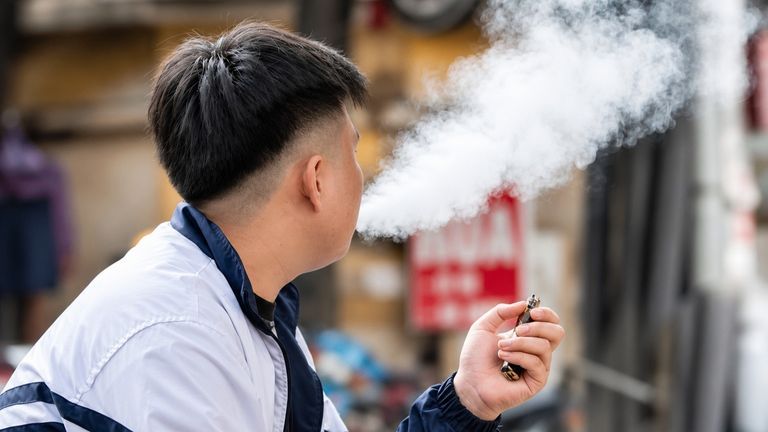
The rules apply to people who vape or use the other covered products, as well as to those who sell them. | Source: Sở Tư pháp
Vietnam’s National Assembly passed amendments to the Law on Prevention and Control of Tobacco Harms on November 21, 2026, taking effect on July 1, 2027. The changes tighten tobacco controls with the aim of protecting public health, particularly young people.
One change extends the smoking ban to all educational institutions, including colleges and universities. The amendments also ban the use and sale of e-cigarettes and heated tobacco products, and prohibit online tobacco sales.
Here’s what you need to know about the new rules.
Ban Smoking In Universities
Under Vietnam’s 2012 tobacco control law, smoking was banned inside university, college and academy buildings, but the ban did not extend to their entire grounds. This left outdoor spaces on university campuses, such as courtyards and car parks, outside the smoking ban.
From July 1, 2027, smoking will be prohibited throughout all educational institutions, including university and colleges, from all areas on campus. The rule applies to students, staff, lecturers and visitors.
The ban does not include smoking on the street outside the gates unless other restrictions may apply there. The government extended a separate ban on tobacco sales within 100 metres outside the gates of educational institutions, including universities and colleges. The distance is measured from the nearest boundary of the institution’s grounds.
E-Cigarette Ban Written In the Law
The National Assembly voted to ban e-cigarettes and heated tobacco products in 2024; the amended law sets out their definitions and extends the restrictions to related products and materials.
According to the amended law, the production, sale, possession, transport, import and export of “new types of cigarettes” (include e-cigarette) are banned. Use is banned too: the rules apply to people who vape or use the other covered products, as well as to those who sell them.
Besides e-cigarettes, nicotine pouches, shisha and products designed to function like vapes or heated tobacco are also banned, even if they are marketed under different names. Restrictions extend to the devices, components and ingredients used to make some of these products.
E-cigarette use among young people in Vietnam rose sharply in the years before the 2025 ban. Online sales and social media marketing made these products easier to find, prompting health authorities to call for stronger monitoring and enforcement.
Ban Tobacco Online Sales
At the same time, from July 1, 2027, tobacco sales to consumers will be prohibited through e-commerce platforms, other electronic transactions and vending machines. This will mean you cannot buy tobacco related products on any e-commerce, online platform and process electronic transactions related to tobacco.
Licensed tobacco businesses may still conduct electronic transactions and sign contracts with one another, but the exception does not extend to online sales to consumers.
Selling tobacco online makes it harder to verify a buyer’s age: someone under 18 may be able to place an order without an in-person ID check. Vending machines pose a similar problem because there is no seller present to check the buyer’s age.
The law also bans displays of tobacco products, packaging and branding at distribution points and stores, subject to exceptions set by the government. A six-month transition period allows retailers to continue displaying up to one pack, carton or box of each brand under the current rule.
What Effects It Bring On Young People
Dr Angela Pratt, the World Health Organization’s Representative in Vietnam said the bans on emerging products such as nicotine pouches and shisha, tighter restrictions on tobacco displays and wider smoking bans would help Vietnam respond to harmful new products. She added that the measures could reduce exposure to secondhand smoke and make campuses and public spaces healthier.
“These revisions are good news for the health of people in Vietnam, especially children and young people,” she said.
A University of Public Health study published in September 2026 surveyed 2,462 students aged 18 to 24. It found that 3.3% currently used e-cigarettes, compared with 9% in a study conducted before the 2025 ban.
But a smaller visible market does not mean sales have disappeared. At a September 2026 research briefing, the study team reported that 44 of 126 former e-cigarette and heated tobacco retailers they examined had moved sales online. Interviews with students also pointed to sellers using disguised listings and private messages to reach buyers.
This is why the amended law passed on November 21, 2026, adds a ban on tobacco sales through electronic channels and codifies the e-cigarette ban, aiming to shut down this illicit supply channel from July 1, 2027.
Lawmakers also considered a generational tobacco ban for people born on or after January 1, 2010, similar to an UK law banning tobacco sales to anyone born on or after January 1, 2009. The government left it out of this round of amendments, saying the policy was still new and there was insufficient evidence to assess its effects fully. It said it would continue to study the proposal.