Vietnamese Firms Rush To IPO As Startup Ecosystem Climbs Global Rankings
Source: Dien May Xanh
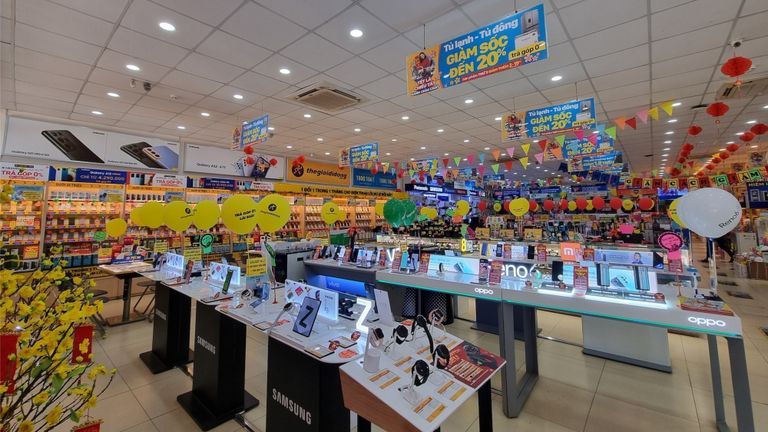
Dien May Xanh Targets $546 Million IPO In 2026 Expansion Push
Vietnamese electronics retail chain Dien May Xanh is preparing for a major initial public offering in 2026, aiming to raise around $546 million as the company accelerates expansion plans and strengthens its financial position. The planned listing comes amid improving investor sentiment in Vietnam’s capital markets, supported in part by progress related to the country’s FTSE market upgrade ambitions.
Under the proposed offering plan, the company will issue approximately 79.5 million common shares at a price of VND80,000 per share. The proceeds are expected to support business expansion, debt repayment, and broader efforts to improve operational transparency as Dien May Xanh scales its retail operations in an increasingly competitive consumer market.
The IPO also reflects growing confidence in Vietnam’s consumer retail sector, where large domestic retailers are increasingly turning to public markets not only to raise capital, but also to strengthen long-term scalability and reinforce market positioning. For Dien May Xanh, the listing is expected to enhance brand credibility while consolidating its position within the country’s electronics retail landscape.
Alongside the IPO plans, the company has outlined ambitious financial targets for 2026. Revenue is projected to increase 12% to VND122.5 trillion, while net profit is expected to rise 27% to VND7.35 trillion. The growth targets suggest expectations for continued consumer demand recovery, even as competition within the retail sector continues to intensify.
As Vietnam’s IPO market shows renewed momentum, Dien May Xanh’s planned listing could become one of the more closely watched consumer retail offerings in the market. The success of the offering will likely depend not only on investor appetite, but also on the company’s ability to sustain growth and maintain profitability in a rapidly evolving retail environment.
Bao Tin Manh Hai Prepares For IPO As Gold Market Reforms Open New Growth Opportunities
Hanoi-based Bao Tin Manh Hai Jewelry JSC is preparing for an initial public offering in the fourth quarter of 2026, marking a major step in the company’s transition from a traditional family-owned retailer toward institutional-scale expansion. The company plans to offer up to 10 million shares, equivalent to a maximum 20% stake, as it seeks to strengthen its market position amid shifting dynamics in Vietnam’s gold and jewelry industry.
Proceeds from the IPO will be used to expand Bao Tin Manh Hai’s retail network and support investment in a high-tech 24K jewelry manufacturing plant. The company is currently accelerating its nationwide expansion strategy, with plans to increase its store network from 16 locations to 450 stores by 2030, including the opening of 68 new outlets this year alone. The aggressive rollout reflects the company’s ambition to scale rapidly while building a stronger national retail presence.
The planned listing also comes as Vietnam introduces regulatory changes aimed at reforming the domestic gold market. Recent adjustments removing the state monopoly on gold bar production are expected to improve market supply and operational efficiency, creating more favorable conditions for private gold and jewelry businesses. Bao Tin Manh Hai is positioning itself to benefit from these structural changes as competition and market activity continue to expand.
If completed, the IPO would make Bao Tin Manh Hai only the second gold and jewelry company to be listed domestically after Phu Nhuan Jewelry JSC (PNJ), which listed in 2009. Beyond raising capital, the listing is expected to enhance transparency, strengthen brand credibility, and support the company’s long-term goal of becoming Vietnam’s leading national gold brand by 2030.
The IPO plans follow a year of strong financial performance. In 2025, Bao Tin Manh Hai reported after-tax profit of VND774 billion, while revenue surged to nearly VND28 trillion. As the company moves into a new growth phase, its ability to execute rapid expansion while maintaining operational quality and customer trust is likely to become a key factor shaping its long-term competitiveness in Vietnam’s evolving jewelry market.
Stride Raises $15 Million To Scale Solar Adoption In Vietnam
Climate-tech company Stride has secured $15 million in a Series B funding round to accelerate the adoption of rooftop solar and battery solutions across Vietnam. The round was co-led by Lightrock and TRIREC through the Accelerate7 platform, with continued participation from existing investors Clime Capital and UOB Venture Management.
The new funding comes as Stride moves beyond early-stage expansion into nationwide scale. Since its Series A round in 2025, the company has nearly tripled its project portfolio and expanded its presence across Vietnam through a network of more than 75 verified EPC partners.
Stride focuses on improving access to clean energy for households and micro, small, and medium-sized enterprises (MSMEs) by addressing one of the sector’s biggest barriers, high upfront installation costs. The company offers affordable payment plans alongside complimentary insurance, allowing customers to adopt rooftop solar and battery systems with lower financial risk and greater operational flexibility.
With the latest capital injection, Stride plans to strengthen its digital systems, enhance quality assurance processes, and support further expansion both in Vietnam and new regional markets. The company is also targeting broader long-term impact, with plans to help an additional 200,000 people gain access to clean energy solutions by 2030.
Vietnamese Startups Deepen Push Into Japan For Long-Term Growth
Vietnamese startups are increasingly turning to Japan as a strategic market for expansion, reflecting a broader shift in the country’s startup ecosystem toward more sustainable and internationally focused growth strategies. Rather than viewing Japan solely as a source of funding, many startups are seeking long-term market opportunities that can support scaling, strengthen operational capabilities, and enhance business credibility in the region.
Market entry efforts are being supported through a growing number of structured ecosystem initiatives, including accelerator programmes, market immersion trips, and direct collaboration with Japanese corporations and investors. These partnerships are becoming an important channel for Vietnamese startups to access local networks while navigating operational and regulatory requirements in one of Asia’s most demanding business environments.
Beyond capital access, startups are also looking to Japan for distribution partnerships, enterprise customers, and operational expertise. Cross-border cooperation is increasingly seen as essential to overcoming barriers related to localisation, compliance, and market trust, particularly as Japanese businesses place strong emphasis on long-term relationships and high execution standards.
At the same time, the focus of collaboration is gradually moving toward deeper technology-driven sectors. Areas such as artificial intelligence, enterprise software, semiconductors, and digital infrastructure are emerging as key priorities, reflecting growing interest in more advanced and strategic forms of partnership between the two markets.
Despite rising momentum, execution remains a major challenge for Vietnamese startups entering Japan. Success increasingly depends on the ability to adapt products and operations to local expectations, build trusted relationships, and meet the market’s strict standards for quality and reliability. As more formal partnerships continue to emerge, these collaborations may gradually create more repeatable pathways for Vietnamese startups seeking long-term expansion in international markets.
Vietnam Climbs To Record High In Global Startup Ecosystem Rankings
Vietnam has climbed to 50th place in the Global Startup Ecosystem Index 2026, marking its highest ranking to date and moving up five positions from last year. The improvement reflects growing momentum across the country’s startup landscape as Vietnam gains recognition as one of the world’s fastest-growing startup ecosystems.
According to StartupBlink, Vietnam emerged as a standout performer within the global growth cluster ranked between 21st and 50th, signaling the country’s transition from an emerging startup market toward a more structurally competitive ecosystem. The expansion is no longer concentrated in a small number of high-profile startups, but increasingly supported by broader ecosystem development across cities, institutions, investment networks, and policy frameworks.
Ho Chi Minh City entered the global top 100 startup ecosystems for the first time, rising 12 places to rank 98th worldwide. The city recorded particularly strong performance in fintech and blockchain, reinforcing its role as Vietnam’s leading startup hub. At the same time, ecosystem growth is becoming more geographically diversified. Alongside Hanoi and Da Nang, Hai Phong also entered the world’s top 1,000 startup ecosystems for the first time, reflecting broader startup activity beyond the country’s traditional innovation centers.
The scale of Vietnam’s startup ecosystem also continues to expand. The country now has around 4,000 startups, 208 investment funds, 84 incubators, and more than 20 startup support centers. The growing presence of investment capital and support infrastructure is helping strengthen the ecosystem’s long-term development capacity while creating more structured pathways for startup growth and commercialization.
Policy support is also accelerating as Vietnam pushes forward with national initiatives tied to science, innovation, digital transformation, and strategic technologies. These programmes are helping reinforce the institutional foundation of the ecosystem while supporting the development of future-oriented sectors across the economy.
As Vietnam’s startup ecosystem gains greater international visibility, the next phase of growth will likely depend on the ability of local startups to scale globally and generate stronger long-term outcomes. The latest rankings suggest that Vietnam is building a more mature and interconnected startup environment capable of supporting deeper innovation and international expansion.
Genesia Ventures is an early-stage venture capital firm operating in Japan and Southeast Asia, with a strong belief in the long-term potential of Vietnam’s digital economy. Beyond providing capital, the fund actively supports startups through strategic guidance and connections to a broader regional network.