Vietnamese Food That Sounds Like A Failed Fusion Experiment, But Isn’t
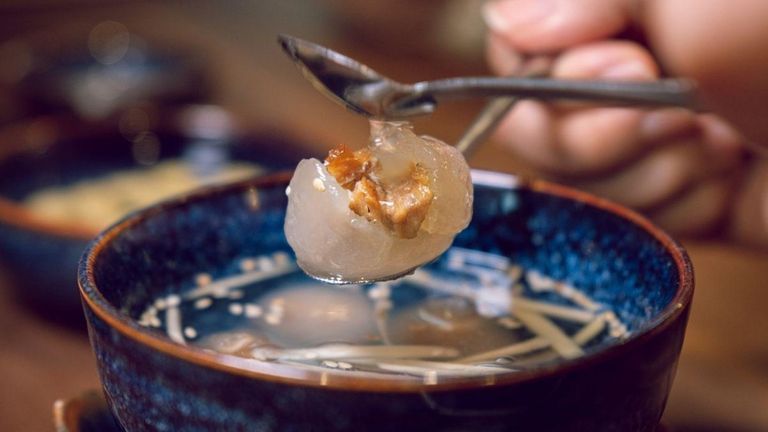
Chè bột lọc heo quay is proof that some of Vietnam's most surprising food combinations are anything but new. | Source: Znews
Recently, the Vietnamese internet was set abuzz by cà phê mắm ruốc (coffee with fermented shrimp paste). The mere concept of mixing robust coffee with pungent fermented shrimp paste sounds like the kind of combination designed to provoke outrage and generate clicks.
And when Vietnamese diners may not have recovered from the surprise of the new unique coffee, another unlikely combination began making the rounds online: cơm tấm nước cốt dừa (broken rice with coconut milk). And for many, this extraordinary dish prompted a collective groan and a pressing question: Is Vietnamese cuisine taking food experimentation a step too far?
Yet, the uproar over this genuinely new, albeit bizarre, creation raises an interesting dilemma. When modern diners, especially Gen Z, are navigating an endlessly scrolling feed of culinary stunts, it is easy to assume it is just another restaurant’s desperate attempt at viral fusion. But what if a dish that sounds entirely made up is actually a deeply entrenched part of Vietnamese food culture? Before dismissing an unlikely pairing as new innovation or a failed experiment, it is worth looking past the internet’s latest food trends to explore whether it already has roots in a regional tradition.
Cơm Tấm Nước Cốt Dừa: Coconut Milk Meets Broken Rice
To anyone raised on the iconic street food of Saigon, altering the foundation of cơm tấm or broken rice feels nearly sacrilegious. Broken rice is an established monument of savory balance, celebrated for its dry, distinct grains topped with caramelized grilled pork chops, shredded pork skin, steamed egg meatloaf, and a glistening drizzle of scallion oil.
Coconut milk, by contrast, belongs largely to the pantheon of southern desserts, sweet drinks, or rich braises. Folding heavy coconut fat into a plate of smoky street rice sounds, at first blush, like a misguided effort to fix something that was never broken.
However, travel southwest into the Mekong Delta, particularly the emerald expanse of Bến Tre, and the culinary logic shifts entirely. In these southern alluvial plains, coconuts are not an occasional luxury or a confectionary accent; they are an agricultural baseline that defines domestic life. Long before broken rice became a polished urban staple, rural cooks in coconut-growing provinces routinely used fresh coconut water and freshly squeezed coconut cream (nước cốt dừa) to steam their broken rice grains.
The fractured rice kernels, naturally more porous than whole grains, absorb the rich coconut milk as they swell over heat. Rather than turning the rice soggy or cloying, the fat coats each broken grain with an ivory sheen and a subtle, nutty richness. When served alongside savory marinated pork and drenched in the sour, pungent hit of garlic-and-chili fish sauce (nước mắm chua ngọt), the coconut’s natural sweetness acts as a bridge rather than an obstruction. It softens the aggressive salinity of the fish sauce and buffers the intense char of the grill, creating a harmonious plate shaped entirely by the geography of the southern lowlands.
Chè Bột Lọc Heo Quay: Sweet Soup with Roasted Pork in Huế
If coconut in savory rice raises an eyebrow, the concept of a dessert soup packed with roasted pork belly sounds like an outright culinary collision. Chè bột lọc heo quay (mochi sweet desert soup with roasted pork) unites elements that seem fundamentally irreconcilable: crisp, fatty, five-spice-roasted pork wrapped inside translucent tapioca dumplings, floating in a warm, sweet ginger syrup. To the modern observer, it sounds like an impulsive late-night dare between bored cooks.
Yet this dish is one of the crown jewels of Huế, Vietnam’s former imperial capital. Huế cuisine has never adhered to timid boundaries; shaped by both royal kitchen sophistication and inventive folk traditions, the city’s gastronomy is rooted in the philosophy of âm dương (yin and yang), the deliberate harmonization of complementary opposites. As sweetness in Huế cooking is rarely one-dimensional, it is frequently utilized to elevate, contrast, or soften intense savory profiles.
In chè bột lọc heo quay, the structural engineering of the dish is paramount. Savory roast pork belly, seasoned with spices and caramel, is chopped into small, uniform cubes and encased in a firm, chewy skin of tapioca starch before being boiled. This tapioca shell acts as a culinary insulator. When submerged into a light, simmering syrup infused with rock sugar and fresh ginger root, the dumpling retains its internal saltiness while absorbing the warmth of the sweet bath.
The resulting bite offers an astonishing textural and thermal progression: the soothing heat and floral sweetness of the ginger syrup, the neutral chew of the tapioca, and finally, the salty, savory crunch of roast pork crackling. It is not an error of fusion, but a centuries-old masterclass in structural contrast.
Bánh Canh Ngọt: Sweet-Like-Desert Noodle Soup from the Mekong Delta
Throughout Vietnam, the term bánh canh universally signals a comforting, intensely savory meal. These thick, slippery noodles—fashioned from tapioca, rice, or a blend of both—are almost always anchored in deep broths simmered from pork knuckles, crab, snakehead fish, or shrimp. The suggestion of bánh canh ngọt, or sweet bánh canh, sounds like an unsettling linguistic mistake, as if someone accidentally poured dessert syrup over a bowl of hearty dinner noodles.
Once again, the culinary customs of the southern provinces challenge our culinary orthodoxies. The Mekong Delta has long maintained an unapologetic affection for sweetness, reflecting the generous abundance of its soil, its extensive sugarcane harvests, and its endless groves of palmyra palms and coconuts. In the tranquil villages along the delta’s canal networks, bánh canh ngọt emerged not as an attempt to deconstruct a savory meal, but as a practical, deeply nostalgic afternoon snack.
In this southern regional iteration, the familiar thick, chewy noodles are made by hand and dropped directly into a gently simmering cauldron of rich coconut milk, raw palm sugar or cane sugar, sliced ginger, and bruised pandan leaves. As the noodles cook, their surface starches naturally thicken the coconut broth into a silky, comforting chowder. Ladled piping hot into small bowls and finished with a scattering of toasted white sesame seeds, the dish transforms the noodle into a vessel for tropical warmth and sweetness. For generations of delta residents, it is the quintessential comfort of childhood, demonstrating that a single culinary ingredient need never be trapped in a single savory box.
What These Dishes Reveal About Vietnamese Food?
These examples share a simple quality: a dish can sound unusual to someone encountering it for the first time and still make perfect sense within its culinary context. Coconut milk in rice, roasted pork inside a sweet dumpling, and noodles in a sweet broth all challenge familiar expectations about which ingredients belong together.
Understanding these dishes means looking beyond whether a combination sounds strange and considering how people actually cook and eat it. Regional ingredients, local tastes, and everyday cooking practices all shape what becomes familiar in a particular place.
Yet, these combinations are best understood not through the lens of modern, shock-value fusion food, but through their regional context and eating traditions. While cà phê mắm ruốc is a modern, provocative experiment and innovation, dishes like sweet bánh canh and savory-stuffed chè boast established culinary contexts. Their coexistence proves that Vietnamese food culture is vast and flexible enough to accommodate both fleeting novelty and enduring tradition.
Ultimately, Vietnam’s gastronomic landscape is full of combinations that can surprise outsiders and younger diners alike. Sometimes, a bizarre dish really is just a new invention designed for the camera. But often, it is a brilliant regional specialty that the internet is only just discovering.