Why Does Vietnam Love Pickleball?
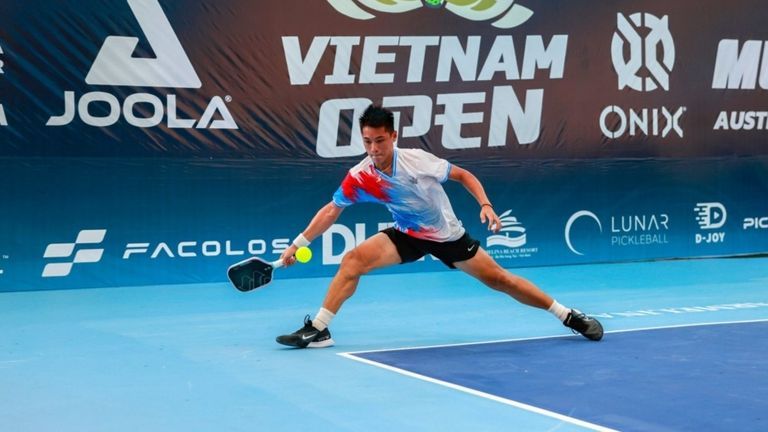
Pickleball has quickly evolved from a foreign import into a new social ritual in Vietnam, bringing together players across generations. | Source: Pickleballplus.vn
If you step into a sports club in Ho Chi Minh City or Hanoi around 6:00 PM, you will likely hear a distinct sound before you see anything: a crisp, hollow pop-pop-pop bouncing off concrete courts.
Inside, under bright LED lights, you will find a multi-generational mix of people. A 20-something tech worker in sleek athleisure matches a soft, short shot with a 50-something uncle in classic badminton shorts. On the adjacent court, a group of college students pauses between games to pose for a photo, rackets held like micro-trophies.
This is pickleball in Vietnam.
Over the past two years, this paddle sport—invented in 1965 in the United States—has transformed from an obscure foreign import into the country’s fastest-growing recreational movement. Across urban areas, former tennis courts are being re-lined, badminton hubs are adding net dividers, and empty warehouse spaces are being transformed into climate-controlled indoor courts overnight.
To an outside observer, the sudden obsession might look like another fleeting internet trend driven by social media aesthetics. But dig a little deeper beneath the colorful rackets and trendy athletic gear, and you discover that pickleball fits the country’s urban culture, social habits, and modern lifestyle with uncanny precision.
What Exactly Is Pickleball?
For those unfamiliar with the sport, think of pickleball as a hybrid of tennis, badminton, and table tennis. It is played on a compact court using solid, lightweight paddles made of wood or composite materials, along with a hollow plastic ball full of holes (similar to a Wiffle ball).
The game can be played in singles or doubles, though doubles is by far the most popular format. Because the ball is light and the court is small, the game relies far less on raw power or running speed, and much more on quick reflexes, positioning, and strategy.
The Low Barrier to Entry in a High-Pace World
To understand why pickleball caught fire so quickly, you first have to look at the existing local sports landscape.
Historically, racket sports have shaped how people here spend their free time. Badminton borders on a national pastime, played out in public parks, narrow alleyways, and community centers in every major city. Tennis has long carried an executive, upscale image, while table tennis has fed the local appetite for fast, reflex-driven play.
Pickleball sits precisely at the intersection of all three, taking the accessible nature of badminton, the status of tennis, and the quick reaction dynamics of table tennis while eliminating their highest physical and technical hurdles.
Learning tennis requires months of expensive coaching just to consistently clear the net and keep balls in play. Badminton demands intense cardio and quick jumps that can wear heavily on knees over time. Pickleball, by contrast, offers immediate gratification.
The plastic perforated ball moves slower through the air, the underhand serve is intuitive, and the court—measuring 44 feet by 20 feet (13.4 meters by 6.1 meters), identical in dimensions to a doubles badminton court—drastically cuts down on sprinting distance. Within 30 minutes of picking up a paddle for the first time, a complete beginner can sustain a long, fun rally.
In a fast-moving economy where urban professionals juggle demanding work schedules, a sport that delivers fun on day one—without requiring months of technical instruction—is a compelling proposition.
Coffee Culture Moves to the Court
Social life in Vietnam centers on "third places"—spaces outside work and home where people gather. For generations, the street-side café has served as the default venue for casual chats, spontaneous catch-ups, and low-stakes business. The primary focus of these gatherings has never been the coffee itself, but the relaxed, unstructured connection it facilitates.
Pickleball has seamlessly adopted this role, transforming passive social drinking into an active ritual.
The sport’s structure naturally mirrors café dynamics. Games are fast, played to just 11 points, and standard doubles play requires a constant rotation of four players. Between short matches, players naturally retreat to side benches to drink iced tea, swap stories, and wait for the next game, maintaining the easygoing flow of a weekend coffee session.
Even the physical setup of the court fosters intimacy. The non-volley area near the net—known as "the kitchen"—extends 7 feet (2.13 meters) on either side, forcing opposing players to stand just feet apart. Unlike tennis, where opponents are separated by vast distances, pickleball brings players close enough to joke, banter, and praise a good shot in a normal speaking voice.
Ultimately, pickleball succeeded because it captured the exact essence of local café culture: low-pressure, community-driven, and endlessly social.
The Aesthetic and Digital Factor
No analysis of modern lifestyle trends in Vietnam is complete without considering the digital layer. The country boasts one of the world’s most dynamic and visual social media ecosystems, driven by TikTok, Instagram, and Facebook.
Pickleball arrived fully equipped for the visual age.
Unlike traditional sports that often mandate strict dress codes or utilitarian uniforms, pickleball embraces vibrant personal style. The sport’s modern lifestyle branding—pastel paddles, retro-inspired sportswear, neon balls, and tailored athletic sets—resonates strongly with a young, design-conscious urban demographic.
Courts across major cities have adapted quickly to this demand. Moving away from rigid, functional layouts, modern facilities feature aesthetic lighting, clean, color-coordinated courts (ocean blue and deep teal are local favorites), integrated refreshment bars, and dedicated lounge areas designed specifically with photos in mind.
It is common to see players spend as much time reviewing match footage on their phones or recording casual highlights as they do playing. The sport provides a fresh backdrop for self-expression, blending physical wellness with lifestyle curation.
Urban Real Estate and Business Agility
Beyond the culture and the aesthetics, there is a pragmatic economic narrative driving the pickleball wave: local business agility.
Converting commercial real estate in bustling Vietnamese metros is notoriously challenging. A standard tennis court enclosure including mandatory run-off space requires a footprint of roughly 36.6 meters by 18.3 meters (120 feet by 60 feet).
A pickleball playing area, however, requires only 13.4 meters by 6.1 meters (44 feet by 20 feet). In the footprint of a single full-sized tennis enclosure, operators can fit two to three pickleball courts, once matching space is set aside around each court for player movement.
This math transformed the economics of urban sports facilities in three major ways:
- Higher Density: Multiple courts mean more players—up to a dozen or more—active simultaneously in the space previously occupied by two or four tennis players.
- Lower Conversion Costs: Existing badminton courts require almost no structural changes—just net height adjustments and court line additions.
- Flexible Monetization: Facility owners can offer hourly court rentals, host casual open-play nights, run corporate tournaments, and operate on-site juice bars or pro shops within modest footprints.
Local entrepreneurs reacted with characteristic speed. Unused industrial plots, older sports complexes, and rooftops across urban centers were rapidly repurposed. Custom booking apps and messaging mini-programs quickly streamlined court reservations, letting players book a court in three taps.
Bridging the Generational Divide
One of the subtle charms of pickleball is its cross-generational appeal.
In many Western nations, pickleball initially gained traction as a sport for retirees before sweeping younger demographics. Locally, the adoption happened almost simultaneously across age groups.
Younger generations focus on socializing, fashion, and short bursts of intense, fast-reflex play. Meanwhile, older adults appreciate the low-impact joint movement, outdoor mobility, and opportunities for multi-generational bonding.
It is common to see multi-generational families sharing a court on Sunday mornings. A teenager raised on digital entertainment can play a competitive, engaging match against their aunt or grandfather without anyone feeling sidelined by raw physical power or pace.
Because soft touch, strategic placement near the net, and tactical patience routinely beat raw overhead power, older or more experienced players often dominate younger, aggressive opponents. This balances the playing field in a way few other sports can match.
Is It Here to Stay?
Critics initially dismissed pickleball as a post-pandemic fad—a passing craze fueled by novelty that would fade once the initial media cycle quieted down.
However, the infrastructure being built tells a different story.
Local tournaments now pull sponsors from banking, real estate, and automotive sectors. A growing number of professional and open tournaments have been held across the country, including events backed by major television networks such as HTV. These tournaments bring together competitive players beyond the usual recreational crowd, signaling that pickleball is becoming more than a weekend pastime.
Primary schools and universities are beginning to introduce paddle sports into physical education options, while real estate developers are incorporating pickleball facilities into new residential master plans.
Pickleball succeeded because it did not ask people to change their lifestyle habits; instead, it adapted to them. It offered an active break that fits neatly into a busy workday, built a low-pressure social space for friends, and created a sport where community matters just as much as the scoreboard.
Whether you drop by for an intense competitive match or simply show up for iced coffee and conversation by the sidelines, one thing is clear: the pop-pop-pop of the plastic ball is officially part of the modern urban soundtrack.