Why Is Vietnamese Gen Z Paying For Photos In The Age Of Infinite Free Selfies?
Source: Dân Trí News
2026 market research recorded over 450 photo booth venues and 124 brands spread across Vietnam. That’s equivalent to roughly triple the combined footprint of McDonald's and Starbucks locations in Vietnam. Photo booth culture in Vietnam has hit an all-time peak, particularly among Gen Z and Gen Alpha. Yet in a digital landscape where endless photos cost nothing to take, why are young urbanites so eager to pay for a single four-frame strip?
From Mall Corners To Curated Studios
Photo booths have transformed from lone kiosks tucked away in mall corners into spacious standalone studios on bustling city streets, equipped with racks of curated props and themed rooms tailored to the Gen Z tastes for 100,000 VND or less.
The concept of instant-printed photo services was first introduced to Vietnam in the late 1990s to early 2000s, taking the form of small coin-operated machines influenced by Japanese automated feature-enhancing and photo-sticker booths known as Purikura. These booths emerged in the corners of youth hubs like malls and arcades, with vibrant glitter stamps and customizable stickers attracting large numbers of young urbanites.
However, the fad eventually faded as the rise of digital cameras and smartphones took over the practicality of casual photography for the younger generation, especially with interactive Instagram filters and selfie apps. Yet, a second wave came in 2021, and a massive revival swept across the country, with South Korean brands like Life4Cut, Photo Time and Haru Film expanding from compact booths into standalone studios.
Today, photo booths are not limited to mall corners but have expanded to major muli-level space with multiple booths assembled in the heart of major cities like Hanoi and Ho Chi Minh. Individual booths feature diverse backdrops, ranging from minimalist pastel rooms and high-angle “elevator” perspectives to low-angle floor cameras and futuristic metallic spaces.
The booth experience comes alongside curated prop racks and vanities, equipped with staple beauty tools like hair brushes and clips, rollers or hairsprays, even Dyson curlers! The statement accessories are the real star, from plush hats and quirky headbands to signature Grab driver jackets and helmets. They turn simple photography into an immersive experience that lets young people truly connect with local culture.
Photo booth studio experiences go beyond just what is inside the booth, the surrounding outside spaces are decorated with pastel coquette-styled wallpapers or retro concept designs, allowing comers to maximize photo taking opportunities both in and outside of the booths. Brands now also integrate pop-up booths with Gen Z hangout spots like trendy cafes, neon-lit bars and lounges, as well as the traditional mall or cinema corners, making photo booths a conveniently accessible ritual in dating and meetups.
While snapping pictures with friends is undoubtedly a classic way to capture memories, modern brands are elevating the ritual for today’s fast-paced digital world, transforming memory capturing into fun, youth-centric experiences.
The Psychology Behind Gen Z’s Obsession With Photo Booths
The reason Gen Z chooses to pay for a limited set of photo strips, despite living in an age of unlimited digital photos, goes beyond mere aesthetics; it fulfills a fundamental psychological need for tangible, shared experiences that anchor memories in the physical world.
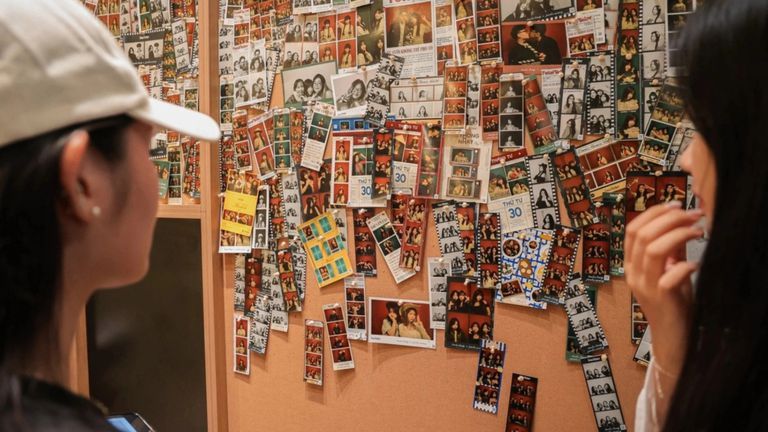
Photo booths generate a physical print, and physical prints provide a sense of psychological ownership to a generation that has always had digital photos, but rarely owned a tangible one. A psychological experiment in 2018 conducted by Atasoy and Morewedge shows that people consistently value physical versions of goods above digital ones, including souvenirs like photographs. For Gen Zs, having these printed versions of valuable moments makes it much easier for them to attach their sense of self to a tangible memory. Slipping it into a clear phone case, pinning it onto a bedroom corkboard, or sticking it in a wallet feels like a deliberate emotional anchor and a precious reminder of memories in a world of ephemeral digital clutter.
Still, the booth not only offers a physical photo strip but simultaneously a digital version of the same copy given via QR codes which includes video files of the behind-the-scenes countdown readily designed for Tiktok and Instagram posts. The behind-the-scenes videos show the raw and chaotic side of changing poses with multiple friends packed in a small booth, the captured laughters and smiles make the experience feel alive when posted online. The accessible online digital versions allow several friends to collect the same memory without bickering over who gets to keep the limited number of photo strips provided. This particular aspect of modern day photo booths is what makes Gen Zs keep coming back, it is the perfect bridge between the digital and physical world.
Additionally, a photo booth session much resembles a game that provides instant gratification, making it particularly appealing to a generation accustomed to fast-paced consumption and immediate rewards. Think about the 10-second countdowns, the fixed number of frames and shots, the scramble to switch poses, and the final reward of printed photo strips in your hand. At its core, a photo booth session is built like a fast-paced reaction game, complete with flattering filters and built-in fun. While a phone gives you controlled takes and unlimited shots with minimal elements of surprise, a photo booth with quick countdowns and chaotic pose changes gives you a small rush of dopamine that triggers laughter and excitement. Neuroscience suggests that this is what our reward system responds to: dopamine is released from anticipation and surprise, and instantly rewarded with physical prints. This small rush of happy hormones is what makes the experience so thrilling and satisfying to Gen Z.
Being photographed by a professional photographer, or posing on a crowded street, triggers performance anxiety. Psychologists trace this to fear of being judged rather than to the camera itself, and we consistently imagine far more people watching than actually are. The photobooth removes that audience. Behind the curtain there’s no photographer, no passers-by, just a countdown and a button you control. Besides, for a photobooth session with professional camera and lighting, props and backdrops, physical and digital copies, the price is surprisingly affordable considering its perceived value. Typically costing around 80,000 VND - 100,000 VND, depending on the number of prints and times you do, if split between a couple or a large friend group, it’ll only take less than 50,000 VND for a session, multiple times cheaper than hiring a professional photographer! At this price level, photo booth sessions are affordable enough to become a habit accessible to a generation that are more cautious with spending, making it just as strong of a ritual as getting a drink at a cafe.
In short, an affordable photo booth session delivers genuine psychological thrills and emotional value to a generation constantly navigating digital overload, turning ephemeral moments into a lasting, tangible memory.
The Nostalgia Wave And The Reason Why It’s Only Booming Now
Photo booths have certainly been around for generations, yet they are seeing an unexpected revival among the very demographic that seems least likely to embrace an analog tradition.
The reasons go far beyond a mere trend on social media, photo booths have become a vibrant cultural playground for young people in Vietnam. Firstly, Gen Z craves for a lightweight but fulfilling tactile leisure activity after a long period of remote socializing and the COVID-19 lockdowns. Vietnam had one of the strictest pandemic quarantine procedures, and the fun photo booth sessions with friends happen to serve the post-pandemic hunger for real-world socializing in Vietnam. Photobooths emerged as an interactive, indoor social ritual that were accessible to everyone and not just sitting at another cafe. Secondly, Vietnam has one of the largest, most active K-pop fanbases in Southeast Asia. When Korean brands like Photoism and Life4Cuts started dropping limited edition frames featuring popular K-pop artists like NewJeans and Seventeen, Vietnamese Gen Zs began queuing up for a quick photo strip with their favourite K-pop artist, it’s the perfect parasocial keepsake. Simultaneously, social media has turned the photobooth ritual into a self-reinforcing loop. As Tiktok and Instagram spread new meme-inspired poses and popularizing “high angle” elevator themes and metro cabin set ups, photo booth trends continuously build on top of one another. Every visit produces entertaining content for the feed, allowing Gen Zs to stay in touch with both local and global trends.
More importantly, the photo booth culture has been riding a broader wave of nostalgia, including the resurgence of items such as digital cameras, film, Y2K fashion style and retro concepts. Gen Z is the main driver of the wave, with roughly two thirds of the generation reported to experience nostalgia for a time period many of them never lived through. Researchers call this “borrowed” or “historical” nostalgia, suggesting that this phenomenon stems from the uncertainties of the present and the future. With rising social pressure and political polarization, turning to collective nostalgia produces a sense of comfort and predictability that unconsciously serves the Gen Z’s need for emotional security. Nostalgia is often viewed through “rose-colored glasses” where the negative parts are filtered out, this goes further for Gen Z as many of them have never experienced those bad parts at all. Thus, the 2000s become flash photos at parties and not dial-up frustration. These representations are widespread especially with social media, images of the vintage aesthetics are everywhere on Pinterest and Tiktok, making it the new mainstream. For photo booths, borrowed nostalgia is light, playful and aesthetic, not heavy or sad. That makes it ideal for entertainment, allowing Gen Zs to “visit” the 2000s for 10 minutes without feeling the bittersweet weight of the real memory. Additionally, the booth has become one of the nostalgia wave’s most visible outlets because it is a retro object itself, and it turns nostalgia into something you can do. with friends and take home. Therefore, the B&W aesthetic and Y2K backdrops have become just as popular as photo frames featuring major K-pop artists for Gen Z.
Gen Z may be a seemingly questionable demographic for the old-fashioned photo booth culture, yet considering the nostalgia wave and other modern twists to a vintage booth, the reasons are a lot more understandable than you’d expect!
Curated Recommendations
If you want a Korean-styled booth and a frame featuring your favourite K-pop artist, then check out these booths:
1. Photoism Vietnam
A sleek, modern and minimalistic space, famous for its exclusive “Artist Frames” that let fans pose side-by-side with K-pop idols, like NCT Dream, LE SSERAFIM, and Seventeen, as well as Vietnamese stars and hit local shows.
Locations:
- North: Ha Noi, Hai Phong, Thai Nguyen, Thanh Hoa
- South: Ho Chi Minh City, Bien Hoa, Vung Tau, Can Tho
- Central: Da Nang, Nha Trang
Price range: ~100,000–150,000 VND / session
2. Life4cuts Vietnam
One of the earliest and largest Korean photo booth chains in Vietnam. A vibrant and playful space with a massive collection of props and accessories including plush hats and fun headbands as well as frequent pop-culture frame collabs.
Locations:
- North: Ha Noi, Hai Phong, Ha Long , Bac Ninh, Viet Tri (Phu Tho)
- South: Ho Chi Minh City, Bien Hoa, Binh Duong, Vung Tau, Can Tho, My Tho (Tien Giang), Rach Gia (Kien Giang), Long Xuyen (An Giang)
- Central: Da Nang, Hue, Nha Trang, Quy Nhon, Buon Ma Thuot, Da Lat
Price range: ~70,000–100,000 VND / session
3. Photoby Vietnam
A cozy Korean café meets DIY scrapbooking studio. After printing your strips, you can sit at their decorating tables stocked with free markers, washi tape, and cute stickers to customize your physical prints.
Locations:
- North: Hanoi
- South: Ho Chi Minh City
Price range: ~70,000–150,000 VND / session
If you want a concept rooms and studios featuring Y2K, B&W and other trendy aesthetics, then check out these booths:
4. Photo Objet
An edgy and experimental space with viral themed rooms including the Laundry Room (filled with pastel washing machines and colorful balls), the Subway Cabin, Business-Class Airplane, and High-Angle Elevator booths with convex mirrors for wide-angle Y2K group shots.
Locations:
- North: Hanoi
- South: Ho Chi Minh City
- Central: Da Nang
Price range: ~70,000–120,000 VND / session
5. Photogenic Vietnam
A coquette-styled and dreamy space decorated with satin ribbons, lace accents, bows, and ornate vintage mirrors, stepping inside feels like entering a dreamy pastel dollhouse. Inside the booths are whimsical and fairy-tale inspired backdrops with flattering lighting.
Locations:
- South: Ho Chi Minh City, Bien Hoa, Binh Duong, Vung Tau, Can Tho, Vinh Long, Rach Gia
Price range: ~70,000–120,000 VND / session
6. Tack Tack Booth
A sunlit single-floor minimalist studio housing three differently themed booths, alongside a compact standalone street booth tucked right into the bustling streets of Hanoi’s Old Quarter for spontaneous, walk-up snapshots. Featuring colorful indie backdrops and a classic B&W snapshot theme.
Locations:
- North: Hanoi
Price range: 100,000 VND / session
7. Crater Booth
Tucked inside a shopping store and a cafe shop, an old-fashioned and brushed steel booth features multiple animal-print backdrops and a classic B&W aesthetic filter. Best for fans of monochrome, analog style and a souvenir with a Saigon character.
Locations:
- South: Ho Chi Minh
Price range: ~70,000–120,000 VND / session
If you’re looking for a more localized option, check these booths out:
8. Hoi An Photobooth
Viral for its rustic and traditional wooden structure (nhà gỗ) designed to blend seamlessly into the Old Town’s historic architecture. The booth also comes with traditional Vietnamese props like the conical hats, hand held paper fans and flowers.
Locations:
- Central: Da Nang (Hoi An)
Price range: 100,000 VND / session
9. Monobooth
Located inside District 1’s iconic older apartment buildings, right alongside local indie fashion boutiques and vintage shops, walking up the worn stairwells to MonoBooth already feels like stepping into classic Saigon youth culture. Specializes in B&W and warm vintage color strips printed with custom Saigon-themed graphic borders.
Locations:
- South: Ho Chi Minh
Price range: 100,000 VND / session
In the end, the photo booth gives Gen Z what the smartphone can’t: limited frames that make moments matter, privacy to be ridiculous, and a keepsake that outlasts the scroll. Four frames may seem like a strange thing to pay for in a world of free photos. But for a generation drowning in images, less turns out to be more.