From North To South: The Many Flavors Of Tet In Vietnam
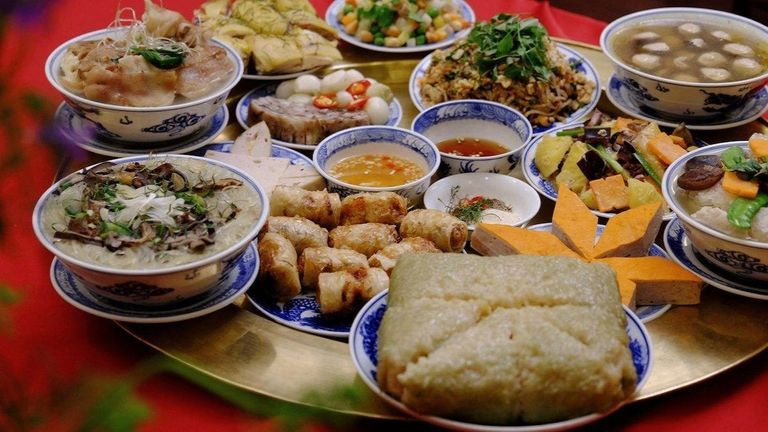
A typical Tet’s dinner table in Northern Vietnam. | Source: Thanh Vu for Chao Hanoi
Tet is a time for family reunions and gathering around the table for a shared feast during the most important holiday of the year. Food plays a central role in Vietnamese Tet celebrations, and with the country’s rich regional diversity, tastes and traditions shift as you travel from North to South.
Once house cleaning is done and offering trays are prepared, the celebration begins—most notably on Lunar New Year’s Eve (đêm 30). Across the country, households cook a festive meal to be placed on family altars.
According to long-standing folk beliefs, Tet is a sacred moment when ancestors return to reunite with their descendants. The offering tray acts as a spiritual bridge between the living and the dead, expressing gratitude while asking for blessings and protection for the year ahead.
Below is how the three regions of Vietnam celebrate Tet through food.
North
Chung cake–a savory sticky rice cake–is the Northern's Tet staple. According to Extraordinary Stories from Linh Nam (Lĩnh Nam Chích Quái) in the 15th century, there was a cooking competition among the sixth Hung King’s 20 sons to find the heir. Lang Lieu, the eighteenth son, who was poor and motherless, received a divine dream message that used sticky rice as the main ingredients to make glutinous rice cake. With a filling of meat, mung beans, and pickled onions, wrapped in banana leaves and shaped into squares called bánh chưng (Chung cake) symbolizing the earth, and bánh giầy (round cakes) symbolizing heaven. To the deity, there was no exotic delicacy that can compare with rice, as it feeds and nurtures life in Vietnam. Lang Lieu followed the suggestion and became the heir.
Since that day, it has become a tradition to prepare Chung cake and round cakes for Tet celebration.
Northern Tet cuisine values balance, structure, and harmony, mirroring a culture shaped by Confucian order and seasonal features. The cold weather in Northern provinces also explains the presence of dishes like jellied pork (thịt đông), pickled shallots (dưa hành), bamboo shoot soup (canh măng) or pork rind soup (canh bống) served with fatty pork trotters - food that are easy to preserve and provide warmth during winter.
This culinary custom can be summarized in a popular couplet:
Thịt mỡ, dưa hành, câu đối đỏ;
Cây nêu, tràng pháo, bánh chưng xanh.
(“Fatty pork, pickled shallots, red couplets;
New Year pole, string of firecrackers, green rice cakes.”)
Central
In Central Vietnam, Tet meals are often described as modest, shaped by a history of harsh climate and limited resources. With the exception of Hue city, where royal cuisine has left a lasting imprint, and some north-central provinces influenced by Northern food culture, Tet feasts in this region tend to favor simplicity over abundance.
Central Vietnamese Tet dishes prioritize preservation and practicality: pork preserved in fish sauce (thịt heo ngâm mắm), beef braised in molasses (bò kho mật mía), giò bò (beef sausage), nem chua (fermented pork), dưa món (pickled vegetables). Salty and spicy dishes that can endure long periods of unstable weather.
Historically, Central Vietnam was also shaped by centuries of cultural exchange. Central Vietnam version of bánh tổ (glutinous rice cake), is believed to have originated from Chinese culinary traditions and was introduced to Hoi An (Quang Nam) between the 16th and 17th centuries, when the port town thrived as a trading hub frequented by Chinese merchants and settlers. Over time, glutinous rice cake was absorbed into local customs and became an indispensable Tet specialty in Central Vietnam.
South
Living in the Mekong Delta, Southerners benefit from a tropical climate with abundant rivers, rich soil, and year-round agricultural production. As a PhD. Do Thi Huong Thao notes, natural conditions shape social character - and in the South, that character is open, generous, and flexible.
The local version of New Year rice cake in the South is bánh tét (Tet cake), a cylindrical glutinous rice cake wrapped in banana leaves. One widely told oral narrative told that the traditional square Chung cake was adapted into a cylindrical form, which was easier to carry, slice, and preserve during wartime in King Quang Trung’s period. Another version tells of a soldier presenting Tet cake from his hometown to Quang Trung as a Tet offering after victory.
Some scholars view Tet cake through the lens of agricultural anxiety. Tet historically marked a vulnerable period for crops and food supply. Long-lasting, dense, and filling, Tet cake offered a practical solution against spoilage.
Another theory from a cultural historian Tran Quoc Vuong suggests that Tet cake may trace its roots back to the ancient Champa kingdom, only later becoming widespread among Vietnamese communities during Nam tiến (the southward expansion of Vietnam). In Cham culture, Tet cake carries meanings tied to fertility worship that celebrates life, reproduction, and natural vitality.
Beyond the classic filling of mung beans and fatty pork, Tet cake comes in many variations, they reflect the abundance of local produce and the adaptability of regional cooking traditions. Some of popular variations are bánh tét chuối (banana Tet cake) or bánh tét lá cẩm (deep purple leaves Tet cake), commonly found in the Mekong Delta. Vegetarian Tet cake is also widely enjoyed, filled with mung beans, grated coconut, or mushrooms.
Southern Tet meals also feature:
- Braised pork with eggs and coconut water (thịt kho tàu), symbolizing fullness and continuity, with the natural sweetness from coconut water.
- Bitter melon soup (canh khổ qua), expressing the wish that hardship will “pass” in the new year since the word “khổ” in Vietnamese means challenges.
- Fried spring rolls, roasted meats, and fresh herbs.
According to the research “Vietnamese New Year Rice Cakes: Iconic Festive Dishes and Contested National Identity” in cultural and social anthropology, there is a powerful relationship between national identity and iconic dishes, which the food stories reveal much about the recognizable national identity.
Tet tastes different in every region, but its meaning remains the same: reunion and renewal.