Is Vietnam Usually This Hot?
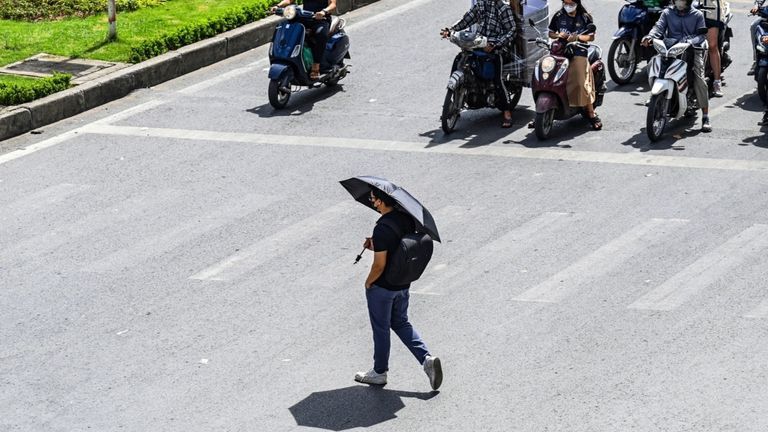
Is Vietnam’s summer actually getting more aggressive? | Source: VnExpress
Vietnam has been so scorching lately that stepping outside feels like a test of endurance. Unlike the typical mid-April transition, the 2026 heat arrived uninvited, unexpected, and unapologetically intense.
The country is now facing its earliest heatwave in decades, with temperatures surging as early as mid-March, two weeks earlier than expected. Nationwide, temperatures have climbed to 35–37°C, with some areas reaching up to 39°C in late March.
According to the National Centre for Hydro-Meteorological Forecasting (NCHMF), in 2026, this temperature is expected to be 0.5-1°C higher than in other years
Is Vietnam usually this hot?
Although Vietnam’s regions have very different weather patterns, this kind of heat doesn’t normally appear every year.
In the North, where Hanoi is located, late March and early April usually mean “spring”, with temperatures ranging from 19°C to 24°C. It’s the gentle transitional window between the biting chill of winter and the first breath of summer that typically arrives by mid-April. This is the season of lingering drizzle, grey skies, and the occasional weak cold snap (which is locally called Rét nàng Bân).
At the same time, the Central (Da Nang, Hoi An) usually starts its dry season in January, but the "scorching" heat usually waits until May or June when the "Lào winds" (Foehn winds) are at their peak.
Meanwhile, the South often sees temperatures around 32–34°C in March, but the high humidity usually means the heat tapers off by late afternoon and evening
However, in 2026, that familiar rhythm unravelled. The North skipped its spring entirely, jumping straight to 35°C–38°C days by late March. Regions from Thanh Hoa to Hue are already recording peaks of 38°C in March, way before the “Lào winds” kick in. In the South, the humidity has dropped to as low as 35%. Combined with 36°C heat, it creates a “desert-like” intensity that is rare for the tropical South this early.
The reasons behind this unusual heat
According to experts, this year’s unusual heat is the result of several factors.
Nguyen Van Huong, Head of the Weather Forecasting Department at NCHMF, said that Pacific Ocean temperatures in March have shifted back to neutral, with a tendency toward the warmer phase (El Niño) rather than the cooler (La Nina).
This shift reduces the cooling influence that typically brings clouds and rainfall, allowing heat to build more easily. Combined with regional high-pressure systems, it helps create a “heat dome” effect that traps hot air over Southeast Asia.
Meteorologist Le Thi Xuan Lan noted that in the North, the heat arrived early largely because the hot low-pressure system over India and Myanmar moved east sooner than expected, because of climate change. When that hot air pushes into northern Vietnam, it collides with the fading cool air of late winter, creating sharp temperature jumps and unusually early heatwaves.
For the South, meteorologist Le Thi Xuan Lan explains that sunlight hits the Earth more perpendicularly this time of the year, which increases solar radiation and raises UV intensity compared to other seasons, with clear health impacts.
On top of that, long, cloudless days during the peak of the dry season allow strong sunshine from morning until late afternoon, heating the ground and drying the air much faster than usual.
How long will the heat last?
This early heat is just the opening act for a summer that promises to be long and record-breaking.
Meteorologist Le Thi Xuan Lan said that in June, Vietnam may expect El Niño - an abnormal heat from the Pacific Ocean, which affects wind patterns and typically reduces rainfall in Vietnam, increasing the risk of prolonged heat and dry conditions.
The arrival of El Niño is expected to make the hot season in Northern Vietnam more unpredictable, with longer and hotter periods than usual. In the Central region, El Niño coincides with the peak of the dry season, meaning the area is likely to face severe drought, with temperatures commonly reaching 38–39°C and some locations potentially hitting 40°C or even higher.
According to the NCHMF, heatwaves in Vietnam in 2026 are expected to last longer and be more intense than the long-term average. They may even surpass heatwaves of 2025 - a year that already broke heat records with temperatures about 0.5°C above the long-term average.
“Extreme heat is no longer something unusual. It’s becoming more common as climate change intensifies”, Nguyen Van Huong, Head of the Weather Forecasting Department at NCHMF, said
Forecasts indicate that from around September 2026, the heat is likely to gradually ease, though unusually late heatwaves may still occur.