The Four-Hands Dinner Is Not About Dinner
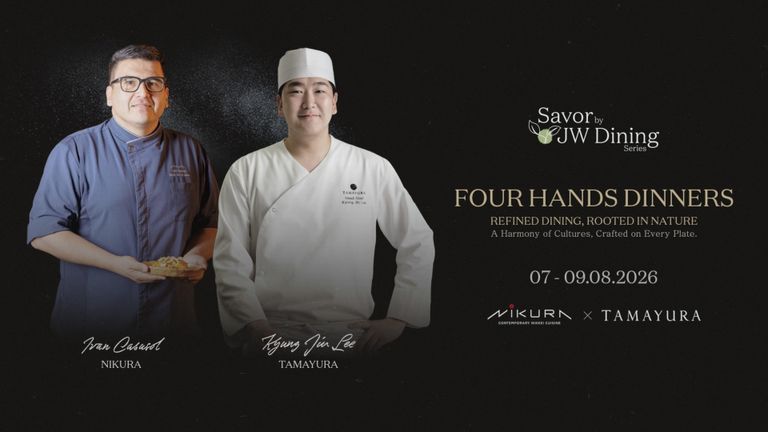
Source: Savor by JW Dining
Something is happening in Asian hospitality, and the clearest way to see it is not in a quarterly report but at a chef’s counter. Across the region, hotel groups are staging limited-run chef collaborations at a pace that would have seemed strange five years ago. Four-hands dinners, guest chef residencies, cross-property dining series that move talent between cities the way galleries move exhibitions. Last weekend I attended one in Saigon, and before I tell you about the food, it is worth explaining why these dinners exist at all, because the reasons say a great deal about where our consumer economy is heading.
The first reason is that food has become the primary reason to choose a hotel, not an amenity of it. Rooms are increasingly commoditized; a great bed is table stakes. What luxury hotel groups have figured out is that their restaurants are the most defensible brand asset they own, and a limited-run collaboration converts a restaurant from a place you eat when staying into a destination you plan around. Three nights only, one menu, two chefs who may never cook together again. Scarcity is the oldest lever in luxury, and hotel F&B has finally learned to pull it.
The second reason is regional, and it is the one I find most compelling. For decades, culinary validation flowed one way: from Paris and Tokyo outward, with the rest of Asia waiting its turn. That is over. Seoul, Bangkok, Singapore, Hong Kong, and increasingly Saigon are now validating each other, trading chefs and techniques laterally rather than looking west for permission. Since Michelin arrived in Vietnam, our fine dining scene has been hungry for exactly this kind of exchange, and visiting chefs bring their reputations and their audiences with them. Culinary tourism within Asia, by Asians, is one of the most underwritten stories in our industry.
The third reason is the diner. The generation now filling these seats would rather spend on a singular evening than on another object. This is the experience economy thesis playing out in real time, and it matters far beyond restaurants. Anyonebuilding a consumer brand in Vietnam should be studying who books these dinners, because the same psychology is reshaping how young Vietnamese spend on travel, fashion, and culture.
And there is a fourth reason, one I notice from where I sit in media. These dinners are contentengines. They are designed to be photographed, posted, reviewed, and remembered, which means hotels are no longer just competing with other hotels. They are competing with publishers, festivals, and streaming platforms for a share of cultural attention. The chef has become a creator in the fullest sense, with a following, a point of view, and collaboration instincts borrowed from music and fashion. A four-hands dinner is essentially a featured track. The hotel provides the label and the distribution.
Which brings me to last weekend, when all of this stopped being theory. I sat at the counter at Nikura, inside the JW Marriott Hotel & Suites Saigon, for the Ho Chi Minh City debut of the Savor by JW Dining Series. The premise checked every box above: three nights only, two chefs from two countries, one menu. Chef Ivan Casusol, Nikura’s Peruvian-born executive chef who cooks contemporary Nikkei, alongside Chef Lee Kyungjin of Tamayura, the kaiseki institution at JW Marriott Seoul.
What elevated the evening beyond the business model was that the menu actually delivered on the idea of dialogue. It opened in Chef Lee’s territory with the Tamayura Box: a chilled sweet spring onion soup, chicken terrine with bottarga, fried tofu pouch stuffed with tuna tartare. Everything restrained, seasonal, precise. Then it pivoted into Chef Ivan’s world with a tiradito of seared Japanese scallop and a ceviche of red snapper in tiger’s milk, all acid and brightness where the opening had been quiet. The mains found the middle ground: roasted live lobster with walnut crust, herb-crusted beef katsu with truffle, and a Nagasaki isaki that could have belonged to either chef. Dessert made the point one last time, a sous vide pear with brie ice cream and pecan-miso praline. This was not fusion, which flattens two cuisines into one. It was conversation, which lets each keep its accent.
That, in the end, is the story. The food at Nikura was excellent, but what I witnessed was a business model maturing: hospitality groups turning kitchens into cultural programming, and cities like ours becoming stops on a new Asian culinary circuit. Vietnam is no longer waiting for the food world to visit. Increasingly, we are the venue where it convenes.