Vietnam Encourages Working From Home As Iran War Disrupts Fuel Supplies
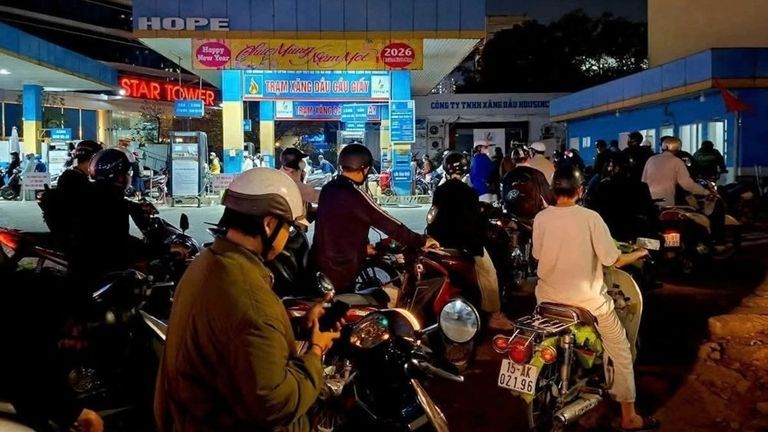
People line up in front of petrol stations at midnight to fill up their tanks amid fears of fuel shortages. | Source: Bao Van Hoa
Long lines of cars and motorbikes have been seen outside petrol stations across Vietnam, as drivers rush to fill up their tanks amid fears of fuel shortages. On March 8, concerns over rising fuel prices and potential supply disruptions prompted many people to stockpile gasoline in various ways — from filling large containers and barrels to lining up trucks at Petrolimex stations, causing a sudden surge in demand within a short period.
The concerns stem partly from disruptions at the Strait of Hormuz following the conflict between the U.S. and Iran, which has unsettled global oil flows and contributed to volatile fuel prices. Although major distributors such as Petrolimex say Vietnam’s current fuel reserves could last until April 2026, rising prices and supply uncertainties have already fueled public anxiety and stockpiling.
In response, Vietnam’s Ministry of Industry and Trade has urged changes in consumption and business practices to help maintain stable fuel supplies and curb price volatility. Among the measures is encouraging work-from-home arrangements to reduce fuel consumption. Some of the other measurements include:
Capping fuel price rises at 1-5%
At one point, gasoline prices in Vietnam rose by as much as 8,000 VND per liter, roughly from about $0.75 to $1.13 per liter, an increase of nearly 40% within weeks. While fuel prices in Vietnam remain lower than in regional markets such as Thailand (around $1.30 per liter) and Singapore (about $2.80 per liter), the pace of the increase in Vietnam has been significantly sharper.
Vietnam has implemented several mechanisms to cushion domestic fuel prices from global volatility. One key tool is the Fuel Price Stabilization Fund, which allows authorities to offset sharp increases in global oil prices and slow down price hikes in the domestic market.
On March 10, the Ministry of Industry and Trade and the Ministry of Finance announced an adjustment to retail fuel prices while drawing on the stabilization fund. Authorities released between 4,000 and 5,000 VND per liter from the fund to cushion the increase, reducing the effective price rise to around 1–5%, compared with a potential 10–34% hike without intervention.
Ensuring a stable energy supply
Vietnam is among the countries most heavily affected due to its strong reliance on energy imports from the Middle East, which is currently disrupted. Ensuring a stable fuel supply has therefore become a key priority for policymakers.
The Ministry of Trade and Industry urged fuel distributors to diversify import sources and secure additional supplies to reduce dependence on any single region. They encouraged distributors to sign long-term contracts with partners in Southeast Asia, Australia, and the United States to supplement supply in case shipping routes through the Middle East are disrupted.
In the meantime, the government has worked with domestic refineries such as Dung Quat Oil Refinery and Nghi Son Refinery to maintain stable production and prevent supply shortages. Regulators have also monitored inventory levels and import plans of major distributors like Petrolimex to ensure the market remains adequately supplied.
At the same time, Prime Minister Pham Minh Chinh has made phone calls to his counterparts in Kuwait, Qatar, and the UAE to secure fuel and crude oil supplies. Vietnam also decided to remove import tariffs on fuels, effective until the end of April.
Encouraging more efficient fuel consumption
In addition to supply-side measures, authorities have encouraged the public and businesses to reduce fuel consumption.
Recommendations from the Ministry of Industry and Trade include:
- Working from home to reduce travel demand.
- Limiting the use of private vehicles.
- Encouraging the use of carpooling or public transportation.
- Adopting fuel-efficient habits such as steady speeds and avoiding sudden acceleration.
- Considering electric, hybrid, or biofuel-powered vehicles, with E5 and E10 blends promoted from June 1.
- Cycling for short-distance trips.
- Maintaining vehicles regularly to improve fuel efficiency and save 10–15% of fuel consumption.