



When his daughter was just three months old, Manpreet Singh and his family left India to start a new life in Dubai. 22 years later, that little girl has grown up navigating multiple educational systems, cultures, and countries. This firsthand journey is why the leader at HSBC Vietnam looks at studying abroad from a different perspective than most parents.
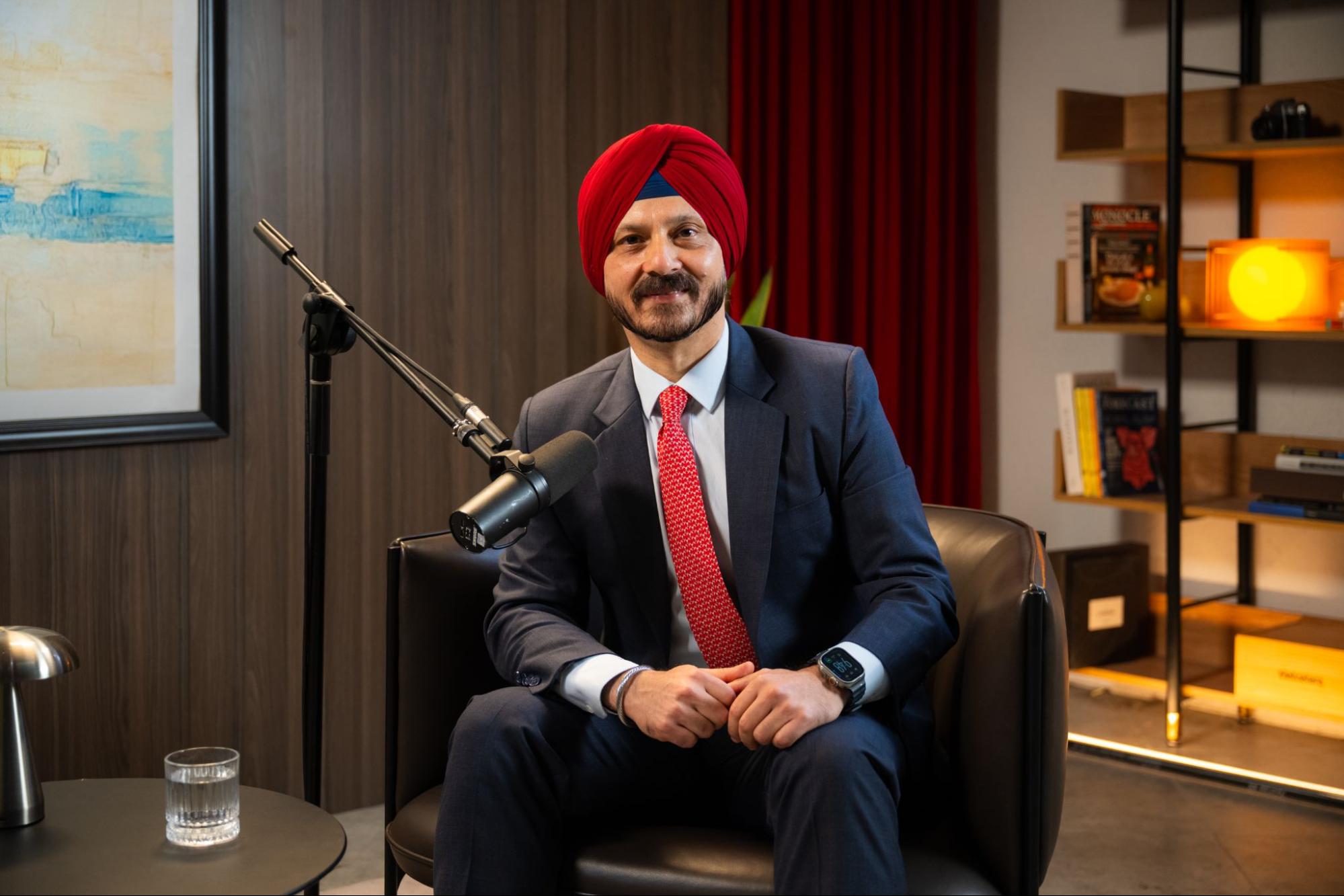
In the latest episode of Vietnam Innovators, Manpreet Singh – Country Head of Customer Propositions and Marketing at HSBC Vietnam – shares deep insights into global education trends. Moving away from the conventional talk around university rankings or acceptance rates, the conversation focuses heavily on “risk and readiness,” offering practical lessons for families preparing their children to step out into the world.

From Personal Parenting To Global Expert Insights
Manpreet Singh is a familiar face to the audience of Vietnam Innovators. With nearly 3 decades of experience across five countries and leadership roles at some of the world’s leading international banks, he currently oversees customer propositions and marketing at HSBC Vietnam, helping shape solutions for the country’s affluent and emerging affluent segments.
However, in this return, he brings a deeply personal perspective. Beyond his role at HSBC, he is also a father whose daughter has grown up across different cultures and education systems around the world. Because of this, the stories he shares are not dry institutional data from a bank, but reflections from his own parenting journey. “Today, what I’m going to share is not just what we hear and see with HSBC customers, but also some firsthand parenting experience as well.”
This personal experience helps him deeply understand the anxieties, expectations, and hurdles a family faces when sending a child overseas. According to Singh, preparing for a successful study abroad journey needs to start early and be comprehensive. “If you take care of the basics and the financial part, the rest of the things fall in place, and students get more headspace to learn and settle in faster.”

International Education Is More Than A Strong CV
While studying abroad undoubtedly enhances a student’s academic profile, Manpreet emphasizes that the true value lies in the profound behavioral shifts that happen outside the classroom. He identifies three major life skills that overseas students naturally develop: ownership, resilience, and judgment. As Manpreet explains: “I feel they become more steady and more self-directed because they have to fend for themselves. There are no longer parents and family systems around to support them.”
In places like the UK and the US, students quickly learn to navigate administrative systems on their own, from tenancy agreements to healthcare registration. In Australia, many learn to balance academics with part-time work, while in Singapore, managing the cost of living becomes part of everyday life.
For Vietnamese students, cultural differences may initially make them more reserved. Over time, however, many gain the confidence to contribute more actively while never losing the humility often associated with Vietnamese culture. Resilience is built through everyday challenges. It may come from dealing with homesickness during long winters in the UK, adapting to Singapore’s intensity, or finding one’s place socially in the US.
Finally, judgment develops when students learn how to make the right decisions without constant supervision. From personal safety and financial responsibility to setting boundaries in social situations, these are lessons that rarely come from textbooks.
Two Risks Families Often Underestimate
When preparing for overseas education, many parents focus heavily on tuition fees and accommodation costs. However, Manpreet believes two major risks are frequently overlooked: emotional challenges and hidden financial pressures.
The emotional side is difficult to quantify. Culture shock, loneliness, homesickness, and the pressure to fit into a new environment can take a significant toll on students. Without proper preparation and consistent support from family, these challenges can become overwhelming.
Financially, unexpected expenses are often what catch families off guard. Beyond tuition and rent, students may face rental deposits, textbook fees, medical bills, or emergency costs that were never part of the original budget.
Drawing from his daughter’s own experience, Manpreet recommends maintaining two separate bank accounts: one for everyday spending and another for savings. Keeping most funds in a secondary account creates a small psychological barrier before spending, encouraging students to think more carefully about their financial decisions while maintaining an emergency buffer.
The International Playbook Of Experienced Families
Instead of viewing the study abroad journey as a series of constant anxieties, experienced international families approach it like a structured system. Manpreet notes: “The families who do it better, they approach it like a plan, not like a worry. They have a playbook in place and that playbook has a few elements in it.”
This strategy heavily relies on building financial redundancy and setting clear decision rules before the student leaves. Financial redundancy means ensuring the student has at least two ways to access money, such as a local bank account and a backup international card, to avoid panic if a payment method fails or a phone is lost.
At the same time, parents and children need to agree on clear decision rules for unexpected situations. A rule in the playbook could dictate that if a student feels sick for more than 24 hours, they should book a doctor’s appointment first and update their parents later. If they ever feel unsafe in their accommodation, they should leave first and explain the details afterward.
Equally, having the right insurance coverage is a step that shouldn't be overlooked. Manpreet highlights a unique, first-of-its-kind insurance product that HSBC worked on with its partner, Bao Viet, which covers uncommon contingencies like sponsor protection and study interruption: “If something was to happen to me, the study doesn't get interrupted, right?”
This policy comprehensively covers mental health support, dental treatments, emergency medical evacuations, loss of passports, and digital bank frauds. Manpreet strongly encourages parents to ensure that their insurance coverage is fully sufficient, reminding them that these administrative mishaps are rarely anticipated until they actually occur.

Real Stories Behind The Statistics
Also joining the conversation were three former international students - Peter, Minh Anh, and Tran Le - whose personal experiences reinforced many of Manpreet Singh's observations.
Peter, who studied in Singapore, arrived overseas at the height of the COVID-19 pandemic on a flight carrying only three passengers. Upon arrival, he spent 14 days in hotel quarantine, managing university coursework and visa paperwork entirely on his own. “It was a huge mental challenge,” he recalled.
Minh Anh, a former student in the United States, faced a different kind of difficulty. During a school break, she developed a high fever while the university health center was closed. With no family nearby, she had to navigate the local healthcare system on her own and seek emergency treatment elsewhere. While her condition eventually improved, the unexpected medical bills became a significant financial burden and a source of stress for both her and her family back home.
Tran, who studied in Melbourne, Australia, experienced another unexpected setback when she developed a severe ear blockage that significantly affected her hearing. The specialist treatment costs exceeded her student budget, forcing her to request urgent financial support from her family. Without an international banking setup in place, transferring funds through a local bank took time, adding further anxiety for everyone involved.
Looking back, all three agreed on one thing: had they established international banking support before leaving home, their transitions would have been far smoother.
Recognizing these challenges, HSBC Premier’s international banking network allows families to open overseas accounts before students leave Vietnam. Parents can manage global banking relationships in one place, schedule recurring transfers, and send emergency funds across borders quickly without transfer fees.
The bank also partners with global real estate firms such as CBRE and JLL to assist with student accommodation, alongside education consultancy partners including Crimson Education and ILA.
A Message For Families Preparing To Let Go
Ultimately, Manpreet believes international education has never been solely about academic achievement. Families send their children abroad because they believe the experience will help them become stronger, more capable versions of themselves.

“It’s not easy to send our kids overseas to study. We do it because we feel they will become a better version of themselves.” The distance may test parents emotionally, but it also creates the conditions for young people to build independence, confidence, and resilience.
His final message to families was simple: “Be brave. You’re walking this journey together, just in different time zones.” And perhaps that is the most important lesson behind every study-abroad journey: it is not only a test of a student’s readiness to step into the world, but also a family’s readiness to let them grow. And this is where HSBC is best positioned to support customers across this journey, across different time zones.
Watch the full Vietnam Innovators episode here:
HSBC Premier International Education Proposition
Studying abroad is a long journey, and HSBC Premier can support your family from the very first step - planning. Through our trusted partners, you can receive guidance on school selection, the application process, and visa support, while building a strong financial foundation with planning solutions aligned to your family’s goals.
Before departure, HSBC Premier helps your child feel prepared and more financially independent: open a Premier Next Gen account, get support to open an overseas account in advance and collect the card in Viet Nam (subject to local country/territory policies). The student can get supplementary cards, travel insurance/medical assistance solutions, plus destination guides and practical checklists.
Throughout the study period, HSBC Premier continues cross-border support: manage your global HSBC accounts in one place, make secure tuition and living-cost transfers via HSBC Global View and Global Transfers, access help in urgent situations (emergency cash advances/card replacement), and enjoy privileges through the HSBC Premier Credit Card and HSBC’s global partners.