From Meme To Meaning: What Grindr’s “Top Shortage” Reveals About Queer Visibility In Vietnam
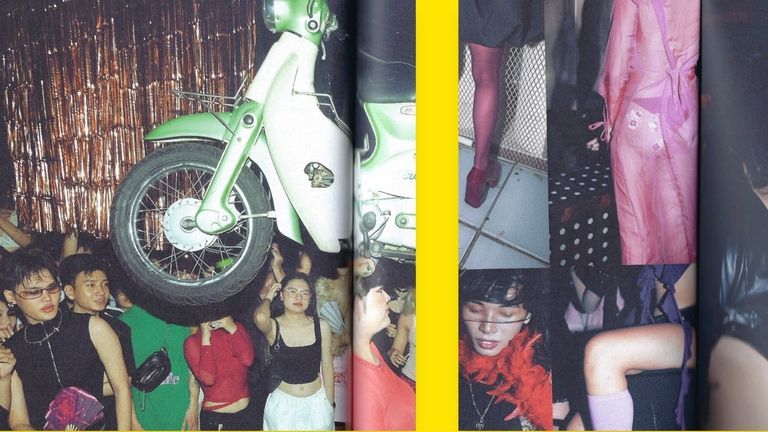
The queer lifestyle is quietly booming in metropolitan Viet Nam. | Source: No One Magazine.
Two weeks ago, the gay dating app Grindr released its 2025 recap, revealing user trends on multiple categories. Titled 2026 Unwrapped–a sensual wordplay of the global trend Wrapped–the review hinges on buzzwords like “highest twink percentage” or “hung bottom capitals.” This year, Grindr released a new category called “biggest top shortage.” Surprisingly, Viet Nam topped the chart at No. 1, beating its South East Asian neighbor Thailand in second place. It was also ranked No. 4 alongside Japan and China as countries with the most bottoms.
Top shortage is the only category featuring Viet Nam. The Viet Nam gayborhood then had a great laugh as the release coincided with inside jokes about the country being the “power bottom nation.” However, Viet Nam’s absence in other categories also sparks curiosity. Why a lack of tops, specifically? A dominant explanation lies in the intersection between the gay culture and social expectations.
“I’m Down-low”
The term down-low (DL) originates from African-American populations who, to put simply, publicly identify as heterosexual but engage in same-sex practices in private. Hop briefly onto gay dating platforms in Viet Nam and you may find several encounters for down-low’s equivalent in Vietnamese–”kín”. Profile biographies of “kín” people are often faceless. Most of the time, they are hesitant to identify themselves unless enough trust is established. In many cases, their bios often state explicitly that they are not into partners who appear effeminate (ẻo lả.)
This form of rejection reveals an interesting pattern of internalized homophobia in Viet Nam. With a long history of Confucianism, Vietnamese society often puts great emphasis on values identified as masculine, while those considered more feminine are likely to be regarded as undesirable. Tops, or masculine-presenting men, face pressure to perform gendered norms. Because being gay is often associated with the display of feminine attributes, many tops avoid coming out, identify as straight/bisexual, and consequently disengage from queer labels altogether. Their disengagement in part explains the top shortage reported by Vietnamese users of Grindr.
“I Might Be A Top But…”
Deciding on one’s position can be just as problematic. After all, labels are all about social performance. They allow people to navigate social life more easily, but there is such a broad spectrum to queerness that merely categorizing oneself as either top, bottom or versatile feels insufficient.
What social values constitute a top? For some, it is reducible to intercourse preferences. Under this perspective, a top means somebody who takes the initiative during intimacy. This understanding is more popular in Western countries with less emphasis on rigid gender roles, which explains new categories such as “fem top,” who might appear feminine but still identify themselves as such.
For Viet Nam, however, being a top goes beyond sexual intimacy. Homosexual relationships are significantly influenced by how heterosexual relationships operate. A homosexual couple may well run into questions like: “Who is the wife and who is the husband in this relationship?” Being the “husband” in Vietnamese culture often means more responsibility.
A phenomenon called “other-identification” is a by-product of this husband-wife binary. Many tops are socially to “appear manly,” be larger in size and be emotionally tough. Definitions like “fem top” are much less accepted among the gay community in Viet Nam.
“Am I Truly Accepted?”
Acceptance is increasing. So is representation, but to a lesser extent. Viet Nam decriminalized same-sex relationships about a decade ago, leaving space for increased coverage of homosexual individuals. A prime instance includes Ninh Dương Story, who became viral for revealing their decade-long relationship. Others include celebrities who are openly queer, namely Gil Lê in Sisters Who Make Waves, BB Trần in Brothers Defeat Thousands of Obstacles, and Pháp Kiều in Brothers Say Hi!.
Their representations signal a resistance to heteronormative norms by performing ambiguity. Ninh Dương, for example, challenged traditional binaries as they identify one another as “chồng-chồng” (husband-husband) rather than “vợ-chồng” (husband-wife.) The reality show figures also demonstrate how queer participants in gender binary environments are blurring the line between the authentic and performing self, according to a recent study.
However, barriers persist as acceptance remains conditional. The compromise is often reflected in comments such as “đừng làm lố quá” (do not overdo it.) Here, “làm lố” becomes shorthand for effeminate expressions deemed excessive—flamboyant makeup, bold styling, or visible queerness—especially when embodied by bottoms.
Tops, who are less likely to be read through these markers, often receive the privilege of social legibility: their queerness is easier to tolerate. As such, many refuse to identify with the LGBTQ+ community as a whole, leaving statements like “I’m one of them, but I’m different.” This downward comparison explains why many tops are hesitant to identify themselves on gay dating platforms.
The Data Might Not Say Everything
After all, 2026 Unwrapped is supposed to be a fun year-end recap of the global gayborhood. The question asked was “How many people identify themselves as top on Grindr?” not “How many tops are there in the Vietnamese community?” Grindr data reflects self-reported, performative labels that might change over time.
Studies in China, Viet Nam’s neighbor, actually showed mixed results when it came to the top-bottom ratio, suggesting that the Grindr stat reveals more about visibility than reality. Some tops may still be in the closet, refusing to disclose themselves or identify with their community.
It’s Time for a New Discourse
What Grindr’s statistics reflect is not an imbalance of sexual preferences, but of legibility. Some identities are easier to name, joke about, and circulate; others remain quiet.
Moving forward, the question may not be whether Viet Nam truly has a “top shortage,” but about how queer discourse in Viet Nam can grow to be more inclusive. A more inclusive future may require loosening the grip of rigid labels altogether, allowing space for ambiguity, fluidity, and identities that do not need to perform to exist. Is Vietnam’s so-called “top shortage” really about desire, or about who feels safe enough to name themselves?