Inside Saigon’s Once-A-Year Ramadan Market
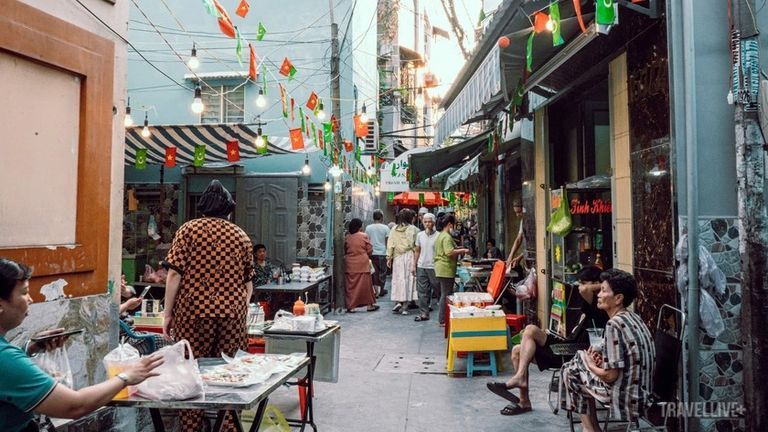
Ramadan food market in Saigon. | Source: Ha Mai Trinh for Travellive
Ramadan in Saigon centers around a vibrant, month-long halal food market in Chanh Hung Ward on Duong Ba Trac Street (formerly District 8), catering to the local Cham Muslim community. Running from February 18 to March 19, 2026, this bustling, once-a-year market offers Islamic authentic, affordable Halal dishes like beef curry, samosas, and traditional sweets.
For Cham Muslim families, the Ramadan market is a place where culinary traditions passed down through generations come alive. Many of the recipes sold at the market reflect migration stories. Some originate from Cham communities in the Mekong Delta, while others were influenced by culinary exchanges with Malaysia, Indonesia, and Cambodia.
A Muslim community in the heart of Saigon
Islam is a minority religion in Vietnam, practiced primarily by the Cham ethnic group. Historically, Cham people adopted Islamic religion through trade networks connecting Southeast Asia, particularly with regions such as Malaysia and Indonesia, between the 15th and 17th centuries.
Today, one of the most visible Muslim communities in Ho Chi Minh City is located in Chanh Hung Ward (formerly Rach Ong Ward, District 8), especially at Alley 157 on Duong Ba Trac Street. The area is home to the largest Muslim community among the 16 parishes in HCMC, with approximately 3,000 people. Many of whose families migrated from the Mekong Delta provinces such as Chau Doc (An Giang province) during the 1960s as Saigon expanded economically.
Despite living in Vietnam’s largest metropolis, the community has maintained distinct cultural traditions, from language and clothing to religious practice and cuisine. Cham and Vietnamese are commonly spoken in daily life, while Arabic is primarily used in religious education and prayers.
At the center of the neighborhood stands Jamiul Anwar Mosque, one of the most important gathering places for Muslims. Regarding daily customs, they pray five times a day: at dawn, noon, mid-afternoon, sunset, and evening. Pork and alcohol are forbidden in their cuisine; all food must adhere to Halal standards.
Muslim community fast from dawn to sunset during Ramadan
Ramadan is the ninth month of the Islamic lunar calendar and is considered the holiest time of the year for Muslims. During this month, believers practice sawm, the ritual fasting from dawn until sunset.
Fasting during Ramadan is one of the Five Pillars of Islam, the laws of worship that Muslims must follow and practice throughout their lives. From approximately 4-5 AM until sunset, Muslims refrain from eating, drinking, smoking, and other physical indulgences.
Experience hunger throughout the day cleanses the soul, strengthens God-consciousness (taqwa), and fosters community solidarity. It carries several spiritual meanings:
- Spiritual purpose: Fasting is a direct command from God to cleanse the soul of harmful impurities and focus on devotion.
- Self-discipline and sacrifice: By abstaining from food, drink, and worldly indulgences during daylight hours, Muslims practice self-control and patience.
- Empathy for the poor: Experiencing hunger firsthand reminds Muslims of the suffering of the poor and encourages charity and compassion.
- Commemoration: It celebrates the month in which the Quran is believed to have begun being revealed to the Prophet Muhammad.
Once-a-year market that unfolds Cham-Muslim culture in Saigon
What makes the market particularly special is that it appears only once a year, becoming both a livelihood opportunity and a cultural gathering space for the community.
Small stalls line the alley, selling a wide range of halal dishes prepared according to Islamic dietary laws. Pork and alcohol are strictly prohibited, and ingredients must be handled following halal guidelines.
The aroma in the market is strongly linked to the preparation of traditional Ramadan dishes. Walking through the alleys, you can easily catch the smell of distinctive curry powder and star anise from the food vendors. Visitors can find dishes such as:
- beef or goat curry rich with spices
- samosas and fried pastries
- Malaysian-style flatbread known as bánh Plata
- grilled chicken skewers inspired by Indonesian satay
- traditional sweets and coconut desserts
Women play a central role in this culinary traditions
Women play a central role in this process. They often wake before dawn to prepare the Suhoor meal - the pre-fast breakfast for their families. Later in the day, despite fasting themselves, they cook dozens of dishes to bring to the market. For them, cooking during Ramadan is both an act of devotion and a way of preserving cultural identity.
For many local women, Ramadan is also a moment when their contributions to the household and the community become more publicly visible. While some women typically spend most of their time at home caring for family, the Ramadan market allows them to step into a public role - selling homemade dishes, sharing recipes passed down through generations, and connecting with neighbors and visitors.
Speaking with Phala Hydah, a local resident, she expressed her happiness while selling food to visitors and explained that fasting during Ramadan is not always absolute. If someone cannot commit to it due to illness, menstruation, or travel, Islamic teachings allow them to postpone the fast and make up for the missed days later through Qada.
When Ramadan ends, the alley returns to its usual quiet rhythm, and the stalls vanish until the next year. Yet for those who visit, whether locals or curious travelers, the Ramadan market offers a rare glimpse into a community that has quietly contributed to Saigon’s cultural diversity for generations.