The Land Bill Shock: What Keppel’s Empire City Arbitration Means for Investors in Vietnam Real Estate
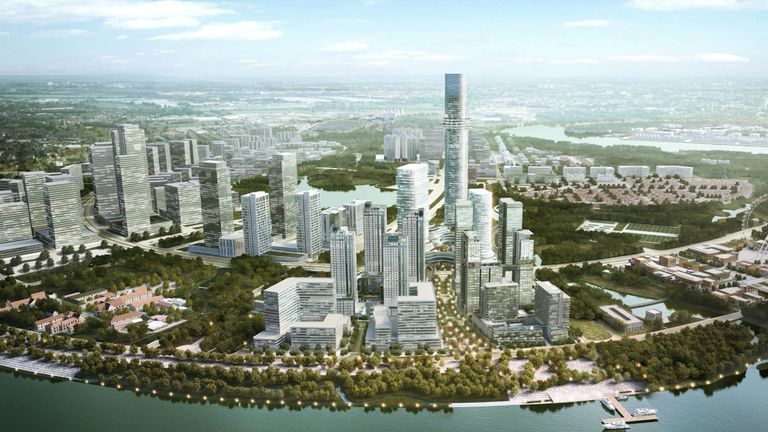
Empire City. | Source: Savills
A Singapore-listed blue chip with a decade-old investment, land-related representations and warranties, and a 40% stake in one of Ho Chi Minh City’s marquee waterfront projects has just taken its joint venture partners to SIAC arbitration. The trigger is a land use fee bill of roughly US$261 million, imposed nearly ten years after the deal closed. If an investor with Keppel’s profile and express land-related contractual protections must arbitrate to allocate this risk, smaller foreign investors with weaker contracts and less security are more exposed.
That is the real story behind the Empire City dispute. None of this means the state-side reassessment is legally wrong. The investor question is who bears the economic cost if the reassessment is upheld. The arbitration mechanics are unremarkable. The risk pattern is not.
The facts, in brief
On April 27, 2026, Keppel Ltd. announced that its wholly owned subsidiary Corredance Pte Ltd had filed a Notice of Arbitration with the Singapore International Arbitration Centre (SIAC) against three Empire City partners: Denver Power Ltd (reportedly linked to Gaw Capital Partners), Tien Phuoc Real Estate JSC, and Tran Thai Lands Company Limited.
Corredance holds 40% of the project company. In 2016, Keppel Land entered a conditional investment agreement to subscribe for that 40% equity interest for US$93.9 million.
In late 2025, the project company was informed that additional land use fees of approximately VND 6,877 billion, or about US$261 million, had been imposed on the land plots. The project company has asked the authorities to reconsider. Those requests were still pending as of Keppel’s announcement.
Keppel’s position is that the 2016 investment agreement contained representations and warranties about land approvals and land use fees, and that the partners, not Corredance, are contractually liable for the bill. It wants the tribunal to declare as much and order reimbursement.
The numbers explain the urgency. If borne pro rata, Corredance’s 40% economic exposure would be about US$104 million. That is more than the US$93.9 million Keppel paid for the entire stake. Keppel says the investment remains profitable on a carrying-cost basis, but the comparison shows how cleanly a later land charge can swallow original deal economics. For lenders and acquirers, unresolved land-price exposure should now be priced into any pre-2024 real estate JV at the term-sheet stage.
Why This Is A Systemic Risk, Not A One-off
Three features of Vietnam’s land regime can turn a closed transaction into continuing exposure.
First, land use fees can be reopened long after allocation.
The project paid about VND 3,581 billion in 2017 to complete its initial financial obligations under a 2016 allocation decision.
In September 2025, public reporting said the developer had petitioned the city over a proposed recalculated land use fee of about VND 8,819 billion, about 2.46 times the amount already paid. The incremental principal increase has been reported at about VND 5,238 billion, before late-payment charges.
Keppel’s April 2026 announcement identifies the figure at VND 6,877 billion. The public record does not fully reconcile Keppel’s figure with the earlier recalculated total, but it is clear that different figures are in circulation for total recalculated principal, incremental principal, and tax debt including fines or late-payment amounts.
The developer asked the authorities to apply the valuation framework in force when the land was originally allocated, and to factor in subsequent planning adjustments to avoid repeated recalculations. The HCMC Department of Finance rejected that request. The methodology applied at allocation may not be the methodology applied when the state later re-determines the obligation.
Second, the triggers for revaluation are largely outside investor control.
The Empire City fee follows, at least in part, Government Inspectorate findings concerning the original land-price determination. A 2017 planning adjustment that increased buildable floor area and apartment count may also be in play. Inspection findings and policy shifts sit on the state side of the table. Planning changes may sit on both sides if the project company sought or benefited from them. Standard representations and warranties, drafted against facts at signing, do not address post-signing state actions unless extended.
Third, this pattern is not confined to Empire City.
In 2025, Lotte Properties HCMC notified the city it wanted to terminate its Eco Smart City project in Thu Thiem under related Thu Thiem land-price and land-use-fee pressure, before later seeking to revive it.
Thu Thiem is the most visible cluster, but the underlying mechanism — older allocation decisions reopened under newer valuation methodology, often after inspection — can affect projects on pre-2024 land allocations where land-price decisions, financial obligations, planning changes, or inspection conclusions remained unresolved or were later reopened.
Contract Protection: Necessary But Not Sufficient
The Keppel arbitration will be argued on the wording of the 2016 investment agreement. The public record points to a cleaner liability question if the fee is tied to obligations that existed before Corredance entered, and a harder one if part of the fee is tied to the 2017 planning adjustment, since the respondents will argue that any planning-driven uplift is a project cost from which Keppel as a 40% shareholder benefited.
The drafting lesson for current deals is more useful. The warranty route only matters if the relevant warranty survived and covers the loss. A 2016 warranty package, with conventional survival periods, may already have expired by the time a state demand crystallises a decade later.
The stronger protection is a standalone indemnity or covenant allocating additional land use fees, late-payment amounts, penalties, enforcement costs and related charges irrespective of when the state demand arises. Effective protection needs to specify:
- coverage of costs arising after the deal closes, not only those crystallised at signing;
- explicit allocation of risk from planning adjustments, inspection findings, and methodology changes;
- a defined mechanism for funding interim state demands — whether tax, land use fee, penalty, or related charge — while liability is contested between shareholders;
- and indemnity survival periods long enough to outlast the realistic window for state revaluation, which on current evidence runs to a decade or more.
A JV agreement cannot bind the tax authority or suspend statutory enforcement. It can only allocate the economic burden between shareholders. That distinction is what makes the funding mechanism, not the indemnity itself, the operative protection in the short run.
None of this is exotic. It is often missing.
Tax Enforcement Runs On Its Own Clock
In early April 2026, the HCMC tax authority warned that the project company’s legal representative, Vo Sy Nhan, could face a temporary exit ban if tax debt, fines, and late-payment interest were not paid within 30 days. That is administrative tax enforcement under the Law on Tax Administration, not arbitration enforcement, and it does not pause for SIAC.
The exit-ban mechanism is now specified through Decree 49/2025/ND-CP, which sets thresholds, delinquency periods, notice procedure, and cancellation mechanics. It bites the enterprise’s legal representative because of the enterprise’s tax position, not because of the shareholder dispute. It is not a determination that the legal representative personally owes the debt.
Foreign investors should assume that disputed land use fee obligations, once they enter the tax administration system, will be enforced against the project company and that pressure will be applied to its legal representative. A shareholder dispute does not pause that process.
The tax demand also creates a governance problem at project-company level. At 40%, Corredance cannot unilaterally force major funding decisions, and depending on the company’s charter, the meeting attendance rules, and how interim funding is structured — charter-capital increase, shareholder loan, or other support — it may be able to block such decisions or be blocked from compelling them.
The point is not that the Vietnamese partners hold an affirmative supermajority. It is that tax demands can turn ordinary funding mechanics into a governance deadlock, while state enforcement continues against the company regardless. The foreign partner is then choosing between funding a bill it believes the local partners owe, or letting the legal representative absorb consequences that will harden positions before arbitration even begins. The remedy is a contractual deadlock-breaker tied to liability allocation, built into the JV agreement at the front end, not negotiated under demand pressure.
Winning Is One Thing. Collecting Is Another.
A SIAC award against Vietnamese respondents is not self-executing. The tribunal can decide the allocation of economic liability between shareholders; it cannot decide the legality of the land-price decision as against the state. To enforce against the local partners, Keppel will need recognition by a Vietnamese court under the New York Convention and the Civil Procedure Code 2015. Vietnam is a Convention state, subject to reciprocity and commercial-matter reservations, and recognition is available but not automatic.
Respondents retain meaningful grounds to resist, including public-policy objections. The offshore respondent, Denver Power, is in principle easier to pursue, but only if identifiable assets, guarantees, or security sit outside Vietnam. Association with a larger investment group does not by itself create a collection path.
A further wrinkle: Under Vietnam’s insolvency regime, members recover only residual value after the statutory creditor waterfall is paid. State financial obligations sit inside that creditor waterfall, not behind equity.
For investors, the practical implication is that dispute resolution clauses need to be paired with security at the front end: parent guarantees, share pledges over offshore holding vehicles, or step-in rights. An award is not cash’ unless the claimant has a realistic asset and enforcement plan.
Where This Leaves The Investment Environment
The 2024 Land Law and the broader push to standardise land valuation methodology should reduce, but will not eliminate, the gap between allocation-era and current-era pricing for new projects. That is the direction of travel and it is the right one. But the existing stock of foreign-invested real estate JVs was contracted under the old framework, and some of it sits on land where obligations can still be reopened. The Keppel case is significant less for what it says about Empire City than for what it signals about the population of deals behind it.
Disclosure asymmetry also distorts the visible sample. Listed investors surface these disputes through exchange announcements and impairment analysis. Private investors may resolve the same issue through funding standstills, quiet renegotiation, or delayed project execution, none of which reaches a public document. The public sample may therefore understate the underlying frequency.
Vietnam remains an attractive market on fundamentals. The Keppel arbitration does not change that. What it should change is how foreign investors price land use fee risk, draft against it, and secure their ability to recover when it materialises. The cost of getting this wrong is no longer hypothetical. It is in Keppel’s public filing, for everyone to read.
is a Vietnamese transactional law firm specialising in M&A, venture capital, finance and antitrust. The firm won “Best New Law Firm” at the Vietnam Law Firm Awards 2026 by Asia Business Law Journal. This article is part of the “Don't Do Deals in the Dark” series.